

More news on this day
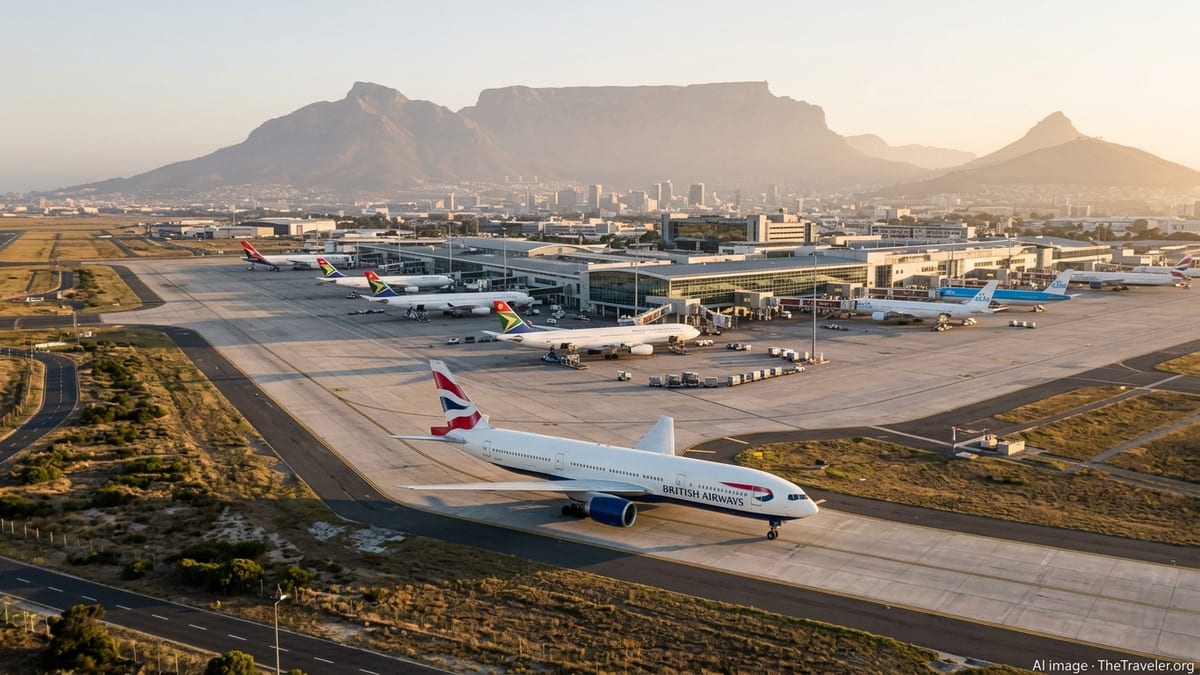
British Airways plans to operate a third daily flight between London Heathrow and Cape Town from December 2026, expanding its capacity on one of the airline’s busiest long-haul leisure routes and reinforcing air links between the United Kingdom and South Africa.
Get the latest news straight to your inbox!
Third Daily Service Builds on Earlier Capacity Increases
The planned third daily rotation between London and Cape Town from December 2026 follows several seasons of incremental capacity growth on the route. Publicly available airport and tourism updates indicate that British Airways moved from a single daily flight to double daily services in the 2024 South African summer, before reaching three daily flights on a seasonal basis from early 2025 to match peak demand for the city’s warm-weather holidays.
Information shared by Heathrow Airport in late 2024 described British Airways operating triple daily services to Cape Town during the southern hemisphere summer, highlighting the route’s importance within the carrier’s long-haul portfolio. By formalising a third daily service for the 2026–27 peak period, the airline is signaling that sustained demand justifies maintaining this higher level of capacity rather than using it only as a short-term response to surges in bookings.
The London–Cape Town corridor has long been a key market for UK–South Africa travel, serving both leisure passengers and those visiting friends and relatives. The additional frequencies are expected to give travellers greater flexibility in choosing departure times and connections, particularly for itineraries that link regional UK airports, Europe or North America with Cape Town via Heathrow.
While detailed schedules for December 2026 have not yet been loaded into public booking systems, the third service is expected to complement existing overnight departures from London and evening returns from Cape Town, helping to spread demand more evenly across the day and easing pressure on the most popular flights.
Boost for Cape Town’s Peak Summer Tourism Season
Tourism intelligence reports for Cape Town show that the city has experienced record-breaking international visitor numbers across recent festive and summer seasons, with airlines steadily adding capacity in response. Updates from local tourism bodies indicate that multiple carriers, including European and Middle Eastern airlines, have increased frequencies into Cape Town over the 2025–26 period, contributing to double‑digit growth in seat capacity to the region.
Against this backdrop, British Airways’ decision to sustain a third daily service into December 2026 aligns with broader market trends. The period from November through March typically represents Cape Town’s busiest international travel window, combining school holidays in South Africa with winter escape traffic from the northern hemisphere. Additional direct services from London are expected to support local hotels, attractions, conference venues and the wider tourism value chain stretching into the Winelands, Garden Route and safari regions.
Publicly available data also points to Cape Town’s growing role as a gateway for high-yield long‑haul tourism, with strong demand from premium leisure travellers and repeat visitors. Higher capacity on a well-known full‑service carrier is likely to enhance the city’s visibility as a long‑haul destination, especially for UK travellers who prefer non‑stop flights over one‑stop connections via European or Middle Eastern hubs.
Industry analysis suggests that additional long-haul capacity into Cape Town can help smooth seasonal spikes in pricing, although peak‑date fares typically remain elevated. A third daily British Airways service may give consumers more choice, particularly for early and late December departures that are traditionally heavily booked.
Improved Connections via London Heathrow
The extra daily flight is set to further consolidate London Heathrow’s position as a key connecting hub for journeys to Cape Town. British Airways uses Heathrow as its primary long‑haul base, and adding more frequencies on a marquee route typically creates additional connection opportunities from the airline’s European, North American and domestic UK networks.
Travel planning guidance and booking pattern analysis indicate that many passengers on the London–Cape Town route originate outside the UK, often arriving at Heathrow from cities such as New York, Toronto or various European capitals before continuing to South Africa. A third daily departure should widen the range of feasible same‑day connections, cutting overall journey times and reducing the need for long layovers or overnight stops in London.
For South African travellers, more return options from Cape Town to Heathrow can make it easier to connect to onward services across Europe and North America. This is particularly relevant during busy return periods in January and early February, when passengers are heading back for the start of school and work calendars in the northern hemisphere and seats can be scarce on preferred dates.
Industry observers note that timetable coordination will be critical to maximise the benefits of the new flight. If scheduled alongside existing services to create a well-spaced pattern of departures and arrivals, the third frequency can help distribute passenger flows more evenly through Heathrow, supporting more reliable connections during the winter peak.
Competitive Dynamics on the London–Cape Town Route
The London–Cape Town market has become increasingly competitive as airlines target strong southern hemisphere summer demand. Publicly available route and capacity summaries show that other long‑haul carriers, including European network airlines and Middle Eastern hubs, have added flights to Cape Town in recent seasons, often marketing one‑stop itineraries from the UK as an alternative to non‑stop services.
By committing to three daily flights from December 2026, British Airways is reinforcing its position as the primary non‑stop option between London and Cape Town. Aviation analysts point out that frequency can be as important as aircraft size in winning market share, since it allows airlines to offer more schedule choice and better connectivity, particularly for premium travellers and corporate accounts.
Additional capacity from British Airways may prompt competitive responses for the 2026–27 season, whether in the form of extra flights, upgraded aircraft or promotional fares from rival carriers. However, reports on recent performance of Cape Town’s international network suggest that overall demand growth has been strong enough to absorb added capacity from multiple airlines without materially weakening load factors.
For travellers, this environment typically results in a broader mix of schedules, cabins and price points. Those prioritising non‑stop travel and loyalty programme benefits may gravitate toward the increased British Airways offering, while others may continue to choose one‑stop itineraries via other hubs if they provide more convenient timing or pricing on specific dates.
Strategic Role of Cape Town in British Airways’ Network
British Airways has been adjusting its global network for the mid‑2020s, adding capacity to leisure‑led destinations and selectively reducing services on underperforming routes. Recent schedule announcements for 2026 point to growth across several long‑haul markets, including additional flights to North America and extended seasonal operations on certain Asian and Indian Ocean routes.
Within this context, the decision to support a three‑times‑daily service to Cape Town highlights the South African city’s status as a cornerstone leisure destination in the airline’s portfolio. Network strategy commentary notes that routes combining strong premium demand, robust visiting‑friends‑and‑relatives traffic and a clear seasonal peak often attract higher levels of capacity when aircraft are available.
Industry observers also point to the growing significance of southern Africa in global tourism planning. With infrastructure investments at Cape Town International Airport and sustained marketing efforts promoting the city’s food, wine, culture and nature experiences, additional non‑stop flights from a major European hub fit into wider efforts to make the destination more accessible to long‑haul visitors.
As schedules for the 2026–27 season are progressively loaded, booking patterns will provide the first indication of how quickly the extra seats on the London–Cape Town route are absorbed. Early demand during previous seasons suggests that the third daily British Airways flight is likely to be welcomed by travellers on both sides of the route, whether for holidays, business trips or visits to family and friends.