

More news on this day
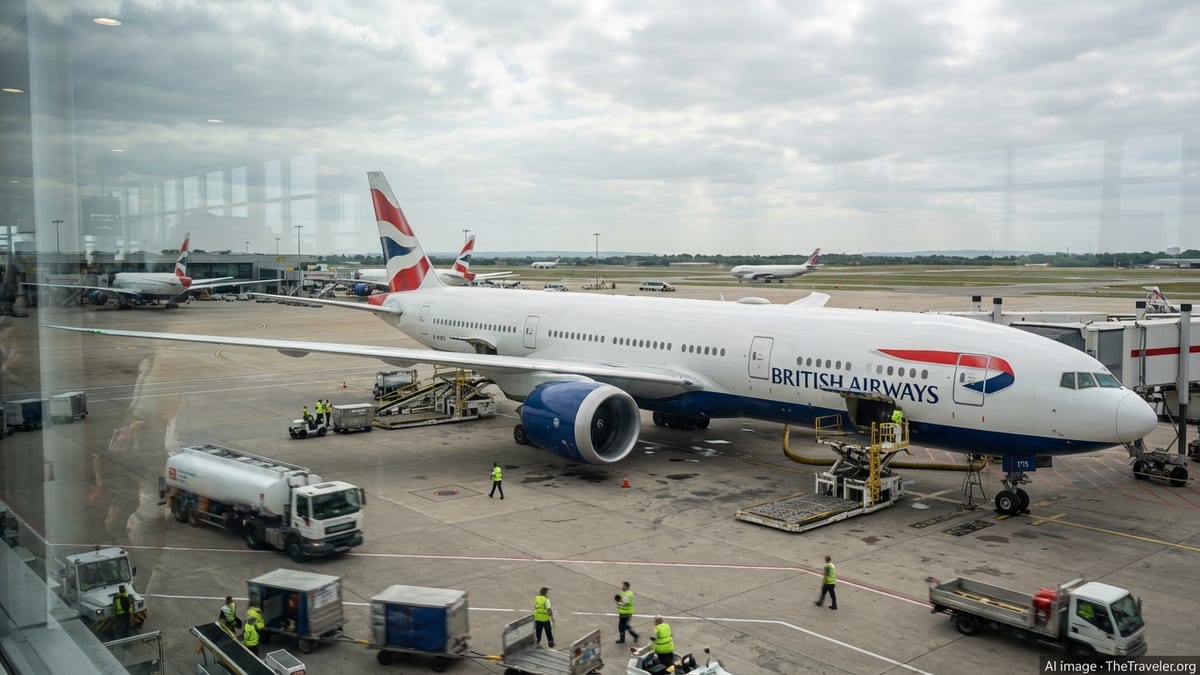
British Airways is quietly laying the groundwork for a new era of long-haul flying, as the delayed but increasingly tangible Boeing 777X edges closer to service entry and promises to reshape the way its customers travel to far-flung destinations.
A Flag Carrier Looks Beyond the Delivery Delays
For British Airways, the Boeing 777X has long been the missing piece in its post-pandemic rebuilding strategy. The aircraft, originally expected to arrive in the middle of the decade, has been pushed back repeatedly as Boeing works through a complex certification program. Industry projections now point to first commercial deliveries in 2027, after regulators tightened oversight and the manufacturer endured multiple program reviews and schedule resets.
Despite this shifting timeline, International Airlines Group, the parent company of British Airways, has doubled down on its commitment to the type. The airline’s firm orders for the 777-9 have grown from 18 to 24 aircraft, part of a broader long-haul order book that also includes Airbus A350s and Boeing 787-10s. Executives view the 777X as a central pillar in a fleet renewal plan intended to replace some of the carrier’s oldest 777s, cut fuel burn and emissions, and support future growth on lucrative transatlantic and Asia-Pacific routes.
The extended wait comes as Boeing moves into advanced phases of certification testing. The manufacturer has resumed flight trials after addressing technical findings and has secured key regulatory milestones that suggest the program is finally turning a corner. For British Airways passengers, the lengthy gestation means that when the jet does arrive, it will do so into a market hungry for capacity but also far more demanding about comfort and environmental responsibility.
In parallel, British Airways has been using the delay to refine its onboard product strategy. Investments already under way across its existing long-haul fleet, from premium cabins to connectivity, are effectively a rehearsal for the airline’s 777X era, when its newest widebody will be expected to carry the brand’s most advanced seats, services and digital features.
What Makes the Boeing 777X Different
The Boeing 777X family, led by the stretched 777-9, is designed as the next evolutionary step for the hugely successful 777 line that has anchored long-haul fleets for more than two decades. Visually, its most distinctive feature is a vast composite wing with folding wingtips, allowing a span that improves aerodynamic efficiency in cruise but still fits within existing airport gate layouts. The configuration is aimed squarely at reducing fuel burn and emissions per seat, a priority for airlines and regulators as aviation faces mounting climate scrutiny.
Under the wing, new-generation GE9X engines promise double-digit efficiency gains compared with the current 777-300ER. The combination of advanced aerodynamics and powerplants is expected to deliver significantly lower fuel consumption and quieter operations, which should translate into a smoother, more sustainable ride for travelers. For long-haul leisure passengers in particular, who often base trip decisions on value rather than carrier loyalty, the efficiency of the aircraft can be a hidden driver of competitive fares on routes to holiday favorites in North America, the Indian Ocean, Asia and beyond.
Inside the cabin, the 777X is built around a wider interior cross-section than its predecessors, giving airlines more flexibility in how they configure economy, premium economy and business class. British Airways is expected to take advantage of this extra width to refine seat design rather than simply add more density. The underlying airframe allows for higher cabin humidity, larger windows and lower cabin altitude than previous generations of long-haul jets, all of which have been shown to reduce fatigue and jet lag on ultra-long sectors.
For many travelers, the differentiator will not be the technology they cannot see, but how that technology is deployed. The 777X platform provides the space, power and environmental envelope for larger inflight entertainment screens, higher-bandwidth connectivity and mood lighting systems tuned to help passengers adjust circadian rhythms on overnight flights. British Airways intends to use these capabilities as a canvas for a renewed onboard identity that aligns with its broader multi-billion-pound investment in the customer experience.
British Airways’ 777X Order and Fleet Strategy
The expansion of British Airways’ 777X commitment is part of a sweeping long-haul fleet refresh that spans the next decade. Alongside additional 777-9 orders, International Airlines Group has firmed purchases of more Airbus A350-1000s and a substantial batch of Boeing 787-10s. Deliveries of these aircraft are scheduled into the early 2030s, a period in which many of British Airways’ oldest 777-200s and 777-300ERs will be approaching or exceeding three decades of service.
According to industry disclosures, the latest adjustments to IAG’s order book will see 18 earlier 777X commitments supplemented by six additional 777-9s, taking British Airways’ firm total to 24 aircraft. These jets are slated to arrive between 2027 and 2030, subject to Boeing’s revised program schedule and regulatory approvals. In parallel, the airline is awaiting deliveries of new Airbus A350-1000s that will continue to roll into the fleet over a similar timeframe, giving planners a rare opportunity to redesign the long-haul network with two of the industry’s most advanced twinjets.
For passengers, the strategy means that flights operated today by aging 777s will progressively be taken over by aircraft that are quieter, more fuel efficient and more spacious inside. British Airways is expected to deploy its 777X fleet first on high-demand trunk routes from London Heathrow to North American gateways and select long-haul leisure destinations where the combination of range and capacity is most valuable. As more frames arrive, the type is likely to appear on services to Asia, the Middle East and southern Africa, particularly on routes that have historically relied on the airline’s largest jets.
The long planning horizon also reflects the realities of the aircraft manufacturing backlog. With production slots for widebody jets heavily booked for years, British Airways is effectively reserving its place in a global queue. While the delays to the 777X program have been frustrating for airlines, they have also given carriers time to fine-tune cabin specifications and integration with digital platforms, ensuring that when delivery day comes, aircraft arrive closer to their ideal configuration for both business and leisure travelers.
Cabin Innovations Shaping the Next Holiday Flight
British Airways has already signaled the direction of its future premium cabins with the unveiling of a new ultra-wide first class suite and continuous upgrades to its Club Suite business class. Although the first iteration of the next-generation first cabin will debut on refurbished Airbus A380 aircraft, insiders expect many of the design cues and technologies to migrate to the 777X once the type joins the fleet. The result, for travelers at the very front of the aircraft, will be more personal space, enhanced privacy and an environment tailored to rest on overnight flights.
The airline’s refreshed first suites feature a bed-length fully flat surface, larger 4K screens, improved storage and refined lighting schemes, all designed in collaboration with British design houses. On the 777X, these concepts can be extended over a longer cabin footprint, potentially allowing British Airways to experiment with dedicated zones for solo travelers, couples and high-yield corporate guests. The emphasis is on creating a more residential feel, without losing the traditional touches that long-time customers associate with the carrier’s brand.
In business class, the roll-out of the Club Suite product, with direct aisle access for every passenger, is intended to set the baseline for the 777X configuration. The wider cross-section of the new aircraft opens up opportunities for slightly wider seats and better shoulder space, particularly in the critical middle seats, where travelers often feel most confined. British Airways is expected to integrate improved wireless charging, next-generation inflight entertainment and more intuitive storage into its 777X business cabin, aligning the hard product with the expectations of younger, tech-savvy travelers who are increasingly willing to combine work and leisure on long-haul trips.
Further back, economy and premium economy cabins will also benefit from the 777X’s design. Larger windows, refined sidewall contours and higher humidity levels can reduce the feeling of confinement that often characterizes long overnight legs. British Airways has indicated that its broader investment program will extend to upgraded seat cushions, improved recline mechanisms and more responsive inflight connectivity, turning even the most affordable cabins into more comfortable spaces for the fourteen-hour journeys that are becoming commonplace on its network.
Greener Skies: Efficiency and Emissions
One of the most significant aspects of the 777X for British Airways is its potential to cut emissions at a time when the airline, like its European peers, is under pressure to demonstrate credible progress toward net zero targets. The combination of new aerodynamics and engines is expected to reduce fuel burn per seat by double-digit percentages compared with the airline’s existing 777-300ER fleet. Over the life of the aircraft, that translates into substantial carbon savings across the carrier’s global network.
British Airways has been vocal about its commitment to decarbonization, from investments in sustainable aviation fuel to participation in industry initiatives to modernize air traffic management. The arrival of the 777X will give the airline another high-profile tool in this campaign. The aircraft is designed to be compatible with greater blends of sustainable fuel, and its improved range and payload performance could allow British Airways to operate long sectors more directly, avoiding additional stops that add emissions as well as travel time.
For travelers, these back-end efficiency gains are increasingly visible in the way airlines communicate. Expect British Airways to highlight the environmental advantages of the 777X in marketing materials and booking flows once the jet enters service, positioning flights operated by the type as the greener choice within its network. While holidaymakers may still prioritize schedule and price, awareness of environmental impact is playing a larger role in travel decisions, particularly among younger customers and corporate clients bound by sustainability policies.
The fuel savings also have a commercial upside. Lower operating costs per seat give British Airways more flexibility in how it prices long-haul leisure routes, especially in shoulder seasons when demand is more volatile. Over time, the cost advantages of a modern fleet mix that includes the 777X, A350 and 787 could allow the airline to sustain a broader range of long-haul destinations, from winter sun beaches to emerging adventure hubs, without sacrificing profitability.
Passenger Experience: Quiet, Connected and More Relaxed
Inside the cabin, the benefits of the 777X’s new technology are expected to be most noticeable in the form of a quieter, more stable ride. Advances in engine design, wing aerodynamics and sound insulation should reduce the hum and vibration that often make it harder to sleep in flight. British Airways is expected to layer on sound-conscious touches such as softer-close storage, refined galley workflows and updated galley equipment to keep noise levels lower during meal services and overnight periods.
The aircraft’s higher-capacity electrical and data architecture makes it easier to support modern connectivity demands. British Airways has been progressively upgrading inflight Wi-Fi across its fleet, and the 777X will be configured from day one with systems designed to handle a cabin full of passengers simultaneously streaming, working and messaging. For travelers extending their vacations by working remotely at their destination, this level of connectivity can mean turning travel days into productive time rather than lost hours.
Cabin air quality and pressure are also set to improve. By operating at a lower cabin altitude and maintaining higher humidity than older designs, the 777X aims to reduce the dehydrating effects of long flights that contribute to jet lag and general fatigue. Combined with refined LED mood lighting, which British Airways can program to simulate sunrise and sunset cues tailored to each route, the aircraft offers a more controlled environment to help passengers arrive feeling more rested and ready to engage with their destination.
For families and leisure travelers in particular, these seemingly subtle improvements can make the difference between treating a long-haul flight as an ordeal and seeing it as the comfortable opening chapter of a trip. With competition intensifying on routes to popular holiday destinations, British Airways is betting that a calmer, more restorative onboard experience on the 777X will become a key element of its value proposition.
Training, Readiness and the Road to Entry Into Service
As Boeing advances the technical program, another sign that the 777X is edging closer to reality comes from the training world. Regulators in the United States and Europe have recently granted initial qualification to new 777-9 full-flight simulators and flight training devices, including units based at Boeing’s training campus near London Gatwick. This approval allows airlines and training providers to begin preparing pilots for the transition to the new aircraft with equipment that accurately reproduces its flight deck, systems and handling.
For British Airways, which already operates one of the world’s largest Boeing 777 fleets, this training pipeline will build on a deep reservoir of existing expertise. The 777X flight deck shares much of the philosophy and layout of earlier 777 models, easing cross-qualification and allowing the airline to manage its pilot rosters more efficiently. Over the next several years, simulator sessions will gradually introduce crews to new systems, updated displays and the handling characteristics of the larger wing and new engines.
Operational readiness extends beyond the cockpit. British Airways is coordinating with Heathrow and partner airports around the world to ensure that ground infrastructure is prepared for the 777X. The aircraft’s folding wingtips are a centerpiece of that planning, allowing the jet to fit into existing widebody gates, but procedures for taxi, pushback and emergency response all require careful rehearsal. Cabin crew will also undergo extensive training in new safety systems, service flows and galley layouts specific to the new type.
All of this preparation means that by the time passengers see the first British Airways 777X at the gate, a quiet revolution will already have taken place behind the scenes. From engineering and maintenance teams to schedulers and ground handlers, large parts of the airline will have been reshaped around the capabilities and requirements of the new aircraft. For travelers, that investment will be felt not in technical acronyms, but in smoother operations, better on-time performance and a more refined experience from check-in to arrival.
How the 777X Could Change Your Next Vacation
When British Airways finally introduces the 777X into regular service, the impact for holidaymakers is likely to be both immediate and gradual. In the near term, the aircraft will arrive on a handful of flagship routes where demand is strong and where the airline wants to showcase its latest product. Travelers booking those flights will see the most advanced version of British Airways’ long-haul experience, from next-generation suites at the front to upgraded seats and amenities throughout the cabin.
As more jets join the fleet, the benefits will spread across the network. High-density leisure routes to North America, the Caribbean, the Indian Ocean and Asia could see capacity increases, opening up more seats in peak school holiday periods and potentially easing the price pressure that often makes those weeks prohibitive. The combination of better fuel efficiency and greater range will also give British Airways the flexibility to test new long-haul leisure markets, connecting London to emerging beach and adventure destinations that once would have required awkward connections.
For many travelers, the most notable change will be qualitative rather than dramatic. Seats that feel slightly wider and better cushioned, cabins that are calmer and more quietly lit, and flights that arrive with passengers feeling less exhausted will gradually reset expectations for what a long-haul journey can be. Over time, older aircraft will be retired or redeployed, and the 777X will take its place as one of the backbone types that define the everyday experience of crossing oceans with British Airways.
In that sense, the 777X represents more than just a new model in the fleet. It is a vehicle for British Airways to reassert its role as a premium global carrier at a time when competition from European and Gulf rivals has never been stronger. For passengers planning their next big trip from London, the arrival of the 777X signals that the future of long-haul holidays will be quieter, greener and more comfortable than the journeys they remember from just a few years ago.