

More news on this day
British Airways is preparing to introduce SpaceX’s Starlink satellite technology across large parts of its fleet from early 2026, in a move that signals a major shift in how passengers on UK and European carriers will stay connected in the air.
Get the latest news straight to your inbox!
A Strategic Leap for IAG and British Airways
The Starlink agreement has been struck at group level by International Airlines Group, the parent company of British Airways, Iberia, Aer Lingus, Vueling and Level. Publicly available information indicates that more than 500 aircraft across these carriers are slated to receive Starlink-enabled inflight connectivity, covering a substantial share of IAG’s 601-strong fleet.
Reports on the deal describe it as a multi-year rollout that will begin in early 2026, with aircraft across both short haul and long haul networks earmarked for installation. The scale of the project positions IAG as one of the largest adopters of low Earth orbit satellite connectivity in global aviation, and makes British Airways the highest-profile UK carrier to commit to Starlink at fleet scale.
Industry coverage notes that the partnership is designed to deliver high-speed, low-latency internet comparable to, and in some cases faster than, typical home broadband. For British Airways, the move represents a significant technology upgrade from a patchwork of legacy satellite and air-to-ground systems that have often attracted mixed reviews from frequent flyers.
IAG’s most recent reporting highlights connectivity as part of a broader digital investment agenda that spans customer experience, operations and data. Bringing Starlink on board supports that strategy by enabling more bandwidth-intensive services for passengers while also enhancing real-time data links for flight operations.
What Starlink Brings to the Cabin Experience
Starlink operates a constellation of low Earth orbit satellites designed to deliver faster response times and more consistent coverage than traditional geostationary systems. Aviation deployments already active with other carriers provide early evidence of smoother video streaming, more reliable video calls and the ability to support many more concurrent users without severe slowdowns.
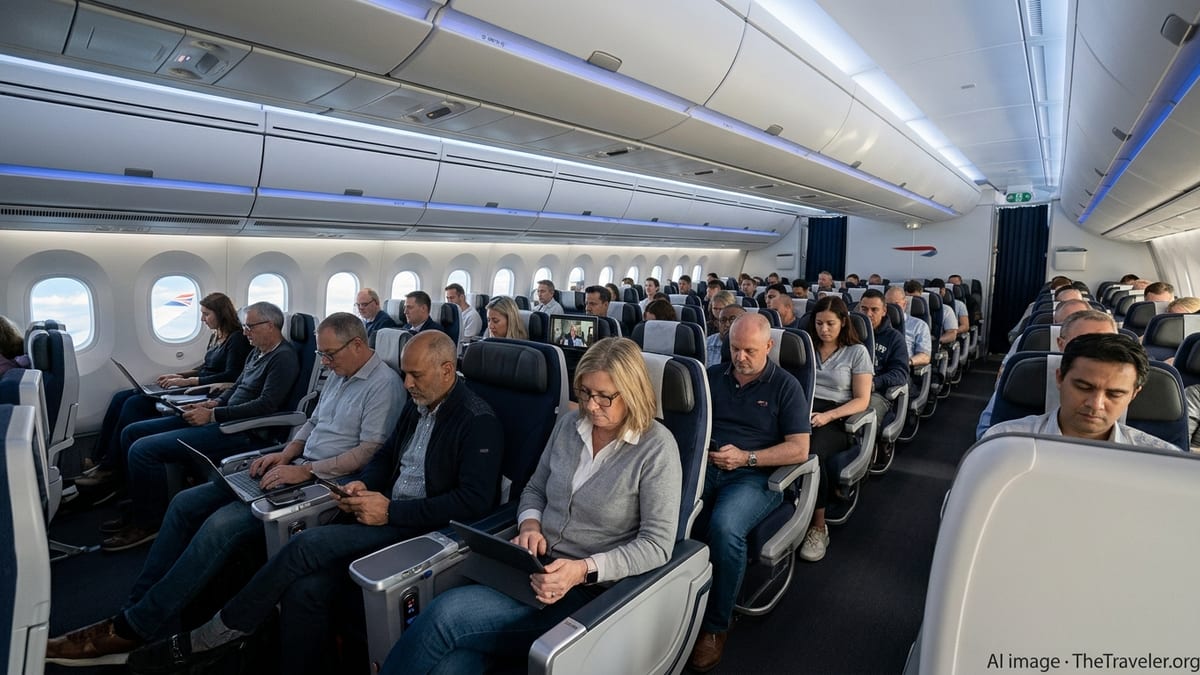
Coverage focusing on IAG’s plans indicates that British Airways and its sister airlines are targeting a product that allows passengers to stream content, join video meetings, use cloud applications and access social media with fewer of the dropouts and delays that have long plagued inflight Wi-Fi. The ambition is to narrow the gap between being online on the ground and online at 38,000 feet.
Industry observers point out that this shift could change how travellers plan long flights. Instead of treating airborne time as largely offline hours, passengers may increasingly schedule work calls or streaming sessions, especially on transatlantic routes linking London with New York, Boston and other business hubs where demand for always-on connectivity is strongest.
For leisure travellers, the promise of more robust connections is likely to support richer use of entertainment, messaging and real-time trip planning tools. Families might be better able to rely on streaming platforms to keep children occupied, while independent travellers can more easily coordinate onward transport and accommodation during the flight.
Competitive Pressures in the UK and European Market
The decision to adopt Starlink also reflects mounting competitive pressure in Europe and beyond. Several North American and Asia-Pacific airlines have already moved to free or low-cost high-speed Wi-Fi, and early Starlink adopters in other regions have attracted attention from technology-focused travellers. British Airways faces not only traditional network rivals on long haul routes but also agile low-cost carriers that are investing in cabin technology.
Analysts following IAG note that the group aims to become the leading European airline conglomerate for high-speed connectivity, using scale to negotiate technology partnerships that smaller rivals may struggle to match. By equipping aircraft across multiple brands, IAG can spread installation and service costs while marketing a consistent connectivity proposition to customers who move between British Airways, Iberia, Aer Lingus, Vueling and Level.
Within the UK, the move sets a new benchmark for inflight connectivity expectations. While several competitors already offer Wi-Fi, performance and pricing structures vary widely. A Starlink-backed service, particularly if offered free or bundled into fares on many routes as some coverage suggests, raises the bar for what passengers will accept from airlines positioning themselves at the premium end of the market.
At the same time, the investment underscores how connectivity has become a core part of airline branding, alongside cabin design, catering and loyalty programmes. For British Airways, which has been working to refresh its image with new cabins and lounges, a more reliable digital experience is likely to be promoted as another pillar of its modernisation story.
Operational and Regulatory Considerations
Rolling out Starlink across hundreds of aircraft will require a significant programme of modifications, testing and certification. Each aircraft needs a Starlink antenna and associated cabin network hardware installed, typically during planned maintenance windows to avoid disrupting schedules. Aviation analysts expect the work to be phased over several years, with some fleets and key routes prioritised early in the rollout.
Regulatory frameworks also play a role, particularly in Europe, where spectrum use, data protection and security requirements are closely scrutinised. Public documents from both IAG and Starlink indicate that the companies are working within existing aviation connectivity regulations while also responding to evolving guidance as low Earth orbit constellations become more common.
Operationally, higher bandwidth and lower latency can support more than just passenger browsing. Airlines can use the enhanced connectivity to improve real-time aircraft monitoring, update flight plans dynamically, optimise fuel usage and provide more timely disruption management information to crew and ground teams. For British Airways, these capabilities sit alongside broader efforts to improve punctuality and resilience across its network.
However, analysts caution that delivering a consistently strong experience across diverse geographies and congested air corridors will remain a technical challenge. Early users of high-speed satellite systems on other airlines have reported generally strong performance with occasional coverage gaps, and customer expectations are likely to rise in parallel with marketing claims.
What Passengers Can Expect from 2026
For travellers booking British Airways flights from 2026 onwards, the most visible change is expected to be the availability of faster, simpler onboard Wi-Fi on an expanding range of aircraft. Industry reporting suggests that IAG intends to move towards offering access without time-based or data-based packages on many services, although precise pricing and tiers are still expected to vary by brand, route and cabin.
Passengers can anticipate more straightforward log in processes, with reduced reliance on captive portals that have historically been slow or unreliable. The technology underpinning Starlink supports seamless device switching and higher numbers of users per aircraft, which should make it easier for whole families, tour groups or corporate travellers to stay connected without severely degrading speeds.
The rollout will not be instantaneous. Travellers are likely to encounter a mix of connectivity experiences for several years as some aircraft receive Starlink equipment ahead of others. Coverage indicates that IAG will prioritise long haul and high-demand routes, including key UK to North America services, before expanding more broadly across European and leisure networks.
As the programme matures, passenger feedback will be a critical indicator of success. If reports from early adopters on other carriers are any guide, the step change in inflight connectivity could quickly shift British Airways customers’ expectations from hoping for basic email access to assuming that full, office-style connectivity is standard whenever they fly.