

More news on this day
A British Airways long-haul flight is facing scrutiny after reports indicated that the body of a passenger who died midair was placed on the galley floor for about 13 hours, leaving nearby travelers complaining of a persistent foul smell throughout the journey.
Get the latest news straight to your inbox!
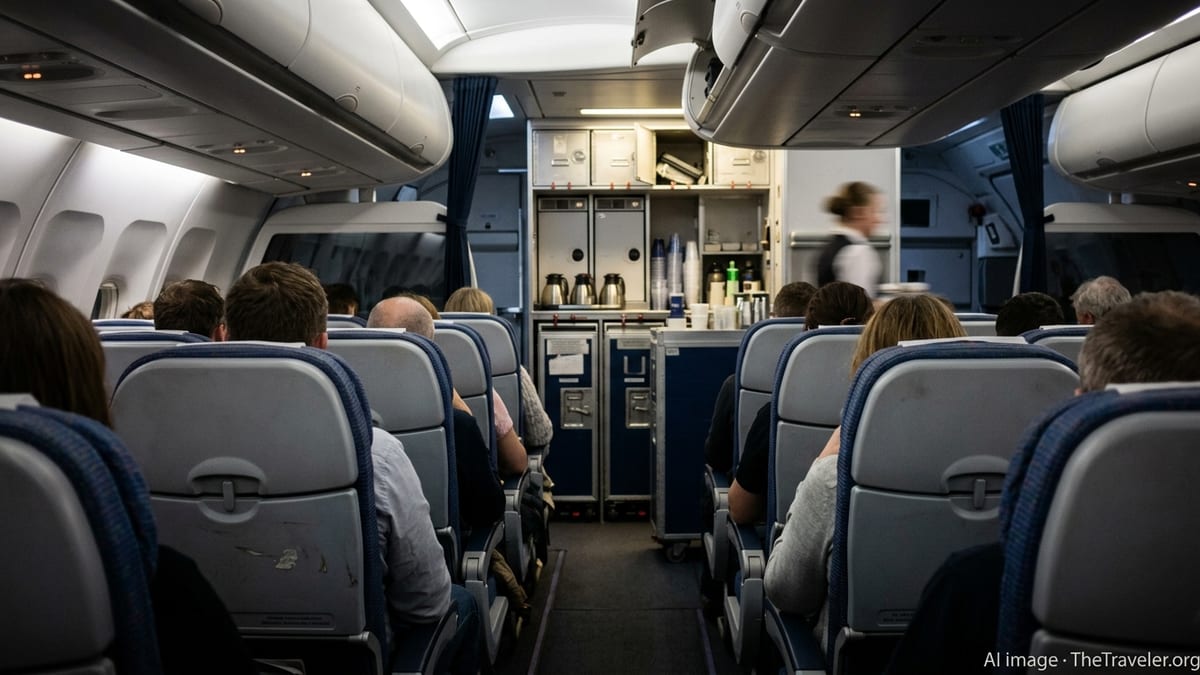
Reports Describe Body Left in Galley Area for Entire Flight
According to multiple media reports summarizing passenger accounts, the incident occurred on a British Airways service between Europe and South Africa when a traveler died during the flight. With no dedicated storage facility for a body on board, crew members reportedly moved the deceased passenger from the seat to the rear galley, where food and beverages are typically prepared and stored.
Coverage of the episode indicates that the body remained in the galley for the remainder of the roughly 13-hour flight. Passengers seated close to the rear of the aircraft later told news outlets that the area developed a strong and unpleasant odor, which they attributed to the presence of the body in a warm, confined space for an extended period.
Accounts suggest that, in addition to the distress of witnessing a medical emergency, some travelers were unsettled by the proximity of the deceased person to where cabin crew were working with trolleys, drinks and packaged food items. The combination of a confined cabin, limited air circulation in certain sections and the length of time involved reportedly amplified concerns.
Passenger Complaints Highlight Emotional and Hygiene Concerns
Passengers quoted in published coverage described feeling shocked that the body was placed on the galley floor rather than in a more secluded space. Some reports say travelers complained about both the smell and the perceived lack of separation between the body and the service area, with at least one account indicating that people avoided using nearby lavatories or walking to the back of the cabin.
Beyond the odor, the episode raised emotional and psychological concerns for those on board. For many travelers, being in close quarters with a deceased person for many hours can be deeply unsettling, particularly on an overnight or long-haul service where movement in the cabin is limited and there is little opportunity for respite.
Several commentators in airline and aviation forums have noted that crew members are often placed in a difficult position, balancing compassion for the deceased and their family with the comfort and safety of fellow passengers. However, the decision to use the galley, a high-traffic working zone, has prompted debate about whether alternative locations or procedures might have reduced distress for those nearby.
British Airways Issues Statement Emphasising Safety and Sympathy
In response to the media attention, British Airways issued a public statement expressing condolences to the family and friends of the passenger who died. The airline also indicated that its crew followed established procedures for managing an in-flight death, while reiterating that the safety and wellbeing of customers and colleagues is a priority.
Publicly available information shows that many commercial aircraft do not have dedicated spaces designed to store a body. In such situations, airlines typically rely on internal guidelines that may involve moving the deceased to an empty row, a curtained-off area or, in rare cases, to a section of the galley or crew rest area where the person can be laid out with some privacy.
While the carrier did not discuss specific operational decisions on this flight, the incident has brought renewed scrutiny to how airlines communicate with passengers after an onboard death, and how they balance transparency with sensitivity. Travel commentators note that clear explanations can sometimes ease anxiety, although privacy considerations may limit what is shared in real time.
Industry Practice on Handling Inflight Deaths Under Spotlight
Reports about the British Airways case have triggered a wider conversation about industry norms when a passenger dies during a flight. Aviation experts cited in news coverage explain that in-flight deaths, though relatively rare, are not unheard of on long-haul routes where passengers may have underlying medical conditions.
There is no single global standard dictating where a body must be placed on a commercial aircraft. Operators typically follow internal policies informed by medical guidance, aircraft configuration and the availability of space. In some cases, a deceased passenger remains secured in their seat with a belt fastened and covered with blankets; in others, cabin crew may move the body to a row of empty seats or a low-traffic area to avoid further distress to nearby travelers.
The British Airways incident has focused attention in particular on the use of galleys, which are designed primarily as workspaces for food preparation and storage rather than for medical or mortuary purposes. Some aviation safety commentators argue that more explicit guidelines could help limit the use of these areas, especially on aircraft with alternative spaces such as crew rest compartments or large storage zones.
Calls Grow for Clearer Protocols and Better Passenger Communication
Following publication of the story, online reaction from travelers and frequent flyers has included calls for airlines to review their procedures and training for handling onboard fatalities. Comment threads on aviation and travel platforms reflect a mixture of sympathy for the crew and criticism of the practical choices made in this case, particularly the decision to keep the body in an active galley.
Some commentators suggest that carriers could develop more transparent public-facing guidance on what may happen if a death occurs during a flight, while still preserving the dignity and privacy of the deceased. Others argue for design changes on long-haul aircraft, such as flexible spaces that can be quickly converted to provide a more appropriate area in rare but foreseeable circumstances like an inflight death.
For now, the British Airways episode underscores the operational challenges airlines face when serious medical emergencies arise in a confined cabin environment with limited medical resources. It has also highlighted how decisions made in the moment, even when consistent with internal rules, can shape public perception of an airline’s professionalism, empathy and hygiene standards.