

More news on this day
British Airways is making a decisive pivot in its global network, withdrawing from Jeddah and scaling back several Middle East routes while redeploying aircraft to a fast-growing India schedule that highlights how air traffic flows between Europe and Asia are being quietly redrawn.
Get the latest news straight to your inbox!
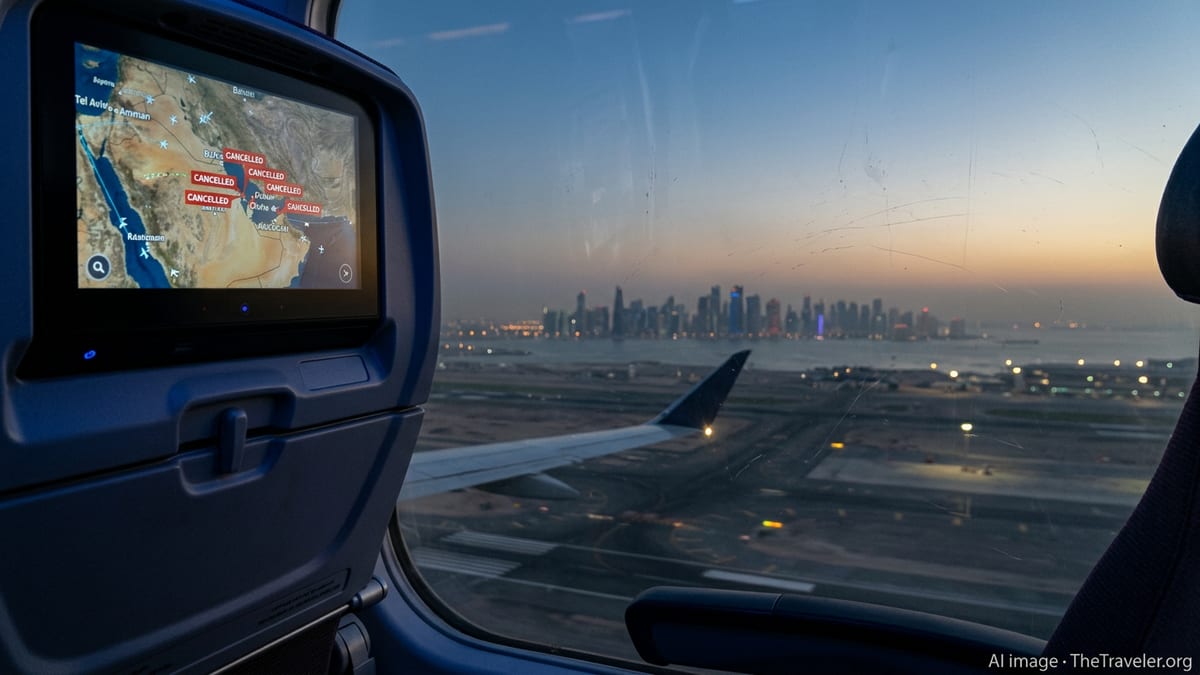
Jeddah Dropped As British Airways Recasts Its Middle East Map
Jeddah, long a strategic gateway between the United Kingdom and Saudi Arabia, is the headline casualty of British Airways’ latest schedule overhaul. According to industry reports and schedule filings, flights between London Heathrow and Jeddah will cease from 24 April 2026, only around eighteen months after the carrier’s much-publicised return to the Red Sea city in late 2024.
The withdrawal follows a period in which British Airways had been rebuilding its presence in Saudi Arabia, adding capacity to both Jeddah and Riyadh for the 2025 and 2026 summer seasons. Publicly available timetables had pointed to daily or near-daily operations using Boeing 787 aircraft, positioning Jeddah as an important market for both religious traffic and business travel.
The decision to drop the route reflects a reassessment of where aircraft can generate the strongest returns. Analysts note that Jeddah’s premium demand and connecting traffic are increasingly contested by regional rivals, making it harder for a European carrier to sustain year-round profitability when aircraft are needed elsewhere.
Passengers already booked on Jeddah services beyond the cut-off date are expected to be accommodated on alternative routings via partner airlines or offered refunds, while Saudi competitors and Gulf carriers are likely to move quickly to absorb displaced demand between western Saudi Arabia and the UK.
Riyadh Retained, Dubai, Doha and Tel Aviv Come Back In Slimmed Form
While Jeddah is being removed from the map, British Airways is not exiting the wider region. Riyadh remains a core destination, with previously announced increases in weekly frequencies still positioned as an important pillar of the airline’s Middle East presence. The Saudi capital continues to attract strong corporate traffic and government-related travel, helping justify sustained capacity.
Separately, flights to Dubai, Doha and Tel Aviv, which have faced suspensions and repeated disruptions amid regional instability and airspace restrictions, are set to return later in 2026 but at a noticeably reduced scale. Aviation industry coverage indicates that British Airways intends to resume these links with fewer weekly frequencies than in pre-crisis years, favouring targeted presence over market share battles with locally based giants.
This leaner approach signals a shift from volume-driven competition to a focus on connectivity for core customer segments. Maintaining at least limited service to Dubai, Doha and Tel Aviv allows the airline to preserve long-standing corporate contracts, loyalty links and alliance flows, while freeing aircraft for redeployment to markets that currently promise stronger yields and more stable operating conditions.
The patchwork recovery also underscores how fragile the Middle East aviation environment remains. Airlines continue to navigate changing security advisories, elevated insurance and fuel costs, and complex overflight restrictions, all of which can rapidly alter the economics of serving particular cities.
India Surges To The Center Of British Airways’ Network Strategy
The clearest beneficiary of British Airways’ Middle East retrenchment is India. New schedule announcements for the summer 2026 season point to a sharp increase in London–India flying, with additional weekly services to cities such as Delhi, Mumbai, Bengaluru and Hyderabad creating what travel trade reports describe as record capacity on the UK–India corridor.
According to recent industry analyses, British Airways is moving from roughly the high-fifties in weekly India flights to more than sixty services a week for peak periods, with thousands of extra seats added using both upgraded aircraft and new frequencies. Some of this growth is explicitly linked to aircraft released from routes such as Jeddah and reduced rotations in parts of the Middle East.
The strategic logic is clear. Demand for India–Europe travel has rebounded strongly, fuelled by technology sector links, growing student flows, and a sizable diaspora market. At the same time, geopolitical tensions and capacity constraints have slightly softened the dominance of traditional Gulf hubs on India–UK and India–US itineraries, creating space for European carriers to regain share on one-stop and non-stop routings.
British Airways is also seeking to deepen its role as a connector between India and North America via London. Additional India flights feed into a dense transatlantic network, giving the airline and its partners an opportunity to capture higher-yield connecting passengers who might previously have routed through Doha, Dubai or Abu Dhabi.
Global Power Play: Europe, the Gulf and India Vie For Long-Haul Flows
The rebalancing of British Airways’ schedule is part of a broader global aviation power play in which Europe, the Gulf and India are jostling for control of long-haul traffic flows. For more than a decade, Gulf megahubs such as Dubai and Doha have dominated connections between Europe, Asia and Australasia, leveraging large widebody fleets and aggressive network expansion.
Recent instability across parts of the Middle East, continued airspace restrictions and cost pressures have slightly altered that equation. While Gulf carriers remain formidable, their capacity growth on some corridors has slowed or been temporarily reversed. European airlines and airports are seeking to exploit any opening by strengthening direct links to fast-growing markets, particularly in South Asia.
India, in turn, is rapidly emerging as both an origin market and a potential hub in its own right. National and private carriers are ordering large numbers of new-generation aircraft, while international airlines are adding capacity into Indian gateways, increasingly viewing the country as a central node between Europe, Southeast Asia and Australia.
Within this context, British Airways’ decision to scale back in certain Middle Eastern cities and double down on India can be read as an attempt to align its network with where growth and geopolitical stability are most likely to coincide over the next several years.
What The Shake-Up Means For Travellers
For passengers, the immediate impact of the changes is mixed. Travellers who relied on British Airways’ nonstop Jeddah link will see fewer direct options between western Saudi Arabia and London, likely shifting to connections via Riyadh, Gulf hubs or European partners. Those flying to Dubai, Doha or Tel Aviv will regain British Airways options later in 2026, but with more limited frequency and potentially higher load factors on available flights.
On the other hand, passengers to and from India will benefit from a wider choice of departure times, more seats and, in some cases, improved aircraft products. Additional frequencies to Indian metros can ease pressure during peak holiday and student travel periods, and may increase the availability of both regular and reward seats on popular dates.
The changes also highlight how travellers’ routings between Europe, India and beyond may evolve. Itineraries that once automatically funneled through Gulf hubs could increasingly be split between direct India–Europe services and emerging hub strategies at Indian airports, with London as one of the key western gateways.
For now, British Airways’ network adjustments underline a central reality of post-pandemic aviation: routes once viewed as permanent fixtures can be reshaped quickly as airlines respond to shifting demand, costs and geopolitics. Jeddah’s removal from the British Airways map, set against India’s rising prominence, encapsulates how fluid the hierarchy of global air corridors has become.