

More news on this day
British Airways is slashing services across the Middle East and parts of Asia through at least May, cutting Dubai and other key Gulf and Southeast Asian routes as the United Kingdom joins Qatar, the UAE, Jordan, Bahrain, Oman, Thailand and Singapore in enduring some of the most extensive flight disruptions since the pandemic, according to airline notices and recent travel-industry reporting.
Get the latest news straight to your inbox!
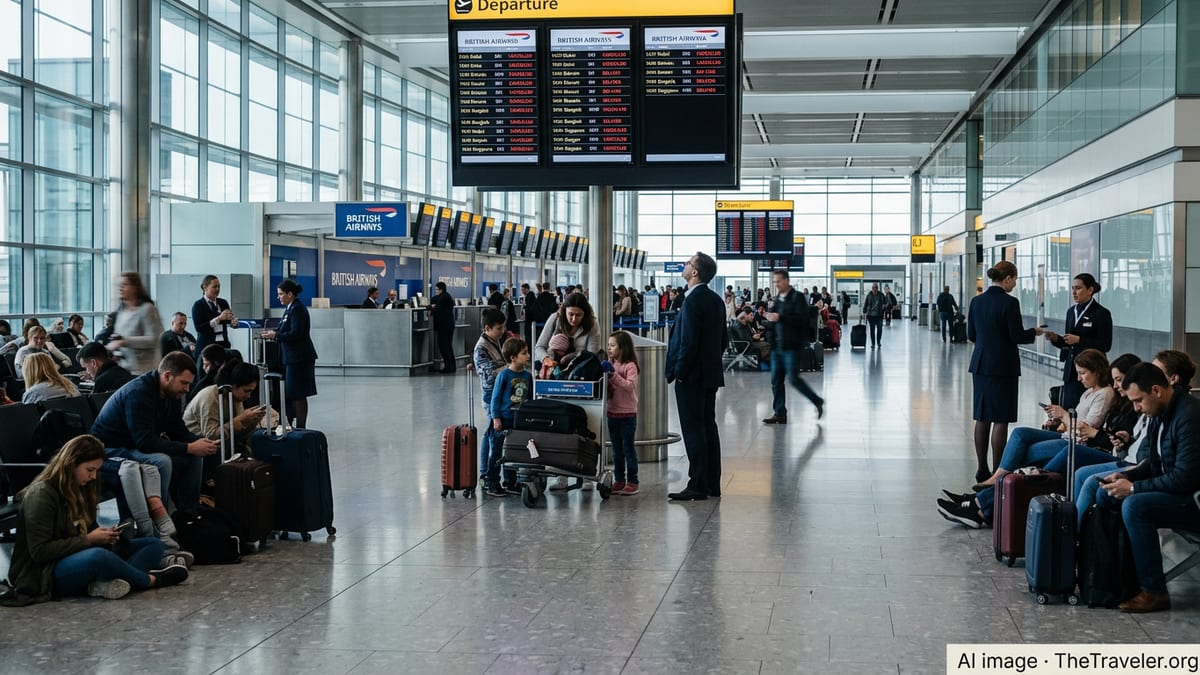
UK Flag Carrier Pulls Back From Dubai and Gulf Hubs
Publicly available disruption guidance and passenger communications indicate that British Airways has cancelled or sharply reduced flights to Dubai and several other major Middle Eastern cities as airlines navigate multiple regional airspace closures. Notices shared with customers in early March show flights to and from Amman, Bahrain, Doha, Dubai and Tel Aviv suspended until later in the month, with Abu Dhabi services paused until later in the year. These cuts come on top of a wider 2026 schedule reshaping that has already trimmed some long-haul capacity.
Travel-industry coverage and airport operations data point to London Heathrow as one of the European hubs most affected by these changes, with departures to Dubai, Abu Dhabi, Bahrain, Kuwait and Amman among those heavily disrupted. Airlines have been forced to either cancel flights outright or reroute around closed airspace, lengthening journeys and complicating crew and aircraft rotations. British Airways has been prominent among carriers scaling back services to the Gulf while attempting to protect core transatlantic and short-haul networks.
Reports from regional outlets in the Gulf describe widespread cancellations involving UK carriers on routes linking London with Doha, Dubai, Abu Dhabi and other key hubs. In some cases, affected passengers have been advised not to travel to the airport without confirmed rebooking, while others have been offered the option to defer trips into May or request refunds as airlines work through substantial backlogs.
Middle East Airspace Closures Ripple Across Global Networks
The flight cuts at British Airways are occurring against the backdrop of unprecedented airspace restrictions across parts of the Middle East. Recent reporting from aviation analytics firms and travel platforms highlights closures and constraints affecting Bahrain, Qatar and segments of Saudi and Gulf airspace, forcing carriers to suspend operations or adopt longer routings around affected regions. These changes have generated knock-on disruptions across Europe, with hundreds of cancellations and delays recorded in recent days.
Gulf carriers have also reduced services significantly. Coverage from outlets based in Doha and the UAE indicates that Qatar Airways and other regional airlines are operating only limited rescue or shuttle flights on select days while most regular schedules remain suspended. This has further restricted connectivity for travelers attempting to move between the UK, the Middle East and onward destinations in Asia and Africa.
Experts cited in industry analyses note that the concentration of major hub airports within a relatively small geographic area magnifies the impact of airspace closures. When Bahrain, Qatar or adjacent corridors are restricted, services linking London to Doha, Dubai, Abu Dhabi and beyond can be disrupted simultaneously, straining capacity on alternative routings via Europe or South Asia and leaving airlines with few immediate options to absorb displaced passengers.
Thailand, Singapore and Asian Connections Also Affected
The disruption has not been confined to the Gulf. Route maps and schedule adjustments show that British Airways, along with several partner airlines, has reduced capacity on connecting corridors that link the UK to Thailand, Singapore and broader Southeast Asia. While many of these Asian destinations remain technically served, the temporary loss or reduction of nonstops to Gulf hubs has weakened one of the main connecting bridges between Europe and Asia.
Travel commentary and passenger reports suggest that journeys between the UK and Bangkok, Singapore and other Southeast Asian cities are increasingly being rerouted via alternative European hubs or through limited services still operating across the Middle East. Longer journey times, tight connection windows and reduced seat availability have made it harder for travelers to secure replacements, especially for departures in March and April.
Industry observers indicate that British Airways is prioritizing resilience on core long-haul routes while working within the constraints created by jointly managed schedules with Gulf and Asian partners. With Qatar Airways and other alliance members also trimming services, the combined effect has been a thinning of options for itineraries that once relied on a network of closely timed connections through Doha, Dubai or Abu Dhabi.
Passengers Face Cancellations, Rebookings and Lengthy Detours
For travelers, the most visible impact of these changes has been a wave of cancellations and last-minute schedule revisions. Accounts shared on travel forums and social platforms describe passengers bound for or departing from Dubai, Doha and Bahrain being informed that their flights were cancelled or suspended until further notice, often within days of departure. Those already overseas have in some instances found themselves stranded as airlines worked to organize alternative routings or limited repatriation services via neighboring countries such as Oman or Saudi Arabia.
Customers have reported a mix of outcomes in securing new itineraries. Some British Airways passengers have been rebooked onto remaining services operated by the airline or by Oneworld partners, while others have described difficulty obtaining seats during peak disruption periods. Limited availability on alternative carriers out of the Gulf has further complicated rebooking efforts, particularly for those hoping to travel before schedules stabilize later in the spring.
Consumer advocates and legal specialists note that travelers departing from or returning to the UK may have protections under UK and European air passenger regulations, which can require carriers to provide rerouting, care and, in some circumstances, compensation when flights are cancelled. However, the extent of these obligations can vary depending on the cause of disruption and whether safety or government-imposed airspace restrictions are involved, leaving some passengers uncertain about what assistance they can reasonably expect.
Outlook Through May: Prolonged Uncertainty for UK–Middle East Travel
As of mid-March 2026, publicly available timetables and travel alerts suggest that British Airways and several major Gulf carriers are planning for a reduced operating pattern that could last well into May. While some airlines have begun to outline phased resumptions of limited services, analysts quoted in aviation and travel media caution that any improvement will depend on the pace at which regional airspace reopens and on broader security assessments.
For UK travelers, this means that routes linking London with Dubai, Doha, Abu Dhabi, Bahrain and Amman are likely to remain fragile in the near term, even if occasional flights operate. Prospective passengers are being advised in public guidance and media reports to monitor booking portals closely, keep contact details up to date with airlines and avoid assuming that long-booked flights will operate as initially scheduled.
Capacity constraints may also linger on connecting routes to Thailand, Singapore and other Asian destinations that traditionally rely on Gulf hubs as transit points. With airlines from the UK, the Gulf and Asia all trimming schedules simultaneously, competition for seats on alternative routings through Europe or South Asia is expected to remain intense, particularly around holiday periods and major events. Until a clearer timeline emerges for the full reopening of affected airspace, British Airways and its partners are likely to continue operating a patchwork of adjusted services rather than the dense, high-frequency networks travelers were accustomed to before the latest wave of disruption.