

More news on this day
A British Airways flight from London to Houston was forced into an unplanned diversion to eastern Canada after a medical emergency on board, leaving 265 passengers stranded for two days and prompting fresh scrutiny of how airlines handle long disruptions far from a flight’s intended destination.
Get the latest news straight to your inbox!
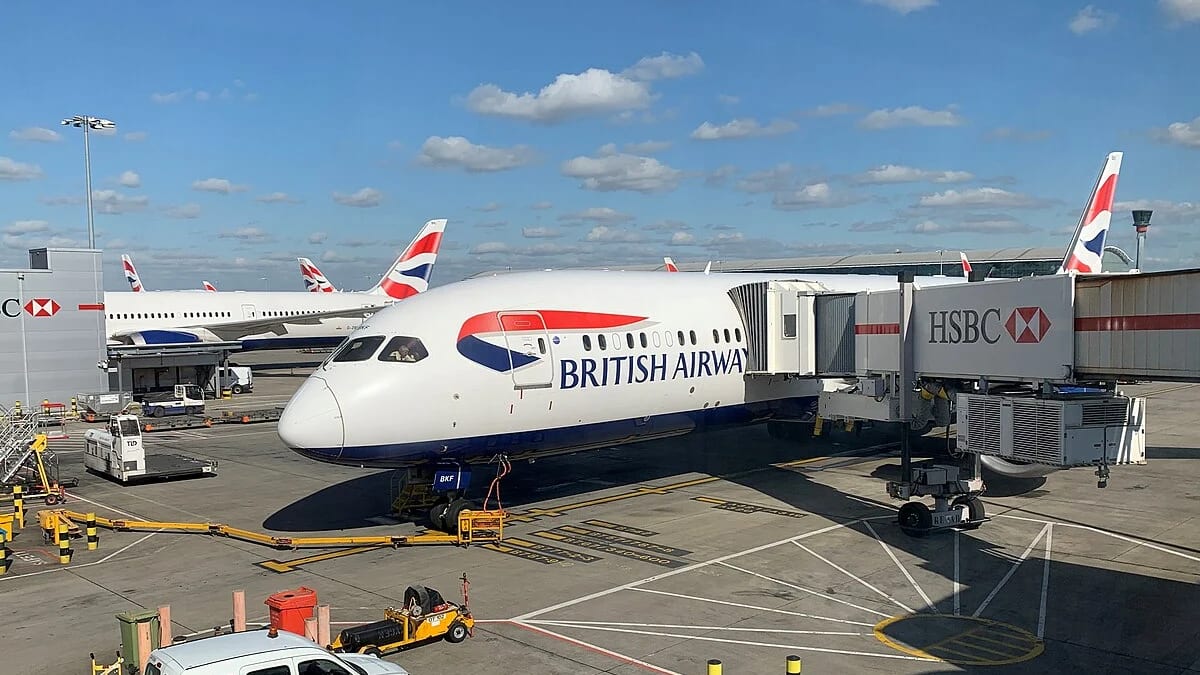
Image by Aviation A2Z
Unplanned Diversion Turns Into Two-Day Ordeal
Publicly available information indicates that the flight, operating from London Heathrow to Houston on March 31, 2026, diverted to St. John’s, Newfoundland, following a medical situation involving a passenger. The aircraft landed safely at the Canadian airport, but what began as an emergency stopover quickly evolved into an extended disruption for everyone on board.
Reports describe how the aircraft remained out of position after the diversion, with the original crew and most passengers unable to continue to Houston as scheduled. With limited spare long-haul aircraft and crew available in St. John’s, the airline faced operational and logistical constraints that made it difficult to resume the journey promptly.
Coverage of the incident notes that passengers ultimately spent around 48 hours in Canada before onward travel was arranged. During that time, they were placed in local hotels and rebooked on later services, but many described the experience as confusing and stressful, with little clarity on when they would finally reach Texas.
The case has drawn attention because the disruption did not stem from weather or air traffic control constraints, but from a chain of events triggered by the emergency landing. The length of the delay has fueled debate about how much contingency planning airlines should have in place for rare but foreseeable mid-route diversions.
Passenger Frustration Over Communication and Care
According to published coverage of the incident, several travelers expressed particular frustration with the flow of information once they were on the ground in Canada. Passengers reported periods of uncertainty in hotel lobbies and airport terminals, with changing departure estimates and limited updates on when replacement aircraft or crew might arrive.
Reports indicate that some passengers were uncertain about meal arrangements, reimbursement processes, and how to recover checked baggage during the prolonged stay. Although hotel accommodation was provided, accounts circulating online suggest that many travelers felt they were left to piece together the situation from departure boards and informal conversations rather than clear, proactive briefings.
Observers note that such communication gaps can significantly amplify the stress of an already disruptive event. After a long-haul overnight flight, many passengers were already fatigued when they landed unexpectedly in St. John’s. For those with tight connections, business commitments, or fixed vacation plans in Houston and beyond, the extended uncertainty reportedly had knock-on effects on onward itineraries.
Travel advocacy groups often highlight that transparent, timely information is as important to passengers as physical assistance such as hotel rooms or meal vouchers. The experience in Canada has therefore been cited as an example of how operational constraints, if not matched with strong communication, can damage traveler confidence in an airline’s crisis response.
What Passenger Rights May Apply in Canada and Beyond
The episode has also renewed interest in the complex patchwork of passenger rights that can apply when a disruption occurs mid-journey in another country. For diversions and extended delays at Canadian airports, the federal Air Passenger Protection Regulations set out minimum standards for treatment and, in some circumstances, compensation.
Under those rules, airlines generally must provide food and drink vouchers, reasonable accommodation for overnight delays, and rebooking at the earliest opportunity when significant disruption occurs. However, the availability of cash compensation can depend on whether the cause of the delay is considered within the airline’s control or linked to safety and medical factors that may fall outside those categories.
In this case, the trigger for the disruption was an onboard medical emergency, which is typically treated as an unavoidable safety-related event. Analysts note that this could limit straightforward compensation claims, even if the practical consequences for passengers resembled a standard cancellation or extended delay. Travelers may still be eligible for refunds of unused tickets or reimbursement of certain out-of-pocket expenses under the airline’s own policies.
Because the journey originated in the United Kingdom and was bound for the United States, some legal experts point out that British and European consumer rules, as well as international conventions such as the Montreal Convention, may also be relevant. Passengers seeking redress are likely to face a multi-layered process of determining which jurisdiction and rule set applies to each segment of their disrupted trip.
Operational Vulnerabilities on Long-Haul Routes
The diversion has highlighted the operational vulnerability of long transatlantic routes that pass far from an airline’s main hubs. When an aircraft must land at a smaller airport such as St. John’s, the carrier may lack spare widebody aircraft, maintenance support, and ready replacement crews, making it harder to restart the schedule quickly.
Industry analysts note that many long-haul fleets are tightly scheduled, with aircraft cycling rapidly between intercontinental routes. Any unplanned stop can therefore cascade into crew duty-time limitations, missed maintenance windows, and disrupted rotations for subsequent flights. In such conditions, reassigning another aircraft from a busy hub can create fresh problems elsewhere in the network.
Observers also point to cost-control strategies over recent years, where airlines have reduced the number of standby aircraft and reserve crews to keep expenses down. While this approach can be efficient in normal operations, it leaves carriers with fewer options when rare events like medical diversions occur at outstations that lack extensive infrastructure.
Specialists in airline scheduling suggest that this incident may prompt renewed discussion about whether additional resilience is needed on heavily trafficked transatlantic corridors. Options could include greater use of cross-airline rescue agreements, more flexible crew positioning plans, or pre-arranged contracts with local service providers at potential diversion airports.
Growing Scrutiny of Disruption Handling Across Global Aviation
The British Airways delay in Canada comes amid a wider pattern of high-profile disruption events affecting travelers in North America and Europe in early 2026. Recent weeks have seen large numbers of delays and cancellations at major airports, as multiple airlines struggle with tight staffing, congested hubs, and weather-related challenges.
Travel industry commentary notes that passengers are becoming more vocal about lengthy disruptions, especially when they feel stranded without clear guidance. Social media posts, consumer forums, and travel blogs frequently document experiences of missed connections, inadequate assistance, and complex claims processes, building public pressure for stronger enforcement of existing rules.
Regulators in several jurisdictions have been reviewing how effectively airlines comply with passenger rights regimes and how quickly complaints are resolved. Consumer advocates argue that consistent application of standards, along with penalties for non-compliance, is essential to encourage airlines to prioritize care and communication during irregular operations.
For British Airways, the Canada diversion is the latest in a series of operational challenges that will be closely watched by frequent flyers and industry analysts. How the airline ultimately handles reimbursements, complaints, and goodwill gestures for the 265 affected passengers may serve as an informal benchmark for how major carriers respond when an unforeseen emergency turns into a multi-day disruption far from home.