

More news on this day
British Airways passengers on a London to Houston flight diverted to St. John’s, Newfoundland, have reported being stranded for nearly two days, describing the carrier’s handling of the disruption as an “utter disgrace.”
Get the latest news straight to your inbox!
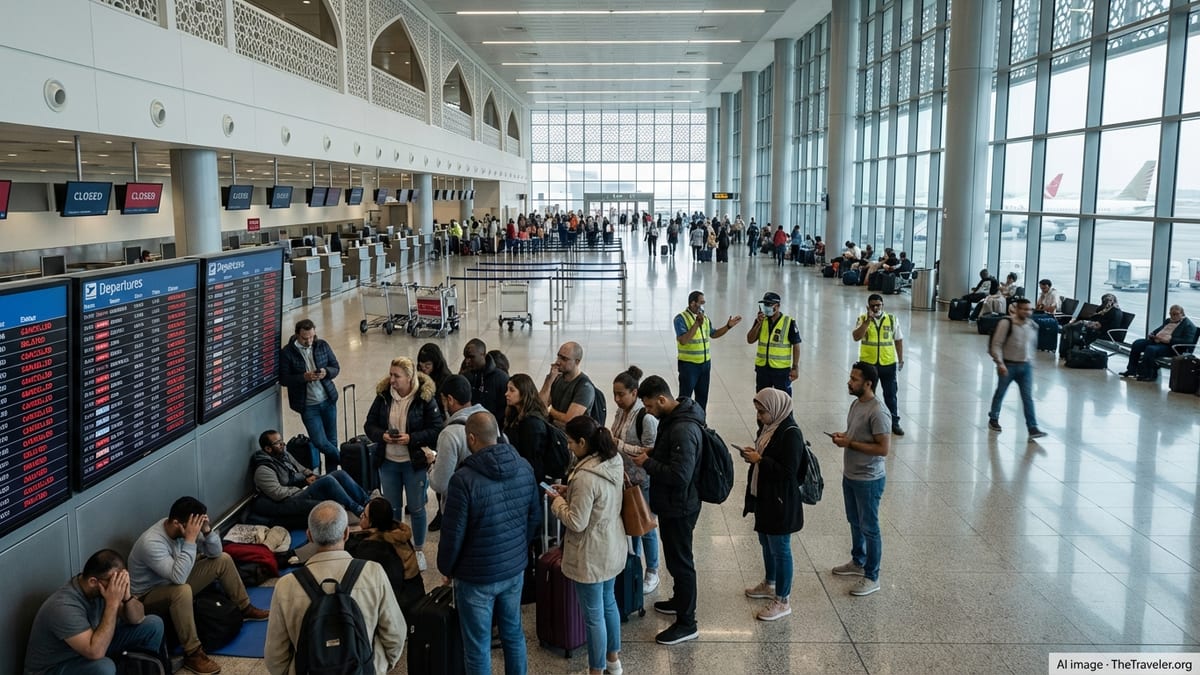
Medical Emergency And Technical Issue Trigger Unexpected Diversion
Publicly available flight tracking data and local reports indicate that British Airways service BA195 from London Heathrow to Houston was diverted over the North Atlantic and routed to St. John’s International Airport in Newfoundland earlier this week. The Boeing 787 Dreamliner, which had been scheduled to land at George Bush Intercontinental Airport in Houston, instead touched down in eastern Canada after a midair incident prompted the crew to seek an unscheduled stop.
Accounts shared on aviation forums and social media suggest that the diversion was initially linked to a medical situation on board, followed by an engineering concern that prevented the aircraft from continuing its journey. Travel industry coverage notes that all passengers and crew disembarked safely at St. John’s, shifting the focus from in-flight safety to the ground-level challenge of rebooking hundreds of travelers far from their intended destination.
Coverage in specialist travel outlets describes the diversion to St. John’s as an uncommon, but operationally logical, choice for a westbound transatlantic flight in difficulty. The airport’s location on the Great Circle route between Europe and North America makes it a frequent contingency option, even though major long-haul carriers such as British Airways do not maintain the same level of ground infrastructure there as at their primary hubs.
Two Days In Limbo On A Remote Stopover
What began as an emergency diversion quickly turned into an extended, unplanned layover. Posts from passengers and family members on discussion platforms describe travelers remaining in Newfoundland for close to 48 hours while awaiting onward transport. One widely circulated comment referred to British Airways as an “utter disgrace,” reflecting intense frustration with both the length of the delay and the handling of basic needs such as accommodation and access to luggage.
Multiple accounts state that passengers were taken to local hotels, with onward travel rescheduled for a later evening departure on a replacement aircraft. However, the lack of British Airways staff on site reportedly complicated efforts to obtain clear information about new flight times, connections, and options for vulnerable travelers, including families with young children and elderly passengers.
Some travelers highlighted the particular challenge of being stranded in St. John’s, which, while a provincial capital, is still a comparatively small and weather-exposed airport by global standards. With limited daily long-haul services and no direct British Airways presence, arranging spare aircraft and crew required time, resulting in a prolonged disruption that rippled through connecting itineraries in the United States and beyond.
Complaints Over Communication, Baggage And Customer Care
The most pointed criticism from stranded passengers centers on communication. According to travel forums and social media posts, updates about the evolving situation were sporadic, with some travelers learning details about the diversion and subsequent delays from online flight trackers and third-party news coverage rather than from the airline’s own channels.
Another flashpoint has been the handling of checked baggage. Passengers report being kept apart from their luggage during the extended stay in Canada, a move consistent with standard security and customs procedures for a mid-journey diversion, but one that left some travelers without access to medication, winter clothing, or essentials for children. Questions about whether more could have been done to retrieve priority items became a recurring theme in online complaints.
Customer service expectations also came under scrutiny. Public posts describe long waits to reach call centers, conflicting information about rebooking options, and uncertainty over entitlement to meals and accommodation. Travel rights commentators note that under European Union and United Kingdom air passenger protection frameworks, carriers are generally required to provide care and assistance during long disruptions, even when the original cause involves a medical emergency or technical fault.
Airline Responsibilities Under EU And UK Passenger Rules
Legal and consumer travel resources point out that journeys beginning in the United Kingdom fall under the United Kingdom’s retained version of EU Regulation 261, which sets out clear obligations for airlines during extended delays and unscheduled stopovers. Regardless of ultimate compensation eligibility, carriers are expected to provide food, refreshments, hotel rooms when necessary, and transportation between the airport and accommodation.
In complex cases such as a diversion triggered by a medical emergency followed by technical checks, experts note that compensation may not always be payable if the underlying cause is deemed to be outside the airline’s control. However, the duty of care generally still applies while passengers are waiting to be rerouted. That distinction between cash compensation and immediate welfare support has been at the heart of many traveler complaints around high-profile disruptions in recent years.
Industry analysts also observe that diversions to airports without a full-service presence test an airline’s resilience. Reliance on local handling agents, limited spare aircraft, and tight crew duty-time rules can quickly stretch operations, particularly when disruptions coincide with broader network congestion in Europe and North America. The Newfoundland incident is being cited in some commentary as another example of how quickly a single midair problem can cascade into days of travel uncertainty.
Broader Scrutiny Of British Airways Service Levels
The difficulties in St. John’s come at a time when British Airways, like many large European carriers, is already under scrutiny over reliability, staffing levels, and post-pandemic customer service standards. Recent travel analysis has highlighted a series of weather-related and operational disruptions across the airline’s network, feeding a perception among some frequent flyers that the carrier’s response to irregular operations has become less robust.
Consumer advocates argue that social media has amplified the visibility of such incidents, as passengers share real-time photos and accounts from airport lounges, hotel lobbies, and diverted stopovers. In the case of the Newfoundland diversion, images and descriptions of families stranded far from home have quickly circulated, reinforcing calls for clearer communication protocols and more proactive contingency planning.
As passengers from the affected flight finally continue their journeys to Houston and onward destinations, attention is likely to turn to how claims are processed and whether the episode prompts internal reviews. For travelers watching from afar, the incident serves as a vivid reminder that while transatlantic flying is statistically safe, the customer experience when things go wrong can vary dramatically from one disruption to the next.