

More news on this day
British Airways has issued an urgent travel advisory and suspended multiple services across the Middle East after Iran’s airspace closure and regional missile strikes triggered a cascading shutdown of routes and hubs vital to UK travellers.
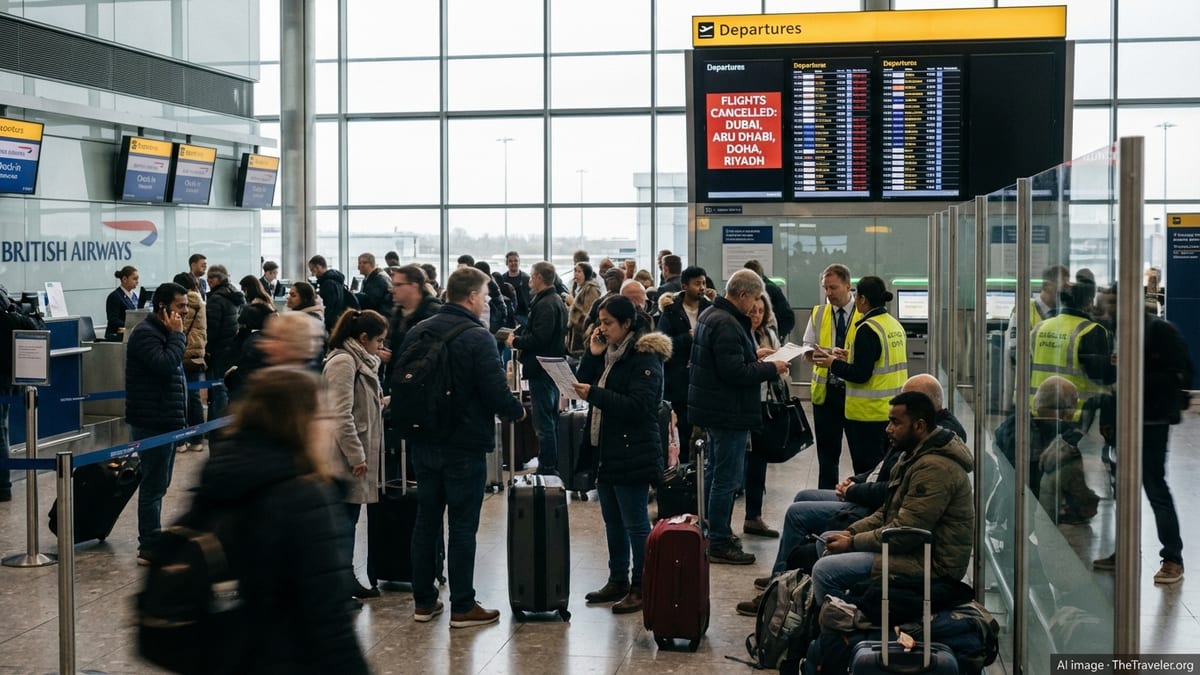
BA Halts Key Routes as Iran Conflict Shuts Regional Skies
British Airways has cancelled flights to Tel Aviv and Bahrain until at least 3 March and halted today’s service to Amman, as the airline races to keep passengers and crew clear of escalating military activity linked to Iran. The moves follow United States military strikes on Iranian targets and retaliatory missile launches that have led to widespread airspace closures across the region.
The carrier confirmed that at least one overnight flight from London Heathrow to Doha was forced to turn back to the United Kingdom, as conditions deteriorated and additional restrictions came into force. British Airways said it is closely monitoring developments and that further schedule changes remain possible at short notice.
The airline’s network planners have already been routing services far south of Iran and Iraq to avoid high-risk skies, increasing flight times to India and parts of Asia. With Iranian airspace now formally closed to commercial traffic and several Gulf states intermittently restricting overflights, the scope for safe, efficient rerouting has sharply narrowed.
British Airways has urged customers with upcoming departures to the Middle East, India and Southeast Asia to check the latest status of their flights before travelling to the airport, warning that last-minute cancellations and diversions are likely as the situation evolves.
Foreign Office Red Alert Adds Pressure on British Travellers
The UK Foreign, Commonwealth and Development Office has intensified its warnings, formally advising against all travel to Iran and setting its highest alert levels for Israel and the Palestinian territories. Updated guidance notes that Iranian airspace is now closed and that travel insurance may be invalidated for anyone who chooses to ignore official advice.
Authorities are also cautioning British nationals in Gulf states, including Qatar, the United Arab Emirates, Bahrain and Kuwait, to be prepared for sudden airspace closures, shelter-in-place orders and further disruption to flights. The Foreign Office is encouraging citizens in affected countries to register their presence with consular services to receive direct updates and potential evacuation information.
Officials estimate that tens of thousands of British nationals are currently stranded or delayed across the region after hubs such as Dubai, Abu Dhabi and Doha were forced to suspend operations during missile alerts. The government is drawing up contingency plans for what could become one of the largest peacetime consular operations in recent years.
While there is no blanket advice against travel to every Gulf destination, ministers have stressed that conditions can change rapidly and that travellers must consider whether non-essential trips should be postponed given the heightened security risk and uncertain flight operations.
What the British Airways Advisory Means for Your Trip
For ticketed passengers, the British Airways advisory means that anyone booked to fly to Tel Aviv, Bahrain or Amman in the coming days is likely to see their flight cancelled or rescheduled. The airline has said customers on affected services will be contacted directly and offered refunds, rebooking on later dates or alternative routing where possible.
Travellers due to transit through Gulf hubs on British Airways codeshare or interline tickets may face indirect disruption even if their own BA-operated leg is still scheduled. With partner airlines suspending services and several countries closing or restricting airspace, onward connections can no longer be guaranteed. Passengers are being advised to build in flexibility, allow for long layovers and be prepared to change itineraries at short notice.
Insurance policies are another critical consideration. Many UK travel insurers exclude cover when travellers enter areas that the Foreign Office has flagged with do not travel or all but essential travel warnings. Holidaymakers are being urged to check their policies carefully and to speak with providers before deciding whether to proceed with trips involving routes that would normally cross Iranian or neighbouring airspace.
BA’s safety-first posture aligns with a broader industry pivot toward conservative routing in conflict zones. However, the resulting detours can add several hours to long-haul journeys, increase fuel costs and reduce overall capacity, meaning fewer available seats and higher prices on some remaining routes.
Middle East Airspace Closures Ripple Across Global Networks
The Iran conflict has triggered a domino effect across the international aviation system. Iran, Israel, Iraq and Syria have all imposed sweeping airspace restrictions, while hubs in the United Arab Emirates, Qatar, Kuwait and Bahrain have experienced temporary shutdowns as missile threats emerge and civil aviation authorities act to protect aircraft on the ground and in the air.
Major European carriers, including Lufthansa and Air France, have suspended services to several Middle Eastern destinations and are avoiding Iranian and Iraqi skies. Gulf airlines such as Emirates, Qatar Airways and Etihad have implemented rolling cancellations and diversions, at times grounding entire banks of long-haul flights when alert levels spike.
For travellers originating in Europe and North America, this has meant marathon journeys to Asia and Australasia, with rerouted paths skirting far to the south over Saudi Arabia, the Red Sea or Central Asia. Flight-tracking data shows detours adding three to five hours in the air on some itineraries, straining crew duty limits and complicating aircraft rotations.
Industry analysts note that if current restrictions persist, airlines may be forced to trim schedules, consolidate frequencies and temporarily withdraw certain aircraft types from the region, further reducing options for leisure and business travellers alike.
Practical Advice for Passengers Caught in the Disruption
For British Airways customers already on the move, the most urgent step is to stay informed. Travellers should monitor airline alerts, local news and Foreign Office advisories multiple times a day, as security assessments and flight permissions can change within hours.
Passengers stranded at airports in the Gulf or wider Middle East are being encouraged to remain inside secure terminal areas when safe to do so, keep travel documents and essential medication accessible, and maintain regular contact with family or employers at home. Queues at airline service desks are reportedly long, so using apps and call centres to manage bookings can be more effective where connectivity allows.
Prospective holidaymakers still in the planning phase face a more strategic decision. While many destinations in the region remain peaceful away from military targets, the airspace closures and heightened tensions have introduced a level of uncertainty that may not align with family holidays or tightly scheduled business trips. Travel agents report a surge in inquiries for alternative routes via southern Europe, North Africa and direct services that avoid the Middle East entirely.
British Airways has reiterated that safety is its overriding priority and that it will adjust its network as required for as long as the Iran conflict continues to pose a credible risk to civil aviation. For now, flexibility, patience and close attention to official guidance are the key tools for travellers hoping to navigate an unpredictable and fast-moving situation.