

More news on this day
British Airways has suspended services to several major Middle Eastern destinations, severing vital links between London Heathrow and key Gulf and Levant hubs just as a new wave of regional conflict and airspace closures sends shockwaves through global aviation networks.
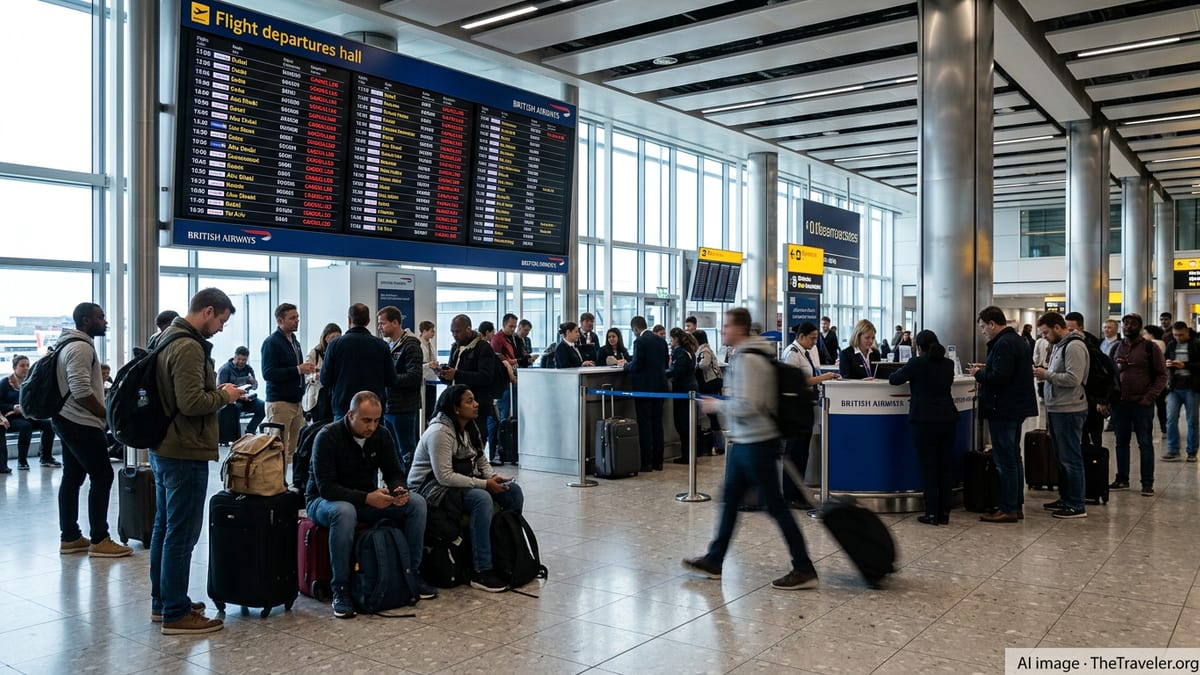
Key British Airways Routes Fall Silent
British Airways confirmed that it is currently unable to operate flights between London Heathrow and Abu Dhabi, Amman, Bahrain, Doha, Dubai and Tel Aviv, citing the rapidly changing security situation and widespread airspace restrictions across the region. The suspensions affect some of the carrier’s most strategically important long-haul routes, many of which feed large volumes of connecting traffic from North America and Europe into Asia and Africa.
The airline has described the move as a safety-first response, stressing that specialist teams are monitoring developments around the clock. Services had already been under pressure in recent months, with earlier pauses to Tel Aviv and contingency plans for operations into Gulf hubs. The latest escalation has now pushed British Airways to halt regular schedules on multiple routes simultaneously.
In a rare bright spot, the carrier has managed to secure permissions to operate a special flight from Muscat to London in the coming days, using Omani airspace that remains open. That one-off operation is intended primarily to bring stranded customers back to the United Kingdom, underscoring how fragmented the regional airspace map has become.
Passengers booked to travel between London and the affected Middle Eastern cities over the coming weeks are being offered the option to move their journeys to later dates without change fees, although actual seat availability remains tight as schedules are rewritten at short notice.
Ripple Effects Across Global Hubs and Alliances
The grounding of British Airways services into major Gulf and Levant gateways is reverberating far beyond the immediate region. Dubai, Abu Dhabi and Doha play an outsized role in global connectivity, functioning as mega-hubs that funnel travelers between Europe, the Americas, Asia and Australasia. When a European network carrier such as British Airways pulls out, even temporarily, thousands of itineraries built around seamless one-stop connections are thrown into disarray.
Other international airlines are making similarly stark adjustments. Several European and Asian carriers have suspended or curtailed operations into Israel and parts of the Gulf, while many more have rerouted flights to avoid Iranian, Iraqi and Israeli airspace, adding hours to journey times. That in turn creates knock-on effects in aircraft and crew rotations, leading to delays and cancellations far from the Middle East itself.
Industry analysts note that for members of the oneworld alliance, British Airways’ retreat from key Middle Eastern points removes a familiar bridge for high-yield corporate traffic and long-haul leisure travelers alike. Some of that demand may shift to partner airlines operating via alternative hubs, but the sudden absence of a London-based flag carrier on these corridors leaves a significant gap.
Gulf carriers such as Emirates, Etihad and Qatar Airways are adjusting capacity and schedules amid the turbulence, but they too are constrained by evolving airspace closures and changing risk assessments. The resulting patchwork of partial suspensions, diversions and limited resumptions has created one of the most complex operational environments the industry has faced in years.
Travelers Face Cancellations, Detours and Longer Journeys
For passengers, the suspension of British Airways’ Middle East services has translated into a mix of abrupt cancellations, lengthy rebookings and uncertain transit plans. Many travelers heading to or from Asia and Africa had built their itineraries around a British Airways leg into Gulf hubs, followed by onward connections on partner or local airlines. With those first segments now pulled, entire trips must be restructured.
Call centers and airport ticket desks are reporting heavy demand as customers seek refunds, alternative routings or date changes. In some cases, British Airways is able to reroute travelers via European partner hubs or onto flights operated by other carriers, but capacity on those alternatives is limited and often more circuitous. Passengers who do secure new itineraries are frequently facing additional stops, overnight layovers or substantially longer total journey times.
Stranded travelers already in the region are confronting a different set of challenges. With schedules changing by the hour, many are shuttling between hotels and airports while they wait for confirmation of rescue flights or new routing options. Governments, including the United Kingdom, have begun to coordinate limited charter and commercial services from safer nearby airports to help citizens leave the most affected areas.
Travel agents and corporate travel managers say the disruption is particularly acute for business travelers, many of whom rely on tightly timed, last-minute bookings to and through Gulf hubs. Companies are now being urged to build greater buffers into trip planning, avoid non-essential travel to affected destinations and maintain close contact with airlines for real-time updates.
Operational and Commercial Pressures Mount for British Airways
The sweeping suspensions across the Middle East come at a delicate moment for British Airways, which has been rebuilding its long-haul network amid strong post-pandemic demand and rising competition on key international routes. Flights to Dubai and Doha, in particular, are typically strong revenue generators, operated by widebody aircraft that also carry high volumes of cargo.
Taking those aircraft out of regular rotation forces the airline to reassign capacity to other long-haul destinations or keep jets on the ground, both of which carry financial and logistical costs. Crew planning adds another layer of complexity as pilots and cabin crew originally rostered for Middle Eastern services are reassigned, sometimes at short notice, to different fleets or destinations.
Beyond the immediate revenue hit, the suspensions risk eroding some of the competitive advantages British Airways holds as a London-based global connector. Passengers who shift their loyalty to rival airlines offering more stable access to Gulf and Levant gateways may not immediately return once services resume, especially frequent flyers accustomed to flexible schedules and multiple daily departures.
Nonetheless, aviation safety experts broadly support the carrier’s caution, arguing that short-term commercial losses are an acceptable price for minimizing exposure to conflict-affected airspace. Insurers, regulators and national security agencies all play a role in advising airlines on risk thresholds, and most major carriers are now erring on the side of conservatism when routing near volatile regions.
What Comes Next for the Middle East Network
With the regional security outlook still unsettled, industry figures expect British Airways to maintain a rolling review of its Middle East network over the coming weeks. The airline has not set firm dates for restoring normal services to Abu Dhabi, Amman, Bahrain, Doha, Dubai or Tel Aviv, instead signaling that resumptions will depend on a sustained improvement in the risk environment and the reopening of key air corridors.
Any eventual restart is likely to be gradual, beginning with limited frequencies and daytime-only operations on the most strategically important routes, followed by a phased return to full schedules if conditions allow. That pattern has been seen before with services to Israel and other high-risk destinations, where airlines have cautiously rebuilt capacity in step with security assessments.
In the meantime, travelers are being urged to remain flexible, to check flight status repeatedly in the days and hours before departure, and to consider alternative routings that avoid the most congested or restricted airspace. Travel insurance policies that cover security-related disruption and additional accommodation costs are also being scrutinized more closely by both leisure and corporate customers.
For the global aviation system, the latest British Airways suspensions underscore how quickly a regional crisis can reverberate across continents. As long as Middle Eastern airspace remains fragmented and unpredictable, airlines and passengers alike will be navigating an uneven recovery, with London’s flagship carrier now at the center of one of the most significant network reshuffles in recent years.