

More news on this day
A British Airways service from London to Houston was diverted to eastern Canada following a medical emergency, leaving 265 passengers facing a two day disruption and sparking renewed debate over how airlines care for travellers during unexpected diversions.
Get the latest news straight to your inbox!
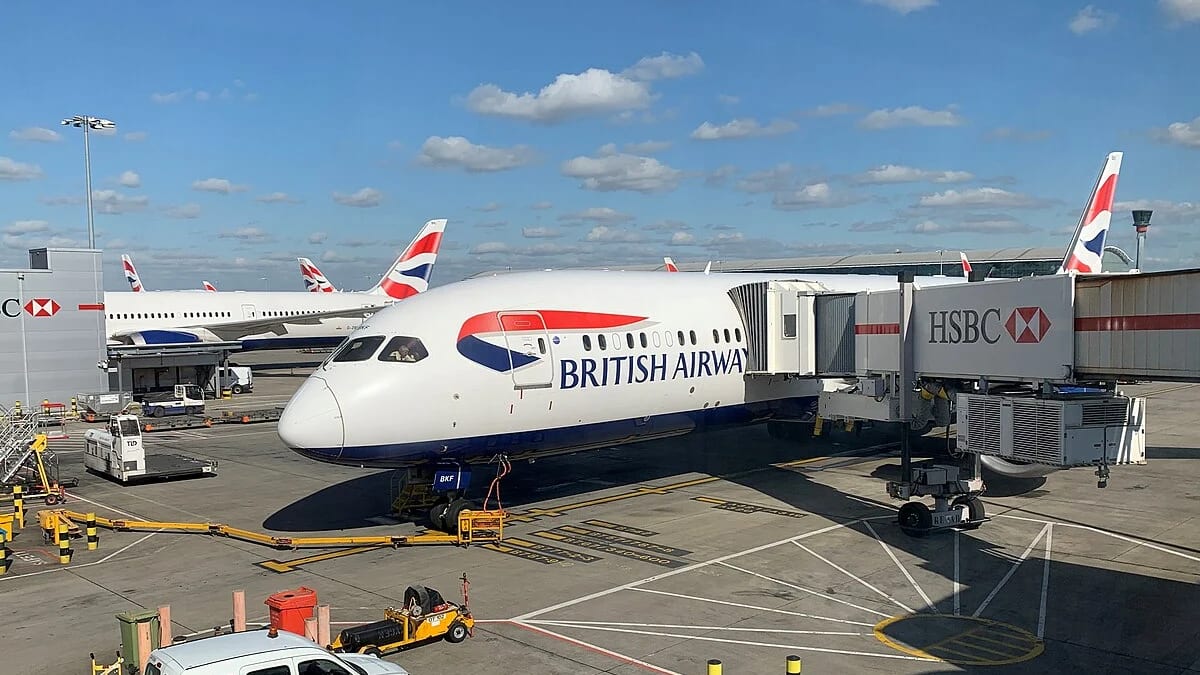
Medical Emergency Triggers Unplanned Stopover
Publicly available information indicates that the disruption began when the London to Houston flight experienced a medical situation on board and diverted to the nearest suitable airport in eastern Canada so a passenger could receive treatment on the ground. Aviation reports describe the aircraft involved as a Boeing 787 operating a transatlantic service that would ordinarily continue across the United States before landing in Texas.
The diversion itself followed standard safety practice, with flight crews trained to prioritize access to medical support over schedule. The resulting landing in a relatively remote Canadian airport, however, created a complex operational challenge, as the location was not equipped to handle a full long haul transfer of hundreds of passengers with onward international connections.
Once on the ground, the aircraft could not simply refuel and depart as originally planned. Operational constraints, crew duty limits and the need for maintenance checks meant the flight was unable to resume its journey within the same operating day. As a result, an unscheduled stopover that might typically last only a few hours stretched into a two day stay for those on board.
Passengers Report Confusion and Long Delays
Accounts compiled in aviation and general news coverage describe a mounting sense of frustration among the 265 passengers as they realized the disruption would not be brief. Travellers reported uncertainty over when they would be able to leave, with some suggesting that information about new departure times and accommodation was slow to arrive or changed repeatedly.
Several reports indicate that passengers were initially kept on the aircraft for an extended period before being moved to local facilities. With the diversion airport situated in a sparsely populated area of eastern Canada, hotel capacity and ground transport options were limited, making it more difficult to quickly house and move such a large group.
Some passengers also highlighted practical concerns such as insufficient access to clothing, medication and basic travel necessities as the delay wore on. For travellers already at the end of long journeys, including families and older passengers, the unscheduled two day stay added both physical and emotional strain.
Operational Challenges at a Remote Canadian Airport
The incident underscores how diversions to smaller or more remote airports can expose weak points in global airline networks. While large hubs routinely accommodate diverted wide body aircraft, eastern Canadian airports that primarily serve regional traffic may not have the ground staff, handling contracts or spare aircraft needed to quickly reposition a long haul service.
Reports suggest that bringing in a replacement crew or a new aircraft to continue the journey to Houston was not straightforward. Crew duty rules limit how long pilots and cabin crew can operate without rest, and the limited number of British Airways crews positioned in North America meant options were constrained once the aircraft landed at an unplanned destination.
Weather, availability of stand space, and coordination with local ground handling providers may also have contributed to the length of the delay. While safety regulators generally view diversions as an essential risk control measure, the practical realities on the ground often leave passengers facing extended waits before operations can be fully restored.
Questions Over Care, Communication and Passenger Rights
The episode has renewed scrutiny of how major carriers communicate with and care for customers affected by extended diversions. According to consumer advocacy guidance and public information on air passenger rights, travellers on long delays are typically entitled to meals, hotel accommodation where necessary, and assistance with communication, especially when stranded abroad.
In this case, accounts from the ground suggest that some passengers felt support was uneven, with confusion over meal vouchers, limited updates on the status of the aircraft, and uncertainty about whether alternative routings would be arranged. The fact that the disruption followed a medical emergency, generally classified as an extraordinary circumstance, may affect eligibility for financial compensation under applicable passenger rights regimes, but does not remove an airline’s responsibility to provide care during the delay.
Travel specialists often advise passengers caught in similar situations to retain receipts for food, transport and accommodation, and to document timelines as accurately as possible. Such records can be important when seeking reimbursement or clarifying what assistance was actually provided versus what is set out in airline policies.
Broader Implications for Long Haul Diversions
The British Airways diversion in eastern Canada adds to a growing body of cases in which long haul flights encounter significant disruption after unexpected landings. Previous incidents involving medical emergencies or technical issues on transatlantic routes have highlighted similar themes of remote airports, limited local infrastructure and extended passenger stays.
Aviation analysts note that as airlines optimize fleets and schedules, there is less slack in the system to absorb major irregular operations. When a wide body aircraft is taken out of position by a diversion, knock on effects can ripple through the network for days, impacting subsequent flights and complicating efforts to quickly rebook passengers.
For travellers, the incident serves as a reminder that even routine long haul journeys can be affected by rare but consequential events. Travel planning experts frequently recommend carrying essential medication and a change of clothes in cabin baggage, as well as maintaining flexible arrangements at the destination, particularly on trips involving tight connections or onward domestic flights.
Industry observers suggest that the episode may prompt fresh discussion within airlines about contingency planning for diversions to remote airports, including prearranged agreements with local hotels, ground transport providers and medical facilities. While safety considerations will continue to drive decisions in flight, the experience of the 265 passengers stranded in Canada for two days illustrates how the quality of care and communication on the ground can shape public perception long after a diversion ends.