

More news on this day
British Airways is preparing a substantial long-haul expansion for the upcoming winter season, with schedule filings and network updates indicating more capacity on high-demand leisure and business routes across North America, Asia and the Middle East.
Get the latest news straight to your inbox!
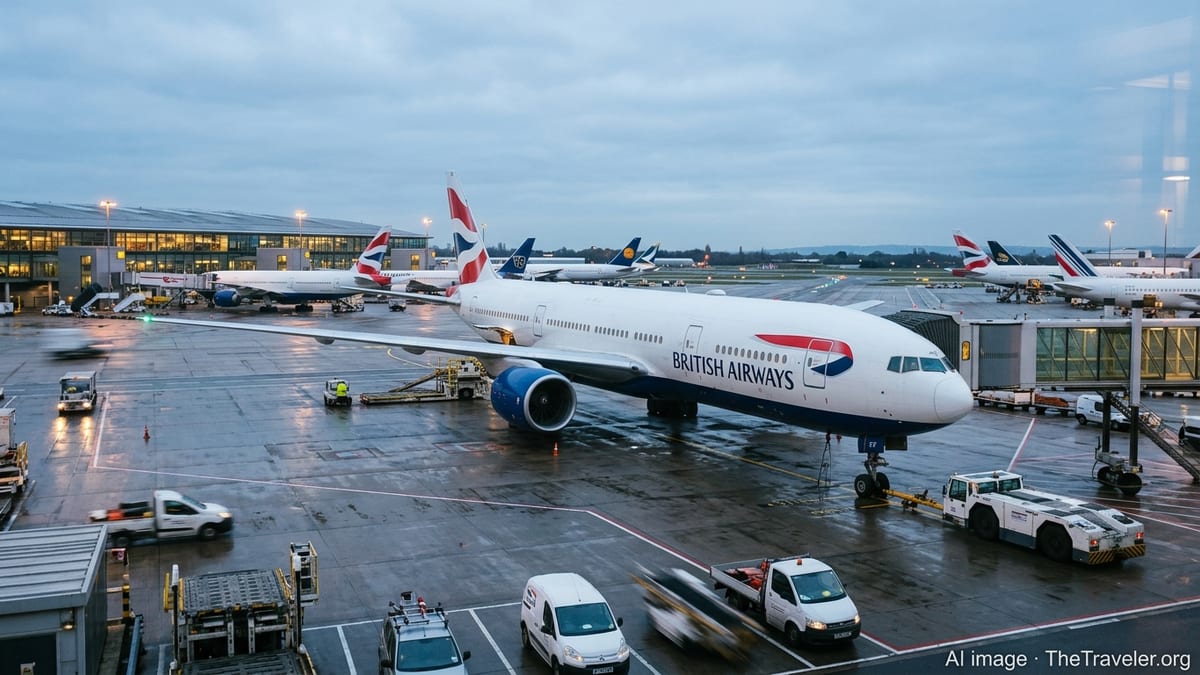
Winter Schedule Points to Larger Long-Haul Network
Publicly available timetable data and recent industry analyses indicate that British Airways is shaping its winter schedule around a broader long-haul footprint from London Heathrow and Gatwick. While some short-haul routes are being trimmed or reshaped, capacity appears to be shifting toward intercontinental services where demand for both holidays and corporate travel remains resilient in the colder months.
The winter build-up follows a period of steady network adjustments, including the gradual restoration of services that were reduced during previous seasons and the introduction of new destinations in Asia and the Caucasus during 2025. Those additions have expanded the airline’s global reach and created more options for connecting traffic over its London hubs.
Timings filed into global distribution systems suggest that British Airways is focusing on longer sectors that can support premium cabins and cargo revenue, a combination that has been central to its post-pandemic recovery strategy. The airline is also using the winter schedule window to refine its mix of Heathrow and Gatwick services as it reacts to changing travel patterns.
More Seats on Key Transatlantic and North American Routes
The transatlantic market is expected to be a major beneficiary of the winter expansion. Industry reports tracking schedule filings for the 2025 to 2026 period show additional frequencies and larger aircraft planned on routes linking London with core U.S. gateways, including New York, Miami and Dallas, compared with recent winters.
Analysts note that British Airways has been steadily rebuilding its U.S. presence after previous seasonal suspensions and capacity cuts, using a mix of Boeing 777 and 787 aircraft fitted with upgraded business-class cabins. The winter growth is set against a backdrop of strong demand on corporate-heavy routes and robust leisure bookings to Florida, the Caribbean and the U.S. West Coast.
North American capacity changes are also intertwined with the carrier’s joint-business and alliance relationships, which allow it to coordinate schedules and fares with partner airlines. For winter travelers, the result is expected to be more choice of departure times and a wider spread of fare options on busy days, particularly around holiday peaks.
Asia and Middle East Flights Repositioned for Year-Round Demand
In Asia, British Airways is positioning several long-haul routes to capture both winter sun seekers and returning business traffic. Trade coverage of the airline’s recent schedule announcements highlights that Bangkok, previously focused on the winter season, is being developed into a year-round route with higher winter frequencies, reflecting consistent demand from both leisure and connecting passengers.
Other Asian destinations such as Kuala Lumpur, which joined the network in 2025, provide additional long-haul options over the winter months and strengthen the carrier’s presence in Southeast Asia. These flights support onward connections across the region via local partners, helping to fill widebody aircraft during periods when some European demand softens.
The Middle East also remains a focal point for winter planning. Published schedules show British Airways adjusting capacity on routes to key Gulf and Saudi cities, responding to strong flows of business, religious and visiting-friends-and-relatives travel. The airline is balancing these increases with earlier seasonal pauses on lower-demand routes, using limited widebody capacity where it can earn the highest returns.
Balancing Long-Haul Growth With Short-Haul Changes
The long-haul expansion is not occurring in isolation. Separate updates from the airline and airport operators show that British Airways has been pruning or reshaping certain short-haul links from London, including selected European business routes and seasonal leisure flights. Aviation analysts interpret these moves as a way of freeing aircraft and slots for higher-yield intercontinental operations during the winter.
At the same time, the carrier is still investing in selective regional growth, illustrated by the planned addition of new short-haul destinations such as Rabat and Graz in the winter timetable. These routes, operated by subsidiaries focused on European markets, complement the long-haul network by feeding connecting traffic into the London hubs.
Overall, the shift suggests a more finely tuned approach to capacity management. By scaling back some short-haul frequencies while adding seats on long-haul routes, British Airways is aiming to match aircraft deployment with the parts of the network that deliver the strongest winter performance.
What the Expansion Means for Winter Travelers
For passengers planning trips during the winter season, the long-haul expansion is expected to translate into more options and, in some cases, improved onboard products. The increased use of widebody aircraft fitted with refurbished cabins gives travelers on select routes a higher chance of experiencing newer business-class suites and refreshed premium economy and economy interiors.
Additional winter frequencies to popular long-haul destinations should also provide greater flexibility, particularly for travelers aligning trips with school holidays or major events. More departure choices can help reduce long layovers and open up new one-stop itineraries to secondary cities beyond the main hubs served by British Airways.
Industry observers stress that schedules remain subject to operational and regulatory changes, especially in a period marked by aircraft delivery delays and evolving geopolitical conditions. However, current filings and published route updates point clearly toward a winter season in which British Airways leans more heavily on its long-haul network, reinforcing London’s role as a global connecting point during one of the busiest travel periods of the year.