

More news on this day
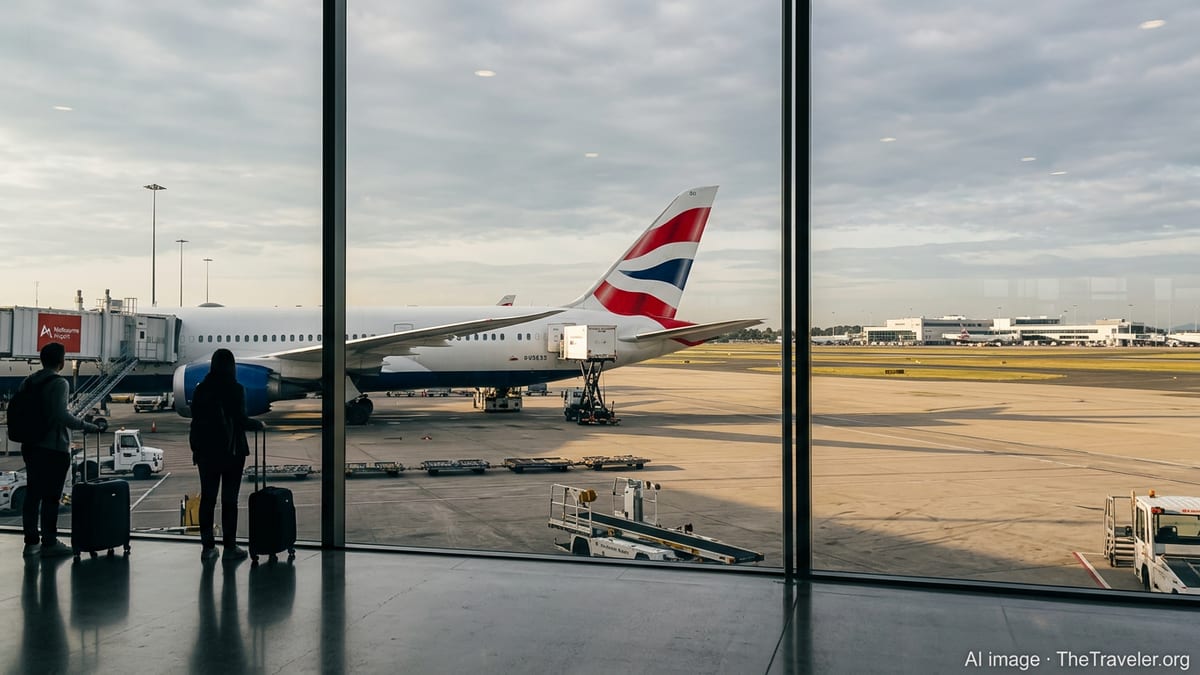
British Airways is preparing to resume direct service to Melbourne for the first time in more than 20 years, reconnecting London and Australia with a new daily flight routed via Kuala Lumpur and adding fresh competition on the historic Kangaroo Route.
Get the latest news straight to your inbox!
A Return to Melbourne After a Long Hiatus
The planned restoration of British Airways services to Melbourne marks a notable expansion of the carrier’s long-haul network between the United Kingdom and Australia. Publicly available historical schedules indicate that British Airways last served Melbourne with its own aircraft more than two decades ago, before consolidating its Australian operations around Sydney and partner airlines.
Reports from industry and loyalty travel outlets indicate that Kuala Lumpur is scheduled to rejoin the British Airways network from London Heathrow in April 2025 as a daily service. From there, the airline plans to offer a one-stop link between Heathrow and Melbourne, using the Malaysian capital as a strategic hub on the route between Europe and Australia.
The move places British Airways back into a market that has seen strong recovery and growing demand since international borders reopened. Melbourne has emerged as a key gateway for Europe-bound Australian travellers, supported by capacity from Qantas, Middle Eastern carriers and Asian hubs, and the return of a UK flag carrier presence is expected to intensify competition.
A precise start date and full operational details for the London–Kuala Lumpur–Melbourne pattern are expected to be confirmed as schedules are finalised and loaded into booking systems. Early information suggests a year-round operation designed around daily frequencies to appeal to both leisure and business travellers.
Daily One-Stop Connectivity Via Kuala Lumpur
The planned operation is structured to provide a single-connection journey between London Heathrow and Melbourne, with travellers changing aircraft in Kuala Lumpur. According to published timetable information, the revived Kuala Lumpur route will operate daily from Heathrow, creating consistent onward connection opportunities to Australia.
Routing Melbourne flights through Kuala Lumpur positions British Airways alongside a growing group of carriers using Southeast Asian hubs to connect Europe and Australia. Kuala Lumpur International Airport already supports extensive services to Australian cities on other airlines, and new British Airways traffic is expected to make additional use of those facilities and ground services.
The one-stop service is expected to appeal to passengers looking for a balance between journey time and schedule flexibility. While nonstop links such as Perth to London offer speed for some travellers, many still prioritise a daily pattern of departures, the ability to choose preferred connection times and the option to combine stopovers with long-haul trips.
For travellers originating in the United Kingdom and Europe, the routing via Kuala Lumpur offers an additional choice alongside existing hubs such as Singapore, Doha and Dubai. The added frequency on the corridor between Southeast Asia and Australia is also likely to benefit travellers starting their journeys in Asia and connecting through Kuala Lumpur toward Melbourne.
Strengthening the Historic Kangaroo Route
The London–Australia market, often referred to as the Kangaroo Route, has been a competitive and strategically important corridor for many decades. Airlines have traditionally relied on Asian or Middle Eastern hubs to bridge the distance between Europe and Australia, and each new routing option can shift travel patterns across the region.
By restoring a one-stop link to Melbourne, British Airways is reasserting a direct role on part of this long-distance market after several years of focusing on partnerships and codeshares. The carrier’s presence on a daily schedule between London, Kuala Lumpur and Melbourne will sit alongside other one-stop options that use hubs such as Singapore, Hong Kong and Doha.
Industry observers note that the added capacity could place downward pressure on some fares while also driving product improvements, as airlines compete on cabin quality, lounge access and connection convenience. Travellers on the Melbourne route will be able to compare timings and onboard offerings on a wider range of airlines and transit points than in previous years.
The renewed connection is also likely to support two-way tourism flows. Melbourne continues to attract visitors from the United Kingdom and Europe for its cultural calendar, sporting events and food and wine regions, while London remains a primary long-haul destination for Australian travellers seeking both tourism and business links.
Implications for Melbourne and Kuala Lumpur Hubs
The decision to structure the new service via Kuala Lumpur highlights the Malaysian capital’s growing role as a hub for traffic between Europe and the Asia-Pacific region. Kuala Lumpur International Airport has steadily rebuilt long-haul connectivity, and the addition of British Airways services is expected to lift its profile among travellers who may previously have transited more commonly through Singapore or Bangkok.
For Melbourne, the restoration of British Airways flights adds another European connection to a network that has been expanding steadily since the pandemic. The airport has welcomed new and returning services from a range of carriers targeting both point-to-point and connecting traffic, helping to diversify options for Victorian travellers heading to Europe.
Local tourism and aviation stakeholders are expected to view the resumption positively, as additional capacity typically supports growth in visitor numbers and trade links. A daily pattern of flights also creates more stable planning conditions for tour operators, conference organisers and corporate travel planners who rely on predictable seats and schedules.
Additional London capacity via Kuala Lumpur may also distribute passenger flows more evenly across transit hubs, potentially easing pressure on some of the busier connection points in peak seasons. For travellers, this can translate into shorter connection queues and a wider spread of departure and arrival times to choose from.
What Travellers Can Expect on the New Route
While final aircraft types and onboard product details for the London–Kuala Lumpur–Melbourne routing are subject to confirmation closer to launch, travellers can anticipate a mix of cabins that typically include economy, premium economy and business class on the long-haul sectors. British Airways has in recent years focused on upgrading its long-haul cabins and ground services, and industry coverage suggests those enhancements are being rolled out progressively across its network.
The daily schedule is expected to provide overnight options between London and Kuala Lumpur, with onward connections timed to reach Melbourne with either morning or evening arrivals, depending on final slot allocations. This pattern allows travellers to align flights with hotel check-in times and onward domestic connections within Australia.
Prospective passengers are likely to consider factors such as total travel time, transit experience in Kuala Lumpur and baggage handling arrangements when comparing the new route with existing alternatives. For some, the appeal of flying on a single ticket with coordinated connections and through-checked baggage will weigh heavily in favour of the new British Airways option.
Further information on exact departure times, aircraft assignments and introductory fares is expected to emerge as schedules are progressively opened for sale. Travellers planning long-haul journeys between London and Melbourne in 2025 and beyond will gain another one-stop choice on one of the world’s most competitive travel corridors.