

More news on this day
British Airways is set to reconnect London and Melbourne with a new daily long-haul service routed via Kuala Lumpur, restoring a one-stop link between the United Kingdom and Australia more than two decades after the carrier last served Melbourne under its own flight number.
Get the latest news straight to your inbox!
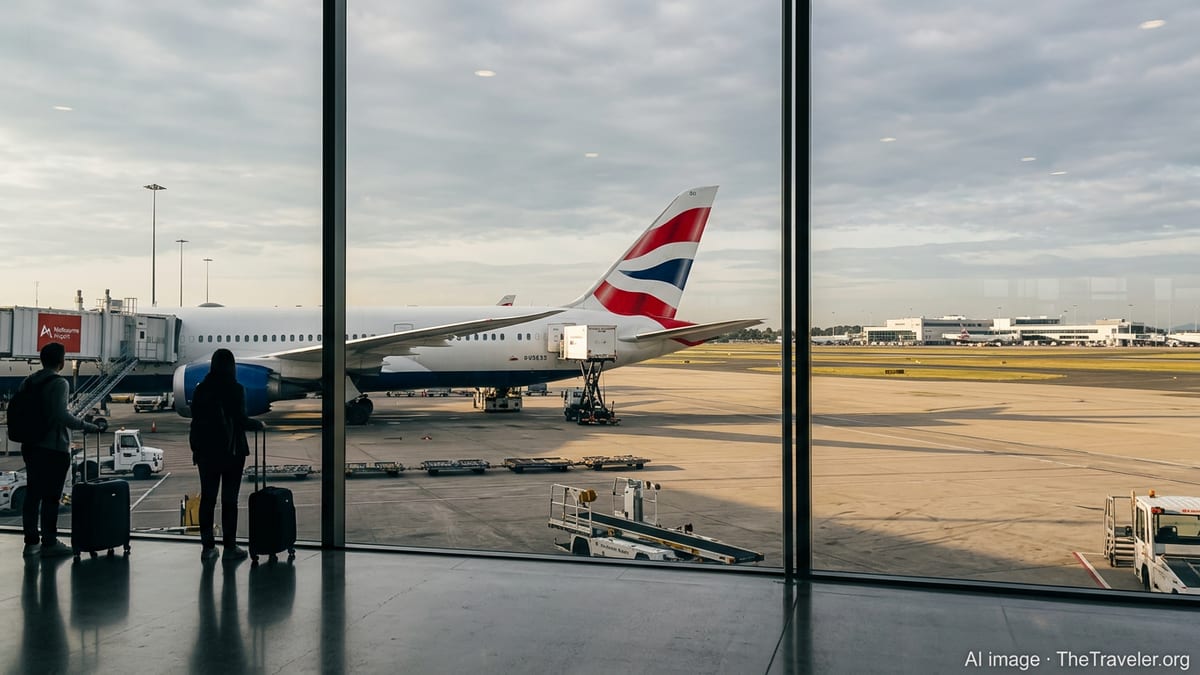
New Daily Link Reconnects London and Melbourne
According to published timetable data and industry reports, the planned service will operate daily between London Heathrow and Melbourne with an intermediate stop in Kuala Lumpur, providing a single-ticket journey that places Melbourne back on the British Airways network after a prolonged absence. The move aligns with a broader rebuilding of British Airways’ long-haul portfolio, following the airline’s recent return to Kuala Lumpur with nonstop Heathrow services.
The new linkage is expected to appeal to both leisure and business travellers who value the continuity of flying under one carrier code across the so‑called Kangaroo Route between Europe and Australia. For Melbourne, the development adds another premium full-service option into an already competitive long-haul market, complementing existing non-stop and one-stop connections offered by other international airlines.
Timetable filings indicate that the London–Kuala Lumpur sector will be timed for overnight departures from Heathrow, arriving into Malaysia in the late afternoon or evening, with onward connections to Melbourne designed to minimise layovers. The return pattern from Australia is anticipated to follow an overnight schedule into London, giving passengers full working days at each end of the route.
Travel industry coverage suggests that the service will be marketed around convenience and continuity, emphasising seamless through-check of baggage, aligned minimum connection times in Kuala Lumpur, and coordinated schedules that reduce overall journey complexity for passengers travelling between the UK and southeastern Australia.
Leveraging Kuala Lumpur as a Strategic Hub
The decision to structure the new Melbourne service via Kuala Lumpur reflects British Airways’ evolving use of Asian gateways to reach Australia, in parallel with its long-standing operations through Singapore. Kuala Lumpur’s geographic position and growing long-haul connectivity make it a practical mid-point on the London–Australia corridor, while also supporting onward links into wider Southeast Asia.
Publicly available information on British Airways’ summer schedules shows that the carrier has already invested in rebuilding capacity into Kuala Lumpur with daily Boeing 787-9 Dreamliner services from Heathrow. Industry analysis indicates that adding beyond services to Australia from this reinstated route allows the airline to deepen aircraft utilisation and broaden network options without immediately committing to ultra-long-haul non-stop flights.
The Kuala Lumpur stop also opens opportunities to coordinate schedules with regional partners and to tap additional traffic flows, including UK travellers heading to Malaysia, Indonesia, Thailand, Singapore and Vietnam. By layering a Melbourne leg on top of the London–Kuala Lumpur trunk route, British Airways is effectively using the Malaysian capital as a hinge between its European hub at Heathrow and key markets across the Asia–Pacific region.
For Kuala Lumpur International Airport, the extension of British Airways traffic onward to Australia is expected to reinforce the airport’s role as a transit point on the Kangaroo Route, complementing existing services operated by regional and Gulf carriers that already link Europe and Australia via Malaysia.
Competitive Pressure on the Kangaroo Route
The restoration of a British Airways connection to Melbourne via Kuala Lumpur comes at a time of renewed competition on Europe–Australia routes. Airlines such as Qantas, Singapore Airlines, Emirates and Qatar Airways currently dominate traffic between London and Australian cities, using a mix of non-stop and one-stop routings through their respective hubs.
Industry commentary notes that British Airways has in recent years relied heavily on partner airlines and alliances to carry passengers beyond Asia to Australian destinations. The revival of a branded pathway to Melbourne marks a strategic shift towards recapturing a greater share of end-to-end traffic under the BA code, particularly among loyal customers and corporate travel programmes that prefer single-carrier itineraries.
The new service is expected to prompt competitive responses in pricing and capacity, especially on premium cabins where corporate demand is strongest. Analysts suggest that the additional routing via Kuala Lumpur may attract travellers looking to avoid some of the more congested hubs while still accessing frequent connections and lounge facilities at both ends of the journey.
At the same time, the London–Melbourne market remains sensitive to schedule reliability and total journey time, meaning British Airways will need to maintain consistent operations on both the Heathrow–Kuala Lumpur and Kuala Lumpur–Melbourne sectors to build confidence among passengers who have become accustomed to other carriers on the route.
Boost for Tourism and Business Travel
Tourism and trade bodies in both the United Kingdom and Australia are expected to benefit from the renewed connection. Melbourne, as a major events city with a strong calendar of sports, arts and conferences, relies on robust long-haul air access to sustain inbound tourism and international business visitation from Europe.
Reports indicate that the new British Airways service will add capacity during a period of broader recovery in long-haul travel, particularly on routes feeding into Australia’s eastern seaboard. Additional seats from London are likely to support visitor growth from key UK and European markets, with tour operators and travel agencies gaining another premium option to package into itineraries that combine Europe, Southeast Asia and Australia.
On the UK side, the route is expected to facilitate outbound traffic to Victoria and neighbouring states, including travellers visiting friends and relatives as well as students heading to Australian universities. Corporate travellers with operations in both London and Melbourne may also welcome the expanded choice, especially where travel policies favour oneworld carriers and through-ticketing under a single airline brand.
Travel trade publications highlight that the resumption of British Airways services into Malaysia and the extension onward to Australia also intersect with Malaysia’s Visit Malaysia Year 2026 campaign, which aims to lift international arrivals. The London–Kuala Lumpur–Melbourne corridor therefore sits at the crossroads of tourism strategies in both Southeast Asia and Australia.
Fleet, Product and Passenger Experience
Timetable and fleet information shows that British Airways is deploying its Boeing 787-9 Dreamliner on the London–Kuala Lumpur sector, with a configuration that includes cabins for economy, premium economy and business-class travellers. The onward Kuala Lumpur–Melbourne flights are expected to use similar widebody equipment, offering a consistent product across the full journey.
For passengers, this continuity of aircraft type and onboard service can simplify long-haul travel planning, with consistent seating layouts, in-flight entertainment systems and cabin environments from London through to Melbourne. Industry observers note that the 787’s lower cabin altitude and improved humidity are often highlighted as benefits on ultra-long sectors such as those linking Europe and Australia via Asia.
British Airways has been progressively refreshing its long-haul cabins, particularly in business class, and travel media reports suggest that routes operating through key strategic hubs are priority candidates for upgraded interiors over time. Although specific retrofit timelines can vary by aircraft, the choice of the 787-9 for the Kuala Lumpur leg signals an intent to showcase one of the airline’s more modern long-haul platforms on the revived connection.
Ground-side, passengers travelling between London and Melbourne on the new routing are expected to gain access to lounge facilities at Heathrow, Kuala Lumpur and Melbourne subject to cabin and frequent-flyer status, along with standard through-check of baggage and coordinated minimum connection times. Together, these elements position the revived British Airways link as a full-service alternative in a market where comfort and reliability remain central to travellers weighing long-haul options.