

More news on this day
British Airways is preparing to deepen its Asia-Pacific footprint with planned new routes to Melbourne and Colombo, moves that would reinforce Australia and Sri Lanka’s growing roles in a regional network already anchored by South Korea, Vietnam, Thailand, Japan and Singapore.
Get the latest news straight to your inbox!
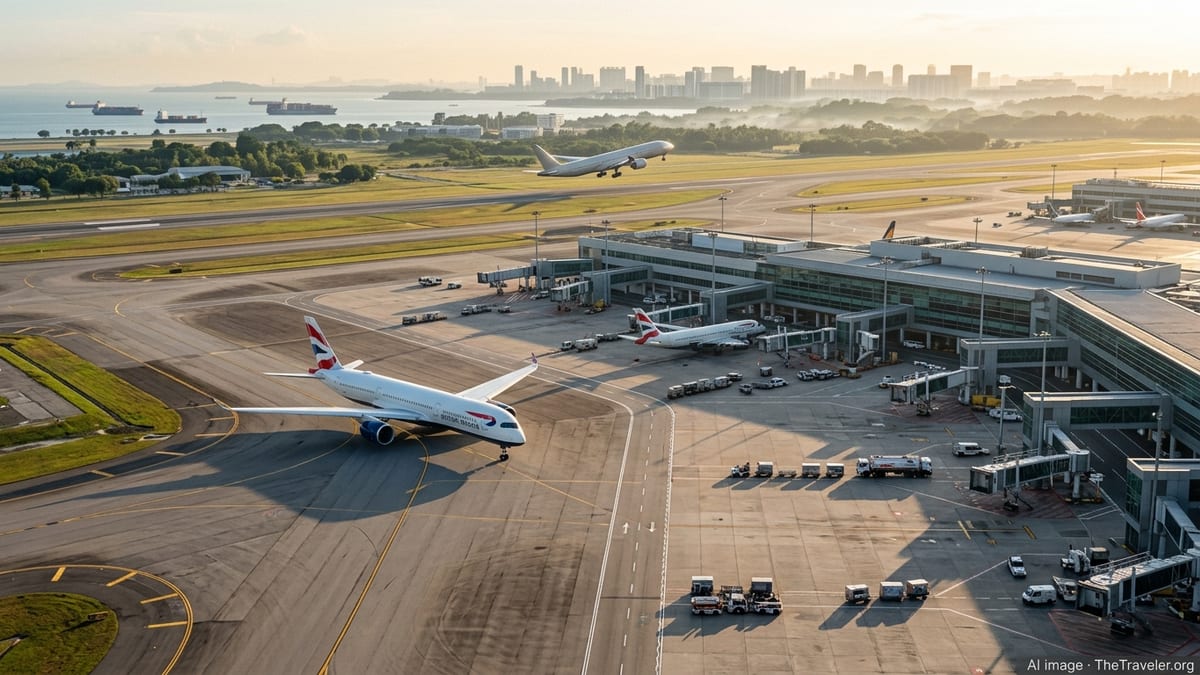
British Airways Eyes New Gateways in Australia and Sri Lanka
Publicly available timetable data and route-planning documents indicate that British Airways is positioning Melbourne and Colombo as the next milestones in its Asia-Pacific strategy. While the carrier already links London and Sydney via Singapore on the historic Kangaroo Route, the mooted additions would extend its reach into southern Australia and restore a direct British Airways presence in Sri Lanka after several years of absence from that market.
Industry schedules show that Melbourne is already embedded in long-haul connectivity through European and Gulf carriers, with services to Singapore, Doha and other hubs feeding onward traffic to the United Kingdom and continental Europe. A British Airways-branded link, even if operated in cooperation with partners, would give the airline a more visible stake in a city considered a core gateway for both business and leisure traffic in Australia.
Colombo meanwhile has re-emerged as a strategic stop on Indian Ocean and South Asia itineraries. SriLankan Airlines and a mix of Gulf and Asian carriers connect the Sri Lankan capital to Europe, the Middle East and East Asia, and new charter and seasonal services have been building inbound tourism from Europe. A British Airways return to Colombo, whether nonstop from London or via a partner hub, would signal renewed confidence in Sri Lanka’s tourism and trade prospects.
Analysts note that these potential routes would also align with the airline’s broader capacity reshuffle, which has included adding new long-haul destinations such as Kuala Lumpur and Tbilisi and upgauging aircraft on the London–Singapore–Sydney corridor to meet post-pandemic demand recovery.
Asia-Pacific Demand Surges From Australia to North Asia
The timing of a deeper British Airways push into Melbourne and Colombo coincides with sustained growth in Asia-Pacific travel flows. Travel and infrastructure reports indicate that markets such as South Korea, Vietnam, Thailand, Japan and Singapore have been expanding airport capacity, digital border processing and tourism promotion, helping to drive record regional passenger volumes.
Vietnam in particular has drawn significant investment from regional airlines and hospitality groups as new expressways and airport upgrades unlock secondary cities. Carriers from South Korea, Japan, Thailand, Malaysia and Singapore maintain dense networks into Vietnam, creating onward flows that can be tapped by long-haul airlines feeding in from Europe and the Middle East.
Singapore and Bangkok continue to function as pivotal connecting hubs for Europe–Asia–Australia traffic, especially on routes between London and cities such as Sydney and Melbourne. As these hubs grow, they amplify demand for additional city pairs across the wider region, including emerging leisure markets in Sri Lanka, coastal Vietnam and secondary Thai destinations.
Australia remains a cornerstone of this growth. Melbourne and Sydney generate high volumes of premium and visiting-friends-and-relatives traffic, with European, Gulf and Asian carriers competing intensely on one-stop services to London and other European capitals. Additional British Airways capacity would insert the airline more firmly into this competitive corridor.
Strategic Partnerships and Competitive Pressures
Any British Airways move into new routes to Melbourne and Colombo is likely to be shaped by alliances and joint ventures. In recent years, the airline has deepened commercial cooperation with partner carriers on key long-haul markets, particularly in the Gulf and Asia, to extend its reach beyond London while sharing risk on new or seasonal routes.
Regulatory filings and competition assessments for Australia–Europe traffic highlight the importance of coordination between European and Gulf or Asian airlines on routes touching Melbourne. These documents show that carriers must navigate tight margin structures and strong existing competition, particularly from local airlines and rival European brands already present on the Melbourne–London market via hubs such as Singapore and Doha.
For Sri Lanka, competitive dynamics are different but no less intense. Gulf carriers and SriLankan Airlines dominate long-haul connectivity from Colombo, supplemented by seasonal services from European leisure operators. A British Airways entry would have to carve out a differentiated proposition, potentially focusing on premium leisure and high-yield traffic between the United Kingdom, Sri Lanka and nearby destinations such as the Maldives and southern India.
Partnerships with regional carriers in South Korea, Vietnam, Thailand, Japan and Singapore are also central to the equation. Code-share and interline arrangements enable British Airways to sell through itineraries that connect London with secondary Asian cities via hubs like Seoul, Tokyo, Bangkok and Singapore, broadening the revenue base that can support new long-haul sectors to Australia and Sri Lanka.
Tourism, Trade and the ‘Next Wave’ of Connectivity
Australia and Sri Lanka are both positioning themselves to capture the next wave of Asia-Pacific tourism and trade. Government and industry campaigns highlight Australia’s appeal for long-stay leisure travel, education and high-value business tourism, while Sri Lanka is promoting its beaches, cultural heritage and wildlife as part of a diversified tourism recovery strategy.
Improved connectivity is critical to both agendas. Additional long-haul capacity from Europe tends to correlate with higher visitor arrivals, more diversified source markets and increased resilience to shocks in any single region. For Melbourne, more direct or one-stop options via London reinforce its status as a global meetings and events city and gateway to wider Victoria. For Colombo, a new or restored link to London would signal that Sri Lanka is consolidating its place on mainstream long-haul travel maps.
Trade flows are also at stake. Air freight capacity on long-haul passenger flights underpins segments ranging from high-value perishables and pharmaceuticals to fashion and electronics. Routes linking London to Melbourne and Colombo can support time-sensitive exports from Australia and Sri Lanka into the United Kingdom and beyond, while facilitating imports of industrial and consumer goods in the opposite direction.
Observers suggest that as Asia-Pacific economies integrate more closely through regional trade agreements and infrastructure projects, the role of long-haul carriers such as British Airways will increasingly revolve around stitching together clusters of mid-sized cities rather than relying solely on a few mega-hubs.
What Might Come Next for the Region’s Route Map
The prospective British Airways services to Melbourne and Colombo raise broader questions about how the Asia-Pacific route map will evolve through the late 2020s. With South Korea, Vietnam, Thailand, Japan and Singapore all expanding airport capacity and enhancing passenger processing, there is scope for more multi-stop itineraries and novel triangle routes that connect Europe, South Asia and Oceania in new ways.
One scenario frequently discussed by analysts is the development of multi-point services that link London to Australia or Sri Lanka via rotating Asian stops, allowing airlines to serve several markets with a single aircraft rotation. Another is the strengthening of hub-to-hub links, such as London to Seoul or Tokyo, paired with dense regional feed into Southeast Asia and the Pacific.
There is also potential for greater seasonal adjustment of capacity as airlines respond to shifting tourism patterns, from European winter sun demand in Sri Lanka and Thailand to peak school holiday flows between Australia, Japan and South Korea. Flexible deployment of widebody aircraft, including upgauging and downguaging on routes like London–Singapore–Sydney, gives carriers more room to experiment with new city pairs.
For travelers, the likely outcome is a richer menu of routing options, with more one-stop possibilities between Europe and secondary cities in Asia-Pacific, and new combinations that include Australia and Sri Lanka on the same itinerary. For the region’s airports and tourism boards, the challenge will be to ensure infrastructure, service quality and sustainability keep pace with the rapid expansion of air connectivity.