

More news on this day
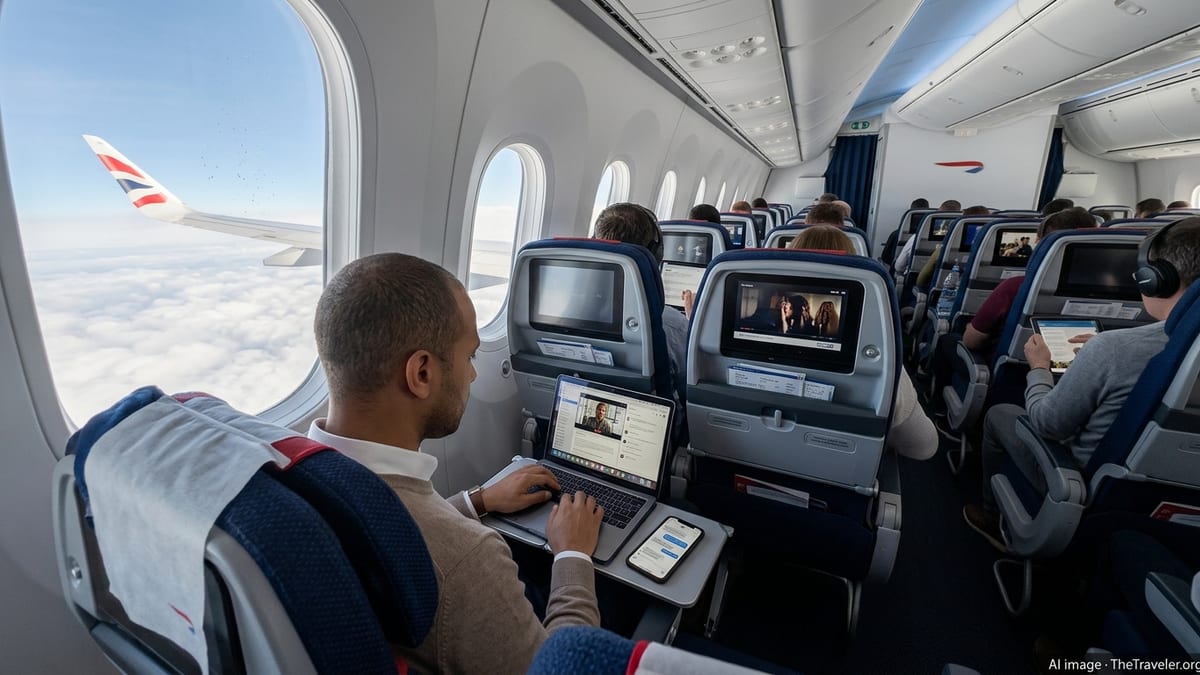
British Airways is preparing to introduce free, high-speed Starlink Wi-Fi across its global network, positioning the carrier at the forefront of a new era in inflight connectivity as roll-out begins from 2026.
Get the latest news straight to your inbox!
Global Roll-Out Begins Under IAG–Starlink Agreement
The move follows a wider agreement between International Airlines Group, the parent company of British Airways, and SpaceX’s Starlink satellite network to equip more than 500 aircraft across the group with next-generation inflight connectivity. Publicly available information indicates the multi-year installation program will cover British Airways as well as Aer Lingus, Iberia, Vueling and LEVEL, creating one of the largest Starlink-enabled fleets in the world.
Group documentation and recent coverage show that hardware installations are scheduled to begin in early 2026, with aircraft entering service progressively once certified. British Airways is expected to feature prominently in the initial phases, reflecting the size of its long haul and short haul operations from London and its role as IAG’s flagship brand.
Reports indicate that the objective is to provide consistent, gate-to-gate connectivity on both European and intercontinental routes, a significant step up from the patchy and often costly inflight Wi-Fi services that many passengers have experienced to date. The program is being framed as a strategic investment in digital transformation, aimed at aligning the onboard experience more closely with customers’ expectations on the ground.
While final implementation timelines may vary by aircraft type and route, industry analysts suggest that once the core of the British Airways fleet is equipped, the carrier will be able to market free, high-speed Wi-Fi as a network-wide feature for most passengers worldwide.
Free High-Speed Access for All Cabins
Coverage from aviation and travel outlets indicates that the British Airways service will be offered free of charge to passengers in all cabins, eliminating the paywalls and data caps that have historically limited productivity and entertainment options in the air. This approach mirrors announcements from other IAG airlines, where Starlink connectivity is being promoted as a standard inclusion rather than an ancillary revenue product.
According to technical outlines shared in Starlink and airline materials, the low Earth orbit network can support download speeds sufficient for streaming video, cloud-based work and online gaming, even with multiple users onboard. British Airways is expected to allow passengers to stream content from popular platforms, join video calls and use data-heavy apps in ways that were previously impractical at cruising altitude.
Making high-speed connectivity free for all passengers also reflects broader competitive pressure in the market. Major carriers in North America and Europe are increasingly experimenting with complimentary Wi-Fi or messaging, and British Airways’ full-fleet Starlink deployment is being interpreted as a clear signal that premium connectivity is shifting from optional extra to core service.
Industry observers note that the change will be particularly visible on British Airways’ dense short haul network within Europe, where flight times are often just long enough for work sessions or streaming, but historically too brief for many passengers to justify paying for Wi-Fi.
Technical Upgrade Aims to Eliminate Traditional Inflight Frustrations
Starlink’s low Earth orbit satellite architecture is designed to reduce latency and increase throughput compared with conventional geostationary systems. In practical terms, this should translate to quicker page loads, smoother video and fewer mid-flight dropouts on British Airways services once the new equipment is active.
Publicly available technical information shows that Starlink’s constellation relies on thousands of satellites orbiting much closer to Earth than traditional communications platforms. Antennas on the aircraft track these satellites as they move, handing off connections frequently to maintain a stable link. The result, based on early experiences at other airlines, is closer to a home broadband connection than the slow, congested inflight networks many travelers associate with older technology.
For British Airways, the installation program involves fitting aircraft with new antenna hardware, onboard routers and cabin access points calibrated to handle hundreds of simultaneous users. Industry reports suggest that newer aircraft types will be prioritized, while older jets nearing retirement may not be retrofitted, meaning there may be some variation in availability across the fleet in the early years of the roll-out.
Experts in the airline connectivity market point out that performance will still depend on coverage in specific regions and how many passengers are online at once, but expectations are that the step change from legacy systems to Starlink will be clearly noticeable to customers on British Airways flights.
Changing Passenger Expectations for Work and Leisure in the Air
The promise of free, reliable Wi-Fi across British Airways’ global routes is likely to further blur the lines between time on the ground and time in the air. Business travelers in particular may treat long haul flights as fully connected workdays, with the ability to access collaboration tools, large files and real-time communication throughout the journey.
For leisure passengers, the shift opens up new possibilities for onboard entertainment. Instead of relying solely on the airline’s seatback content, travelers will be able to stream their own subscriptions, follow live sports, engage on social media or keep in touch with friends and family in real time, even over oceans and remote regions.
Analysts also highlight potential operational and revenue implications for British Airways. With passengers consistently online, airlines gain more opportunities to promote ancillary services such as upgrades, onboard purchases and destination experiences through digital channels, although British Airways has not detailed any specific commercial plans linked to the Starlink deployment.
At the same time, the normalization of always-on connectivity raises questions about digital well-being and the erosion of one of the last offline spaces in modern travel. Commentators suggest that some travelers may continue to treat long flights as rare opportunities to disconnect, even as others embrace the new bandwidth.
Competitive Positioning in a Rapidly Evolving Connectivity Market
British Airways’ Starlink program is unfolding within a broader shift across global aviation, as airlines race to upgrade connectivity and differentiate their onboard product. Several European and North American carriers have already committed to Starlink or rival high-speed providers, and free access is increasingly used as a selling point in premium and even economy cabins.
By aligning closely with IAG’s group-wide strategy and adopting a fully free model, British Airways is seeking to position itself among the leaders of this transition. Industry commentators note that the airline’s extensive transatlantic and long haul footprint gives it significant visibility in key corporate and leisure markets, where connectivity expectations are among the highest.
The timing, starting in 2026, also reflects the maturity of satellite broadband solutions now reaching scale, with Starlink’s constellation and ground infrastructure more developed than in the early trial stages seen at some carriers. As installations progress and early aircraft enter service, travel industry coverage is expected to closely track real-world performance and passenger feedback on British Airways routes.
For travelers planning journeys from 2026 onward, the message from publicly available information is clear: inflight Wi-Fi on British Airways is on course to become faster, more reliable and, crucially, free to use. How quickly that experience becomes universal across the network will depend on the pace of installation, but the direction of travel for onboard connectivity is firmly set.