

More news on this day
British Airways is moving to the front edge of the inflight connectivity race with the quiet rollout of ultra-fast Starlink Wi-Fi on selected Boeing 787-8 aircraft, positioning the UK carrier in a direct contest with Air France, United Airlines and Lufthansa as global airlines rush to offer home-like broadband in the sky.
Get the latest news straight to your inbox!
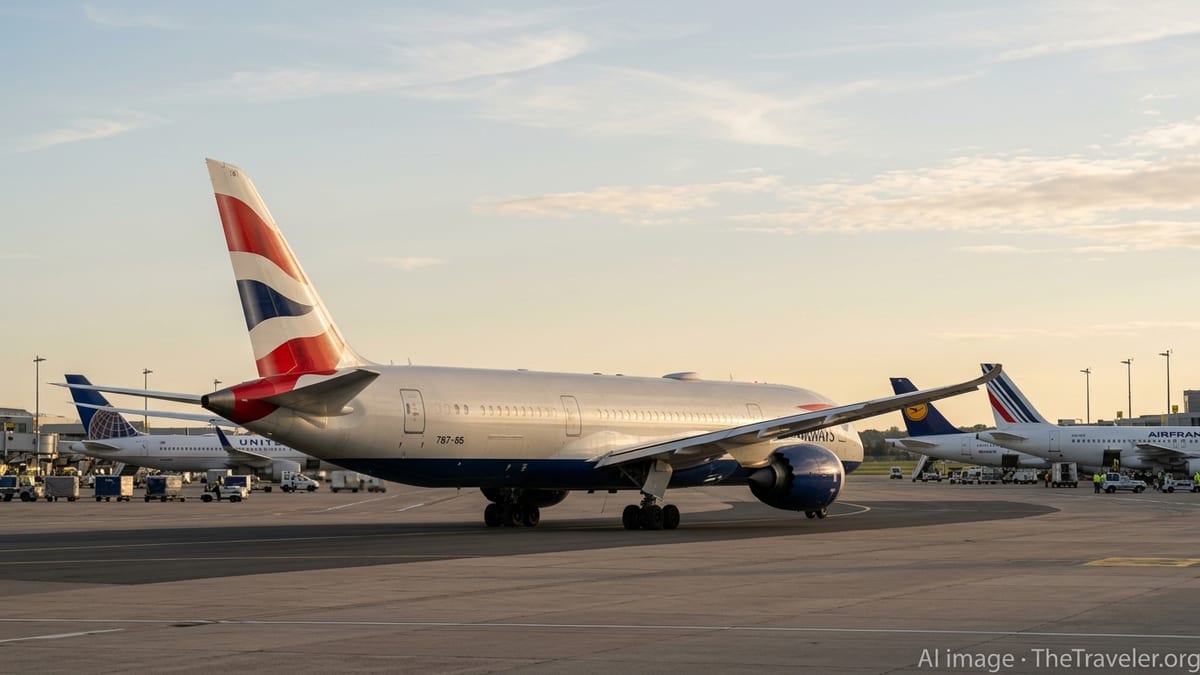
British Airways Uses 787-8 Fleet as a Testbed for Starlink
Publicly available fleet-tracking data and industry reports indicate that British Airways has begun activating Starlink-powered Wi-Fi on a subset of its Boeing 787-8 Dreamliners, using the long-haul twinjet as a proving ground for higher-speed broadband. These aircraft are understood to be operating both transatlantic and longer-haul routes, giving the airline a live environment to test performance across oceanic and remote airspace.
The Starlink hardware uses a low Earth orbit satellite constellation designed to deliver lower latency and higher throughput than traditional geostationary systems. For passengers, that translates into page loads that feel closer to domestic broadband, smoother video calls, and more reliable cloud-based work tools. Early accounts from aviation enthusiasts and frequent flyers describe performance that supports streaming and large file transfers, something that older inflight systems often struggled to provide consistently.
British Airways has not yet detailed a full commercial model for the Starlink-equipped 787-8s, but published coverage suggests the carrier is likely to maintain a tiered approach, with basic messaging access positioned as a standard feature and higher-bandwidth packages offered for a fee. The 787-8 installations are therefore being watched closely across the industry as a signal of how legacy European flag carriers intend to monetise next-generation connectivity.
The decision to begin with the 787-8 also reflects a practical test strategy. The type operates a mix of business-heavy routes and leisure-oriented services, allowing British Airways to gauge how different passenger segments use ultra-fast connectivity, how usage peaks during various phases of flight, and what capacity is required to avoid congestion when most of the cabin is online simultaneously.
Air France, United and Lufthansa Step Up Their Wi-Fi Strategies
British Airways is not entering a vacuum. Air France, United Airlines and Lufthansa are each pursuing ambitious connectivity upgrades, and in several cases are also turning to Starlink for their future fleets. Air France announced that from 2025 it will progressively roll out complimentary, ultra-high-speed Wi-Fi using Starlink across its aircraft, promising what it describes in public communications as a ground-like connection for passengers.
United Airlines has moved early in North America, outlining plans to deploy Starlink across hundreds of aircraft in a drive to offer free high-speed Wi-Fi as a headline customer benefit. Reports on aviation and technology outlets describe test flights where passengers were able to stream video, hold video calls and use corporate VPNs with far fewer interruptions than on legacy systems, underlining how connectivity has become integral to the carrier’s wider brand positioning.
Lufthansa, meanwhile, is reinforcing its long-standing FlyNet service. The group has announced a collaboration strategy that includes Starlink alongside existing satellite partners to raise speeds and improve coverage across all its airlines and fleets. At the same time, Lufthansa has emphasised free messaging on many European flights, reflecting a broader shift toward making basic connectivity a standard inclusion while preserving paid tiers for heavier data use.
This sets the competitive context for British Airways: it is no longer sufficient for a major network carrier merely to offer Wi-Fi as an add-on. Rivals are marketing connectivity as a core element of the onboard product, with free access increasingly used as a differentiator and loyalty driver. The Starlink trial on the 787-8 therefore places British Airways into a direct comparison with these peers on both technology choice and pricing strategy.
From Patchy Connections to “Ground-Like” Broadband
For more than a decade, long-haul passengers have grown used to inflight Wi-Fi that is serviceable for messaging and light browsing but often unreliable for more demanding tasks. Traditional geostationary satellite systems can suffer from higher latency and limited bandwidth, particularly on flights where many users connect at once, leading to slow page loads, dropped connections and inconsistent streaming.
The new wave of Starlink-powered systems promises to change those expectations. Low Earth orbit satellites fly closer to the planet and hand off connections between a dense network of spacecraft, reducing latency and increasing available capacity. Public demonstrations and independent speed tests on early Starlink-equipped aircraft have reported download speeds that support video streaming and large uploads, even over oceans where connectivity has historically been weakest.
For airlines, this level of performance is more than a passenger amenity. Reliable, high-speed connectivity enables real-time operational data flows between aircraft and ground, from predictive maintenance and engine health monitoring through to live weather and route optimisation. While British Airways is initially highlighting the passenger-facing aspect of Starlink on its 787-8s, industry analysts note that the same bandwidth can underpin internal efficiency gains and cost savings over time.
As expectations rise, however, so does the risk when systems fail to deliver. Recent customer feedback across multiple airlines shows that travellers quickly notice outages or speed drops, especially when carriers have marketed their Wi-Fi as ultra-fast or ground-like. That creates additional pressure on British Airways and its peers to ensure that Starlink installations, network integration and onboard hardware are robust before any large-scale rollout.
Pricing, Loyalty and the Business Case for Free Wi-Fi
The question of who pays for ultra-fast inflight internet is emerging as a central strategic issue. United has publicly framed free Wi-Fi as a competitive advantage, betting that the cost of bandwidth will be offset by increased customer loyalty and higher yields on premium cabins. Air France is similarly positioning Starlink-based access as complimentary, at least in its initial deployment phase, with loyalty programme dynamics expected to shape how benefits are extended across fare classes over time.
British Airways has historically combined complimentary messaging for frequent flyers with paid tiers for heavier use on long-haul routes. With Starlink coming to the 787-8, the airline faces a decision on whether to follow competitors toward fully free access or to maintain a hybrid model where premium connectivity is sold as an ancillary revenue stream. Analysts point out that the economics of Starlink differ from legacy systems, potentially allowing more generous data allowances without prohibitive cost escalation.
Lufthansa is taking a more incremental route, widening free messaging access while improving speeds for paid tiers. This approach illustrates an alternative strategy: use connectivity first to remove friction for basic communication, then upsell streaming and high-bandwidth access to those who value it most. The performance gains promised by Starlink and similar technologies could make such segmentation easier to manage, since capacity is less likely to be exhausted by a small number of heavy users.
For passengers, the competitive dynamic is generally favourable. As airlines vie to position themselves as technology leaders, high-speed inflight Wi-Fi is rapidly shifting from a novelty to an expectation, particularly on long-haul and premium routes. The British Airways 787-8 Starlink trial is therefore being watched not only for its technical success, but also for the pricing signals it sends to the wider market.
What the Connectivity Race Means for Long-Haul Travellers
The deployment of Starlink on British Airways’ Boeing 787-8s adds another chapter to a broader transformation of the long-haul travel experience. For business travellers, reliable high-speed Wi-Fi effectively extends the office into the cabin, making overnight transatlantic flights more productive and reducing the need to catch up on arrival. For leisure passengers, the ability to stream entertainment, share content in real time and stay in touch with contacts on the ground changes the perceived length and comfort of a journey.
Industry research consistently shows that connectivity plays an increasing role in airline choice, with many travellers stating that they would prefer, and even rebook with, carriers that provide strong inflight Wi-Fi. Against that backdrop, British Airways’ move to test Starlink on the 787-8 is less an experiment and more a necessary step to remain competitive with European and North American rivals that are promising similar or better performance.
As more aircraft across British Airways, Air France, United and Lufthansa take to the skies with next-generation connectivity, the baseline standard for what constitutes acceptable inflight internet will continue to rise. While coverage gaps, technical teething issues and regional regulatory constraints are likely to persist in the short term, the overarching trend points to a future in which logging on at 35,000 feet feels no more remarkable than connecting at home or in an airport lounge.
For now, the Starlink-equipped British Airways 787-8 has become a symbol of that shift, carrying both the weight of passenger expectations and the competitive ambitions of one of Europe’s most recognisable airline brands in an intensifying global connectivity race.