

More news on this day
A 60-year-old British tourist has been detained in Dubai and charged under the United Arab Emirates’ cybercrime legislation after allegedly filming and sharing footage of an Iranian missile or drone strike over the city, a case that has renewed scrutiny of how national security laws apply to foreign visitors in the Gulf state.
Get the latest news straight to your inbox!
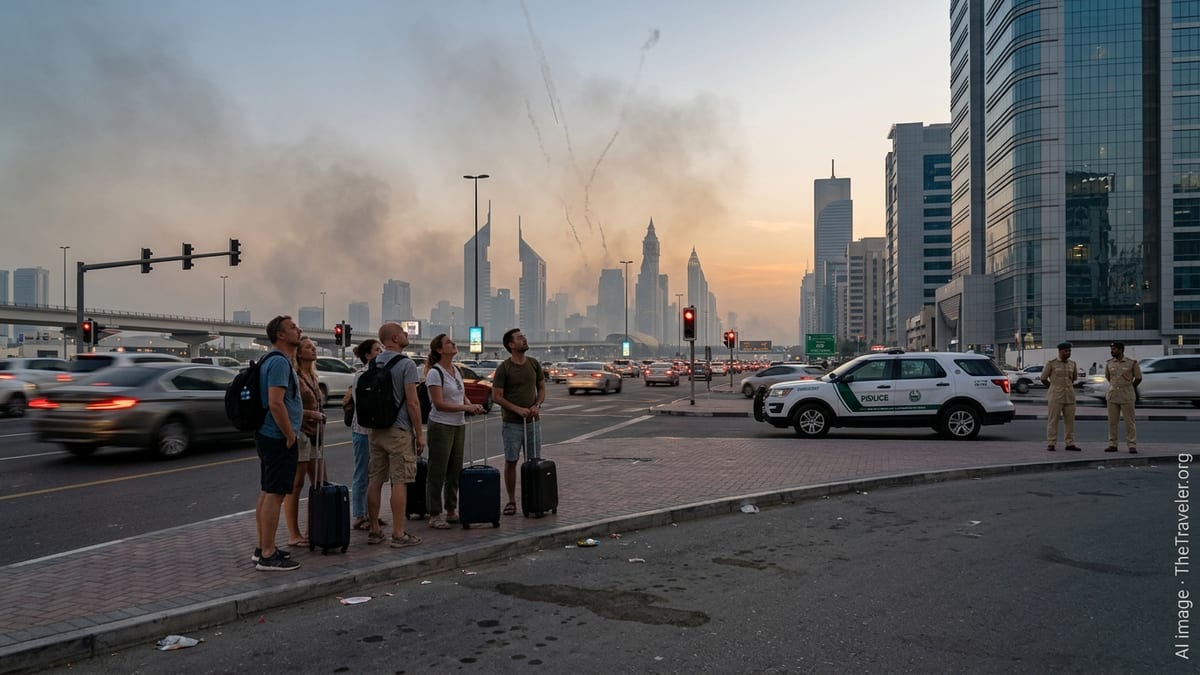
Detention Linked to Footage of Iranian Attack
According to recent published coverage, the unnamed British man was visiting Dubai when Iran launched missile and drone attacks on targets across the United Arab Emirates as part of a wider regional escalation. Footage of explosions and interception attempts quickly circulated on social media, despite local warnings against sharing such material.
Legal advocacy group Detained in Dubai has stated in public commentary that the tourist was stopped by local security officials, who discovered a video of a strike on his phone. Reports indicate the clip had been sent to family members in the United Kingdom. The man was later charged under provisions of the UAE’s cybercrime framework that prohibit publishing or distributing material deemed likely to disturb public order or national security.
Local media and international outlets report that the case forms part of a broader sweep in which around 20 or more people in the UAE have faced legal action over videos of the recent Iranian attacks, including footage near key transport hubs and coastal developments in Dubai.
Cybercrime Law and “National Security Risk” Concerns
Publicly available information on the UAE’s cybercrime legislation shows it gives prosecutors wide discretion to pursue cases involving online content that could be interpreted as damaging to state security, national unity or public morale. The law has been used in recent years in cases involving critical social media posts, viral videos and commentary on sensitive political events.
Legal specialists quoted in open-source commentary note that even seemingly routine acts, such as forwarding a video to friends or relatives, can fall within the scope of these provisions if the content relates to military operations, critical infrastructure or ongoing security incidents. In the current climate of heightened tension following Iranian strikes, material showing missile impacts, interception systems in action or damage on the ground may be treated as especially sensitive.
Advocacy groups argue that foreign visitors often underestimate how broad such definitions can be. Actions that might appear harmless or commonplace elsewhere, such as documenting unfolding events on a smartphone, can rapidly be interpreted as contributing to a national security risk when they involve active conflict or strategic locations.
Travel Warnings and Embassy Advice for Britons
Following Iran’s attacks on the UAE, official travel advisories for British nationals have been updated to highlight the legal risks of photographing or filming security incidents. Recent public statements carried by UK-focused media report that the British Embassy has urged nationals in the Emirates not to capture or share images of missile or drone strikes, debris, or impact sites.
These advisories reiterate longstanding guidance that photography of military facilities, government buildings, transport hubs and certain public infrastructure is restricted. During periods of heightened alert, material that appears to reveal the location of strikes, the performance of air defenses or emergency responses may attract especially close scrutiny.
Travel industry commentary notes that Dubai remains one of the most popular destinations for British holidaymakers, with millions of visitors each year drawn by beaches, shopping and year-round sun. However, the detention of the British tourist has prompted renewed calls for airlines, tour operators and insurers to highlight local content and security laws more prominently in pre-departure information.
Impact on Dubai’s Image as a Tourism Hub
The incident comes at a challenging moment for Gulf tourism, as missile and drone attacks have disrupted air travel and unsettled perceptions of the region’s safety. Coverage in regional business and travel publications describes how Dubai, long marketed as a secure and stable hub, has faced intermittent closures and diversions at its airports during the recent Iranian campaign.
Industry analysts quoted in public reports suggest that while the physical damage from the strikes has been relatively limited, the psychological impact on visitors and residents is harder to measure. Images of explosions near major urban landmarks and transport corridors contrast sharply with Dubai’s usual branding as a haven of predictability and comfort.
The detention of foreign nationals over social media posts or private messages about these events risks further complicating that image. Human rights advocates argue that such cases reinforce perceptions of a low tolerance for expression, even when individuals believe they are simply documenting newsworthy events. Tourism authorities, on the other hand, continue to promote Dubai’s security record and stress that strict rules are central to maintaining order during regional crises.
What the Case Means for Future Visitors
For prospective travelers from the United Kingdom and elsewhere, the British tourist’s experience in Dubai underscores the importance of understanding that local law, not home-country norms, governs conduct abroad. Smartphone habits developed in more permissive legal environments may carry significant consequences in jurisdictions where national security is defined broadly and enforced vigorously.
Legal observers say visitors to the UAE should assume that filming or sharing content that touches on military activity, government installations, police operations or emergency responses can attract attention, particularly in wartime or during active security incidents. Even deleted files may be recoverable if devices are inspected as part of an investigation.
With the British man now facing potential prison time under cybercrime provisions, the case is being closely watched by legal advocates and the travel industry alike. While outcomes in such proceedings can hinge on factors that are not yet publicly known, the episode already serves as a pointed reminder that in destinations like Dubai, seemingly spontaneous acts such as recording a drone strike can be treated as matters of national security, with serious and lasting implications for tourists.