

More news on this day
British travellers are being urged to scrutinise airport parking bookings after new analysis suggested that a combination of rigid terms and last-minute flight cancellations could leave motorists facing bills of up to £189, even when their trip never takes off.
Get the latest news straight to your inbox!
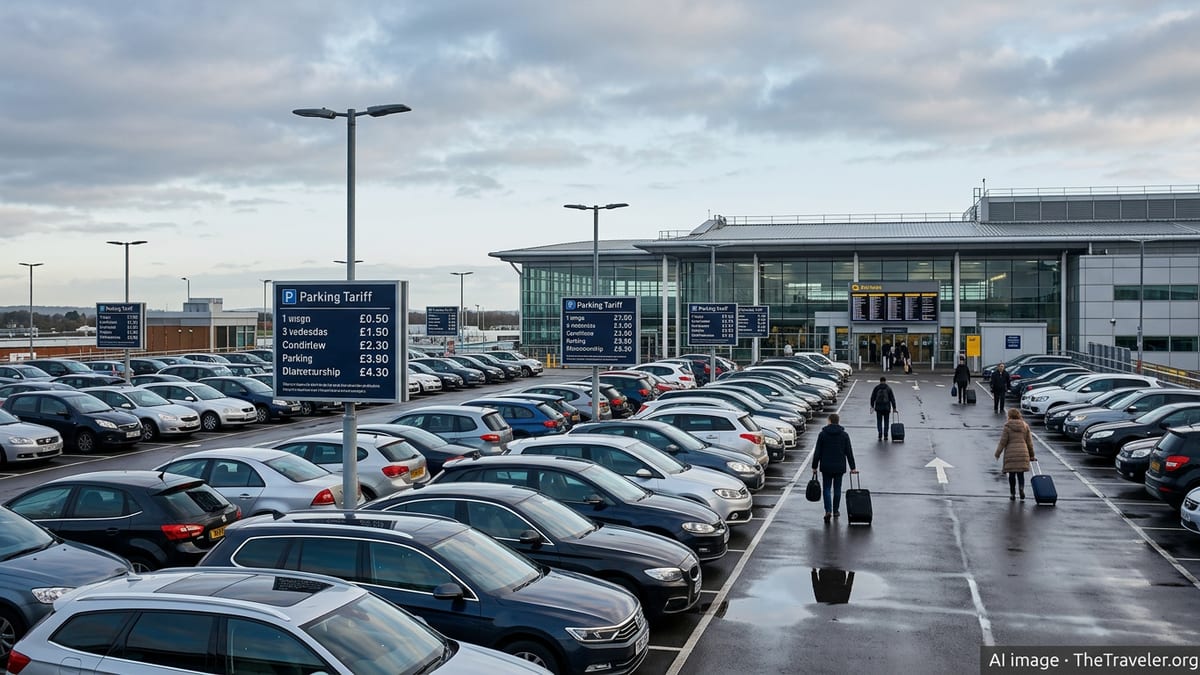
How Flight Chaos Can Turn Parking Into a £189 Bill
New research into UK airport parking charges shows that short-stay and on-site parking at some of the country’s busiest airports can reach as high as £189 for a single trip, particularly when plans change unexpectedly. Reports indicate that headline rates often assume a fixed schedule, but when flights are cancelled or heavily delayed, drivers who leave vehicles at the airport can rapidly tip into higher tariff bands that double or even triple the expected cost.
According to recent UK travel industry data, the steepest prices are typically found at large English airports, where convenience parking closest to the terminal commands a premium. A standard one or two-week stay may start at an advertised rate, but disruption on the day of travel can add extra days or push motorists into more expensive zones. In practice, that means a journey cut short by a cancellation can still leave the passenger paying the full parking bill, sometimes approaching the £189 mark.
Consumer groups note that the problem is compounded when travellers pay for parking far in advance to lock in a supposedly low rate, unaware that many basic products are non-refundable and non-amendable. If a flight is cancelled at short notice and a replacement trip is not immediately arranged, the pre-booked parking may simply be treated as used, even if the car never left the driveway or returned hours after arrival.
Industry analysis suggests that for many travellers, this “double hit” creates a particular sense of unfairness: while passenger rights rules and airline policies may provide refunds or rebooking options for flights, parking operates under entirely separate terms, leaving drivers exposed to charges that bear little relation to the journey that actually took place.
Strict Terms Mean Cancelled Flights Rarely Cancel Parking
Airport parking contracts typically rely on detailed terms and conditions that draw a firm line between airline disruption and parking liability. Publicly available information from major UK operators shows that the majority of cheaper advance-purchase products are sold on a non-flexible basis. In those cases, if a traveller’s plans change because of a cancelled flight, the parking booking cannot usually be amended inside a set cut-off window, often 24 hours before arrival.
Specialist parking providers explain that optional “cancellation protection” or “flexible” add-ons, which cost extra at the time of booking, are usually required for motorists to alter dates or claim a refund when plans change. Without such cover, the contract generally treats a no-show or late arrival the same way as any other missed reservation. Even when a traveller arrives at the car park after learning of a cancellation, staff may have little discretion if the booking type is rigid.
Travel advice sites highlight that this creates a high-risk scenario in periods of transport disruption. If a flight is cancelled at very short notice, the passenger may be entitled to meals, a hotel stay or alternative transport under separate rules, but the parking remains a sunk cost. In the worst cases, a family who abandons an outbound trip altogether may lose their entire pre-paid parking fee, while another traveller rebooked onto a later flight may incur extra days’ charges that push the total closer to the £189 peak identified in recent comparisons.
Some airport car parks and independent operators do offer more flexible products designed for business travellers or those concerned about disruption. These often allow same-day changes or cancellations up to a few hours before arrival, but they can be significantly more expensive than standard advance deals. For cost-conscious holidaymakers, the temptation to choose the cheapest, least flexible option remains strong, leaving them vulnerable when airlines or air traffic control problems derail their plans.
Regional Price Gaps Highlight the Scale of the Trap
Recent coverage of UK parking trends underscores stark regional differences in what motorists pay to leave their car at the airport. Analysis of short-stay and on-site tariffs suggests that travellers flying from some English airports face some of the highest costs in the country, with total bills of up to £189 for a typical trip. In contrast, data on Northern Ireland’s airports indicates that comparable short-stay parking there can be more than 60 percent cheaper than in England.
These disparities mean that the “parking trap” is not evenly distributed. For a traveller departing from a lower-cost regional hub, an extra day caused by a cancelled or rescheduled flight may still be painful but less likely to reach three-figure sums. By contrast, those using London and major English regional airports, where per-day or per-hour charges are already elevated, can see modest delays or extra nights translate into near-doubling of their original estimate.
Consumer advocates argue that such differences are particularly significant for families and passengers from areas with limited public transport links to the airport. Where alternatives like rail or coach services are infrequent or impractical, driving remains the only realistic option, effectively locking motorists into whatever pricing structure their nearest major airport offers, and increasing the risk that disruption could turn parking into one of the most expensive parts of the trip.
Travel cost comparisons also point out that many travellers underestimate the total impact of ancillary fees around a flight, from parking and drop-off charges to luggage and seat selection. In this context, a £189 parking bill triggered by cancellations or delays can wipe out savings achieved by booking a low-cost fare, transforming what appeared to be an affordable holiday into a significantly more expensive experience.
What Travellers Can Do To Reduce Their Risk
While travellers have limited leverage over airline schedules or air traffic issues, they can take steps to reduce exposure to punitive parking costs. Guidance from travel insurers and consumer sites consistently emphasises the importance of reading parking terms in full before booking, paying particular attention to whether the product allows free changes, late amendments or refunds if a flight is cancelled or rescheduled. Any reference to “non-refundable,” “non-amendable,” or “supersaver” should signal a need for extra caution.
Some comparison tools and parking brokers allow users to filter for flexible tariffs or display whether cancellation protection is included. Although these deals may be more expensive upfront, advisers note that the premium can be worthwhile for travellers departing in peak disruption periods, such as during major weather events or after widely publicised system failures. In those cases, the ability to move or cancel parking without penalty can be the difference between a manageable inconvenience and a bill in excess of £100.
Travel insurance is another potential safety net, but only in specific circumstances. Policy documents vary, and published guidance stresses that cover is more likely when disruption is outside the traveller’s control and the loss is clearly documented. Motorists are advised to keep receipts and confirmations, including evidence of flight cancellation and parking charges, and to check whether their insurer explicitly includes or excludes airport parking under travel delay or abandonment sections.
Experts in consumer finance additionally recommend exploring alternatives to on-airport parking, especially at hubs known for high short-stay prices. Off-site car parks with shuttle services, hotel-and-parking packages or even nearby park-and-ride facilities can offer lower daily rates and, in some cases, more forgiving change policies. For those living within reach of reliable transport links, leaving the car at home and travelling by train or coach can remove the risk altogether, though this may not be feasible in areas with limited public transport.
Calls for Greater Transparency Around Parking and Disruption
The growing gap between flight protections and parking policies is prompting calls from consumer commentators for clearer information and fairer practices. Public discussions around airport charges increasingly highlight that while airlines are subject to well-publicised passenger rights rules, there is no equivalent framework governing how airport parking providers should treat travellers caught up in sudden cancellations.
Campaigning organisations argue that at a minimum, airports and parking operators should display prominent warnings when customers choose non-refundable products, explicitly flagging that flight disruption will not normally entitle them to a refund or free change. Some commentators suggest that clearer explanations at checkout about how delays, schedule changes and cancellations are handled would help travellers understand that they are effectively taking on a separate financial risk alongside the cost of the flight.
There is also growing debate about whether bundling parking with flights or packages could offer stronger protection. If more travel companies sold integrated products where parking and flights are covered under a single, flexible booking, consumers might be better shielded from the scenario in which a cancelled flight leaves them out of pocket for a car park they barely used. For now, however, most parking transactions remain standalone, governed by commercial contracts that assume the trip goes ahead as planned.
With airport charges and disruption both firmly in the spotlight, the warning to British travellers is clear: while flight cancellations may unlock compensation or refunds under passenger rights rules, airport parking is playing by its own set of terms. Without flexibility built into the booking, a cancelled departure can still leave holidaymakers paying top rates, turning an already frustrating setback into a costly £189 parking trap.