

More news on this day
Great Britain is sharpening its appeal to international visitors with a reinvigorated BritRail Pass, inviting travelers to criss-cross England, Scotland and Wales on flexible, unlimited rail journeys at a moment when global interest in low-impact, high-experience travel is surging.
Get the latest news straight to your inbox!
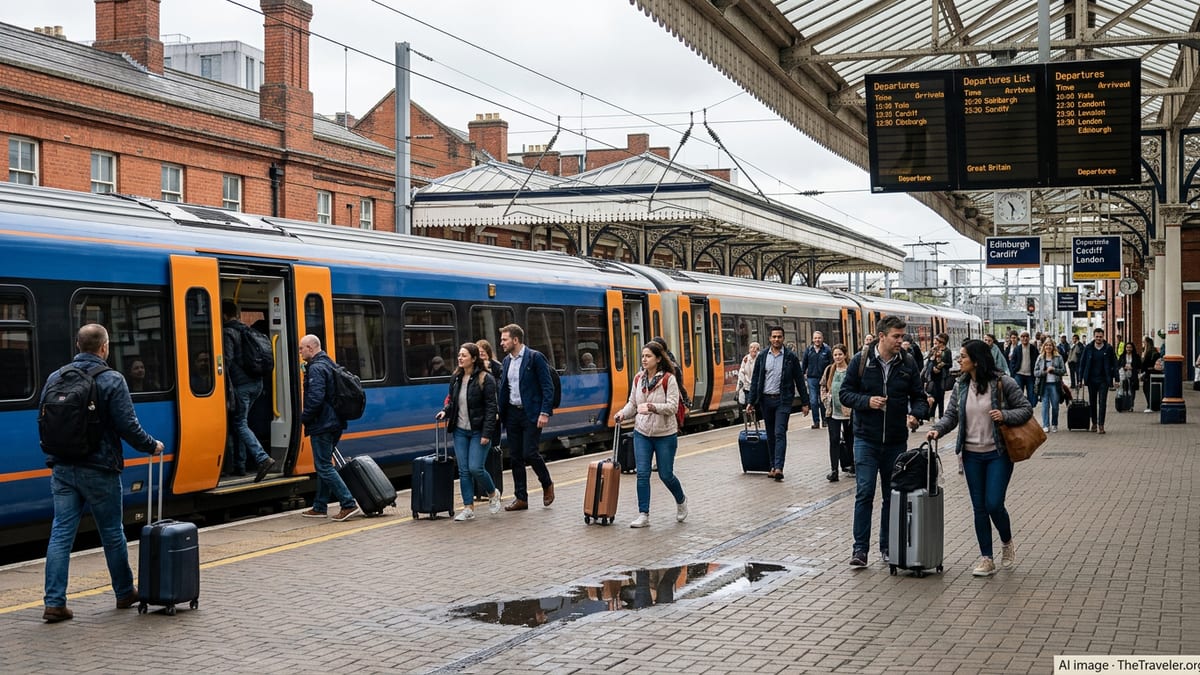
BritRail Returns to the Spotlight for Global Tourists
The BritRail Pass, long familiar to overseas visitors but newly foregrounded in Great Britain’s tourism strategy, is being promoted as a simple, all-in-one ticket to explore the country by train. Available exclusively to non-residents before arrival, the pass offers unlimited travel on most National Rail services across England, Scotland and Wales, giving visitors a straightforward way to build multi-stop itineraries without navigating complex local fare systems.
The renewed push around BritRail comes as inbound tourism to Great Britain continues to recover and diversify, with visitors increasingly keen to look beyond London to regional cities, coastal towns and national parks. Rail booking specialist Rail Europe this week highlighted the pass as a cornerstone of its expanded Great Britain portfolio, reflecting confidence that trains will anchor more itineraries for long-haul markets in North America, Asia and beyond.
Industry partners say the timing is favorable. After years of volatility in air travel and rising concerns about climate impact, international travelers are more receptive to rail-based trips that prioritize experience over speed. The BritRail Pass is being framed as both a practical solution and an invitation to slow down and see more of the country in one journey.
Unlimited Journeys, Flexible Itineraries Across England, Scotland, Wales
At the core of the BritRail offer is flexibility. Pass holders can typically choose consecutive or flexible travel days within a set validity period, then board most scheduled National Rail services within the geographical zone of their pass. For many visitors, that means waking up in London, spending an afternoon in York, and continuing north to Edinburgh on a single day of travel, or combining coastal detours, cathedral cities and university towns in one seamless itinerary.
Beyond the flagship Great Britain-wide pass, regional products allow travelers to focus on specific areas, such as England only, Scotland only or defined corridors in the southwest and north of the country. That modular approach is designed to appeal to visitors who pair a city break with time in the countryside, or who want to add a rail loop onto a longer stay that includes Ireland or mainland Europe.
Digital ticketing is increasingly central to how the pass is used. Mobile BritRail products allow travelers to activate travel days on their smartphones, align journeys with real-time timetable information and avoid queuing at ticket machines. That shift is part of a wider modernization of Britain’s rail network, which includes expanded contactless ticketing and new branding under the forthcoming Great British Railways structure.
Rail at the Heart of Britain’s Sustainable Travel Story
The renewed focus on BritRail fits neatly into a broader sustainability narrative that British tourism and rail authorities have been cultivating. Rail has been promoted as a lower-carbon alternative to domestic flights and long-distance car travel, especially for itineraries that link major cities with regional hubs and rural landscapes.
Campaigns tied to the 200th anniversary of passenger rail, marked in 2025, have showcased Britain’s long rail heritage while emphasizing its role in a more climate-conscious future. Against that backdrop, the BritRail Pass is being positioned as a tool that makes it easier for visitors to choose trains over rental cars, particularly in sensitive environments such as national parks, coastal areas and historic town centers where congestion and emissions are ongoing concerns.
Tourism boards and rail partners are also highlighting the experiential advantages of rail: uninterrupted views from large windows, the ability to work, read or socialize on board, and direct access into city centers. For long-haul markets where travelers may be less familiar with Britain’s geography, the pass is being marketed as a way to discover lesser-known destinations without navigating motorways or left-hand driving.
New Momentum From International Distribution and Rail Deals
Rail Europe’s decision to strengthen its distribution of the BritRail Pass adds new momentum to Great Britain’s rail offering at a time when global interest in European train travel is at a high. By bringing the product into the same channels as continental rail passes and point-to-point tickets, the company aims to capture travelers who are already considering rail-heavy itineraries and extend their journeys across the Channel.
On the domestic policy front, the British government has been using high-profile fare promotions, such as recurring national rail sales, to keep trains in the public eye and encourage off-peak travel. While these discounted offers mainly target residents, they contribute to an overall perception of rail as an accessible, value-driven mode of transport, which in turn supports the story that inbound tourism partners tell around BritRail.
Industry observers note that developments such as planned Great British Railways branding and expanded pay-as-you-go ticketing in parts of England are gradually simplifying the system for all users. For overseas visitors, tour operators and rail specialists act as translators of that complexity, and the BritRail Pass is increasingly presented as the easiest single product to understand in a fragmented market.
Adventurous Travelers Look Beyond London by Train
The BritRail Pass is especially being pitched to a new wave of independent travelers who want the freedom to improvise once they arrive. Backpackers, digital nomads and multi-generational families are all seen as key audiences, drawn by the ability to follow the weather, local recommendations or last-minute inspiration without having to lock in every departure weeks in advance.
Sample itineraries promoted by rail and tourism partners span everything from whisky-themed journeys between Scottish distilleries to literary circuits linking the homes of authors in England, or coastal hops along the Welsh shoreline. In many cases, the message is that the journey itself is part of the experience, with scenic rail lines through moorland, mountains and estuaries framed as highlights rather than simply transfers.
With new international distribution, aligned sustainability messaging and a clearer product story, Great Britain is betting that the BritRail Pass can help define a fresh era of rail-centered travel. For visitors, it offers a practical way to turn a handful of British cities and landscapes into one continuous, free-flowing adventure, stitched together by trains.