

More news on this day
British holidaymakers heading into the Easter break are facing severe disruption as the escalating conflict in the Middle East triggers widespread flight cancellations, diversions and sharp fare increases on key long-haul routes from the UK.
Get the latest news straight to your inbox!
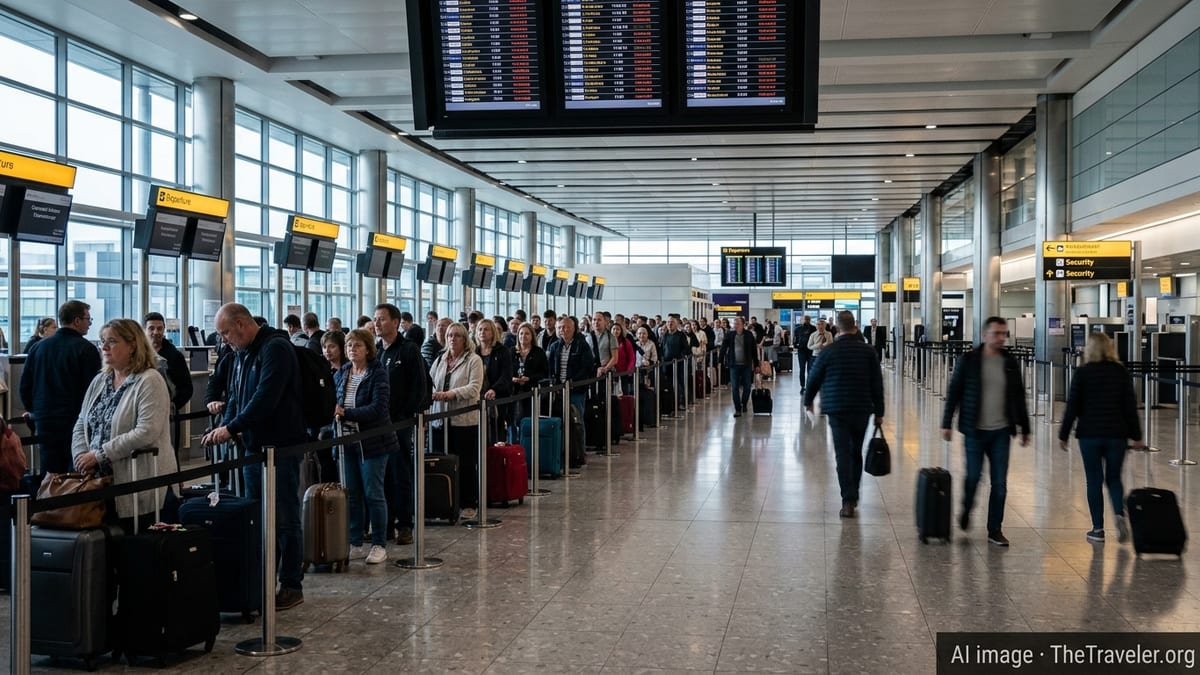
Middle East Conflict Ripples Into UK Easter Getaways
Airspace closures across Iran, Iraq, Israel, Kuwait, Bahrain, Qatar and the United Arab Emirates in recent weeks have upended normal flight patterns, affecting thousands of journeys that would usually connect the UK with Asia, Africa and Australasia through Gulf hubs. Publicly available flight-tracking data shows swathes of regional skies effectively empty, forcing airlines either to halt services or operate lengthy detours.
Major Gulf carriers that typically funnel large numbers of British passengers through Dubai, Abu Dhabi and Doha have suspended or heavily curtailed schedules on multiple days, disrupting onward connections to destinations from Sydney to Bangkok. Aviation analysts describe the shock to Middle East aviation as the most severe since the Covid-19 shutdowns, with consequences now landing squarely on UK Easter travel plans.
Reports indicate that some UK-bound and UK-originating flights have been turned back mid-route or diverted to alternative airports as airspace restrictions tightened with little warning. For many travellers, the Easter period that usually marks the start of the spring getaway has instead become a complex exercise in rebooking, rerouting or postponing long-planned trips.
Flights Cancelled, Schedules Slashed and Passengers Stranded
Published coverage from UK and international outlets shows that carriers including Emirates, Etihad and Qatar Airways have cancelled or suspended numerous departures in recent days, including popular services linking London, Manchester and other British airports with Gulf hubs. At times, airlines have announced full suspensions of flights to and from Dubai or Abu Dhabi for entire operating days while the security situation evolves.
The disruption is not confined to Middle East destinations. Because so many UK travellers to South and Southeast Asia, Australia and New Zealand rely on one-stop itineraries via the Gulf, cancellations at hub airports have cascaded across global networks. Industry data cited by travel analysts suggests hundreds of thousands of passengers remain stranded or significantly delayed across Europe, the Middle East and beyond.
At London Heathrow and other major UK airports, travellers heading for Easter breaks have reported short-notice cancellations to cities such as Dubai and Doha, as well as knock-on delays to flights linking with alternative routes. Some European and Asian carriers have opted to avoid affected airspace altogether, lengthening flight times and placing additional strain on aircraft and crews.
The UK Civil Aviation Authority has reiterated general guidance that passengers on UK- or EU-operated flights whose services are cancelled are entitled to refunds or re-routing, even when the cause is security-related. However, the combination of limited available seats and rapidly evolving schedules means that in practice many families are facing long waits for alternative options.
Fares Surge on Scarce Seats to Asia and Australia
With capacity through the Gulf sharply reduced just as demand peaks for the Easter school holidays, airfare prices on remaining routes have climbed steeply. UK travel columns report that economy return fares to Australia over the Easter period have risen by around 400 pounds in some cases, as travellers compete for seats on detoured services or on routes that bypass the Middle East entirely.
Airlines that continue to operate between Europe and Asia while skirting closed airspace are absorbing higher fuel burn and extended flying times, costs that are increasingly reflected in ticket prices. Analysts note that a flight from South Asia to London that would typically cross Iranian airspace may now take substantially longer via more southerly or northerly corridors, eroding already tight margins.
Travel agents in the UK describe a surge in enquiries from customers seeking to rebook via alternative hubs such as Istanbul, Singapore or various European gateways. With Easter only days away, the pool of affordable options is narrowing rapidly, leaving some holidaymakers to consider postponing trips or switching to nearer destinations in Europe and North Africa that are less affected by the Middle East crisis.
Industry specialists caution that if airspace restrictions and security concerns persist into April, elevated fares and constrained capacity on long-haul routes out of the UK could extend well beyond the Easter peak, affecting business travel as well as leisure bookings into the summer.
Airlines Reroute and Trim Networks as Uncertainty Grows
According to aviation analytics cited in international coverage, thousands of flights have been cancelled across the wider Middle East since the latest phase of the conflict began, with many more operating on significantly altered routings. European and Asian carriers have announced temporary suspensions of services over Iranian and Israeli airspace, and a range of operators are now publishing advisories warning of extended journey times on flights between Europe and Asia.
Some airlines serving the UK are using longer, more northerly routes that arc over central Asia or Europe to avoid the Gulf region, while others are funnelling traffic through secondary hubs to maintain connectivity. These changes add complexity to crew planning and aircraft rotations, making schedules more fragile and increasing the risk of late-notice disruption for passengers.
Travel industry commentary suggests that the situation remains fluid, with airlines reviewing their timetables on a rolling basis as governments update security guidance and as military activity in the region fluctuates. For British travellers, that means even confirmed Easter bookings may be subject to change, particularly on itineraries involving multiple carriers or connections through sensitive airspace.
Some tour operators with customers stranded in the Gulf have arranged special services or coordinated with airlines to prioritise seats for repatriation, but capacity remains limited. Travellers are being advised in public guidance to monitor airline notifications closely, ensure contact details on bookings are up to date and allow extra time at airports in case of last-minute gate or routing changes.
Government Advice and What UK Travellers Can Do Now
The UK Foreign, Commonwealth and Development Office has tightened travel advice for several countries affected by the conflict, including strong warnings against non-essential journeys to parts of the region. The updated guidance highlights the risk of further airspace closures and notes that options for assisted departure may be limited if the security situation deteriorates further.
Consumer advocates point out that while passenger rights rules provide a framework for refunds and care, they do not obligate airlines to pay compensation when cancellations are caused by armed conflict or security risks beyond their control. As a result, British families may be reimbursed for flights but still incur costs for rearranged accommodation, alternative transport or last-minute itinerary changes.
Travel insurers are urging customers, through public statements and policy updates, to check the fine print of their policies. Many standard products limit cover for war-related disruption, although some higher-tier or specialist policies may include benefits for travel abandonment or extended delays stemming from geopolitical crises.
For now, industry experts broadly recommend that anyone planning to transit the Middle East over Easter should regularly review official travel advice, keep a close eye on airline and airport updates, and consider flexible booking options where possible. With the course of the conflict still uncertain, the only constant for UK travellers ahead of the holiday period appears to be volatility in the skies between Britain and some of its most popular long-haul destinations.