

More news on this day
Spain’s Easter getaway has been thrown into disarray around Málaga as damaged rail infrastructure and emergency repairs strand thousands of passengers, disrupt Holy Week plans and shake confidence in one of Europe’s busiest high speed tourism corridors.
Get the latest news straight to your inbox!
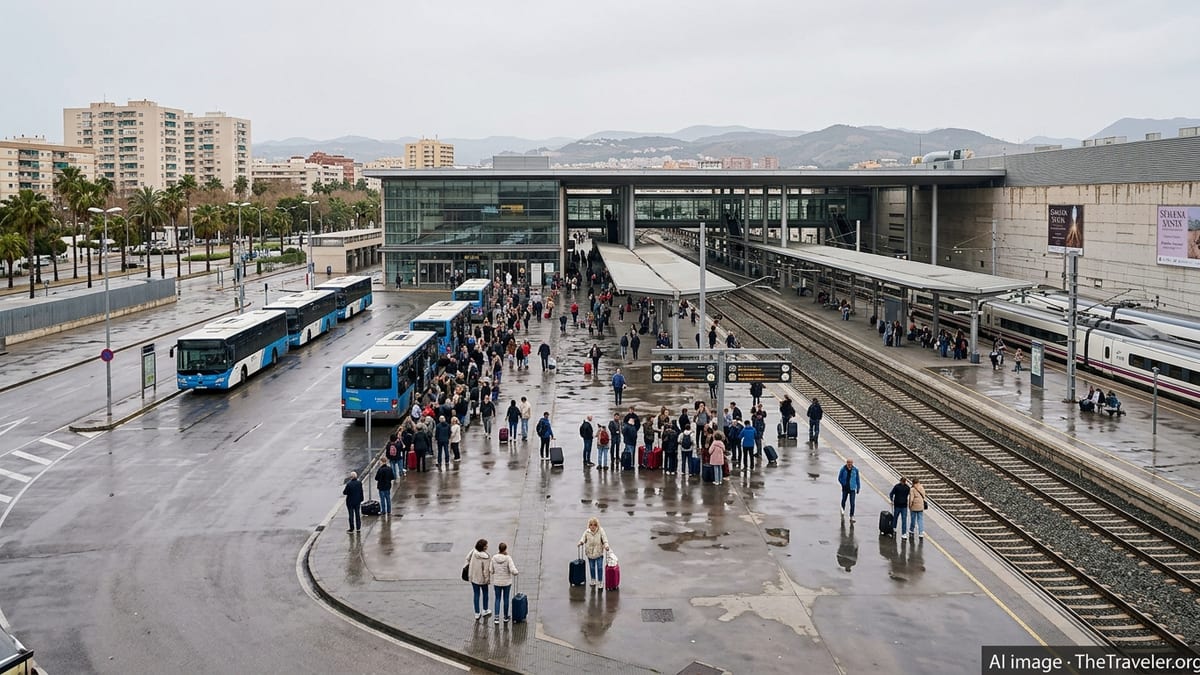
Broken Rails and Storm Damage Hit a Critical Corridor
The disruption centers on the high speed routes linking Málaga with Madrid, Seville and Granada, a network that usually carries tens of thousands of visitors into the Costa del Sol for Holy Week. A combination of earlier infrastructure damage, storm related landslides in Andalusia and at least one broken rail section has reduced train capacity just as seasonal demand peaks.
Publicly available information from infrastructure and operator updates indicates that the high speed line north of Córdoba is still recovering from a serious derailment in January, where a suspected rail failure led to a collision on the Madrid Andalusia axis. At the same time, heavy winter rains in the province of Málaga caused slope and wall failures near key junctions, forcing speed limits and partial closures on approaches to the city.
In recent days, travelers have reported that services which normally run directly in and out of Málaga have been replaced or reconfigured, with trains terminating inland and passengers transferred to buses for the final stretch to the coast. While the backbone of the national network remains open, the weakened links into Málaga have created a bottleneck that is spilling into Easter week timetables.
Rail planners had counted on progressive restoration of normal operations ahead of Semana Santa, but repair work has advanced more slowly than many passengers expected. The result is a patchwork of rerouted trains, emergency bus legs and reduced frequencies that are catching late bookers and casual holidaymakers off guard.
Thousands Stranded as Buses Replace Trains Into Málaga
Evidence from booking platforms, operator notices and widespread social media accounts suggests that thousands of travelers have been affected in the run up to Easter. Some high speed services between Madrid and Málaga have been cancelled outright, while others now run only as far as Antequera Santa Ana, an inland junction where passengers are asked to board buses for the remaining journey to the coast.
Travelers heading between Málaga and Seville or Granada have encountered similar hybrid itineraries, with standard and regional trains truncated and bus segments inserted at short notice. Confusion has been compounded by instances where tickets purchased weeks ago still show rail-only routes, even though current operations rely on road coaches over damaged sections.
Reports indicate that long queues have formed at Málaga María Zambrano station and at inland transfer points on peak days, especially as Easter processions draw crowds into Andalusian cities. Some passengers have described missing onward connections or arriving hours later than planned after waiting for replacement buses in bad weather or heavy traffic.
Despite efforts by operators to issue alerts through apps and email, the scale and timing of timetable changes have left many tourists scrambling at station concourses. Those arriving by air and expecting a seamless high speed link to coastal resorts have often had to improvise with rental cars, ride sharing services or intercity buses when they discover their trains are disrupted.
Málaga’s Easter Tourism Boom Meets Infrastructure Fragility
The rail disruption comes at a sensitive moment for Málaga, which has marketed itself as the cultural gateway to the Costa del Sol and a major Holy Week destination. Easter processions, art exhibitions and gastronomy festivals rely heavily on visitors arriving from Madrid, Barcelona and northern Europe via the high speed rail hub.
Tourism and hospitality groups tracking bookings report that hotels in central Málaga and along the coast remain busy, but the pattern of arrivals is shifting. Some travelers appear to be diverting to Seville or Córdoba, where rail connections from Madrid, while slower than usual in some cases, have been more predictable in the days leading up to Easter.
Local businesses that depend on weekend city breakers and short rail based escapes from Madrid are particularly exposed. Restaurant owners, guides and small tour operators note that same day or overnight visitors are more likely to cancel when journey times lengthen and uncertainty grows around the return trip. The psychological impact of seeing broken rails and emergency repairs highlighted in national media has also dented the image of the corridor as a fast, frictionless route to the sun.
For Málaga’s long term tourism strategy, the episode underscores how closely its visitor economy is tied to the resilience of national infrastructure. The city has invested heavily in museums, cruise facilities and conference venues, but many of those bets assume that high speed trains can reliably funnel visitors in and out during peak holiday periods.
Emergency Timetables, Partial Restorations and What Travelers Can Expect
Rail companies have introduced a series of emergency timetables and alternative transport plans to keep Málaga connected over the Easter period. On the main Madrid Málaga axis, additional high speed services have been scheduled where infrastructure allows, with some trains extended or upgraded in capacity to absorb demand. However, many of these services still involve a road segment between Málaga and Antequera Santa Ana, stretching travel times and adding operational complexity.
On the Avant and regional networks linking Málaga with Seville and Granada, timetables have been gradually rebuilt but remain incomplete. Published coverage indicates that certain Avant routes are slated to return to full frequency around the start of April, while others will continue to rely on substitute buses until structural repairs on damaged walls and embankments are completed. For travelers, that means a mixed picture over the Easter weekend itself, with some lines running nearly as normal and others offering only skeleton or combined bus rail options.
Passengers who are already booked are being urged in public advisories to check their train status repeatedly in the days and even hours before departure. It is common for operators to adjust departure times or rolling stock assignments at short notice as engineering teams open or close sections of track. Travelers are also being encouraged to arrive earlier at stations where bus transfers are in place, since boarding procedures and luggage loading can be slower than on trains.
Those still planning last minute Easter trips to Málaga are finding that journeys involving changes at Córdoba or Antequera offer more certainty than relying on single direct trains. Travel forums are full of suggestions to build extra buffer time into itineraries, purchase flexible fares where possible and keep alternative road based options in mind in case further rail capacity is withdrawn during the holiday rush.
Longer Term Questions Over Spain’s Rail Reliability
The Málaga disruption is feeding into a broader national debate about the reliability and maintenance of Spain’s high speed network following a series of high profile incidents over the past year. Investigations into the January derailment on the Madrid Andalusia line have highlighted the potential role of broken rails and welds, while storm related damage has raised questions about drainage, slope protection and climate resilience along exposed stretches of track.
Regulatory reports released in recent months already show that traffic on some high speed corridors has been growing rapidly, with the Madrid Málaga Granada axis registering strong increases in passenger numbers. At the same time, competitive pressure from new operators has encouraged aggressive pricing and dense timetables, leaving limited slack when infrastructure failures occur.
For international visitors choosing rail as a low carbon alternative to domestic flights, the Easter chaos around Málaga may serve as a reminder that even flagship networks are vulnerable to compound shocks. Travel advisers are stressing that Spain’s trains remain among Europe’s fastest and most extensive, but they now pair that message with more explicit guidance on contingency planning and travel insurance.
As engineering teams race to restore full service on the approaches to Málaga, attention is turning to whether additional investment in inspection technology, redundancy and weather proofing will follow. For now, though, Easter travelers to the Costa del Sol are learning that the romance of Spanish rail can sometimes collide with the hard limits of metal, concrete and saturated hillsides at the very moment demand is highest.