

More news on this day
Brussels Airport is alerting travelers to possible longer queues at passport control as the European Union’s new Entry/Exit System, a bloc-wide digital border database, moves toward full deployment in early April.
Get the latest news straight to your inbox!
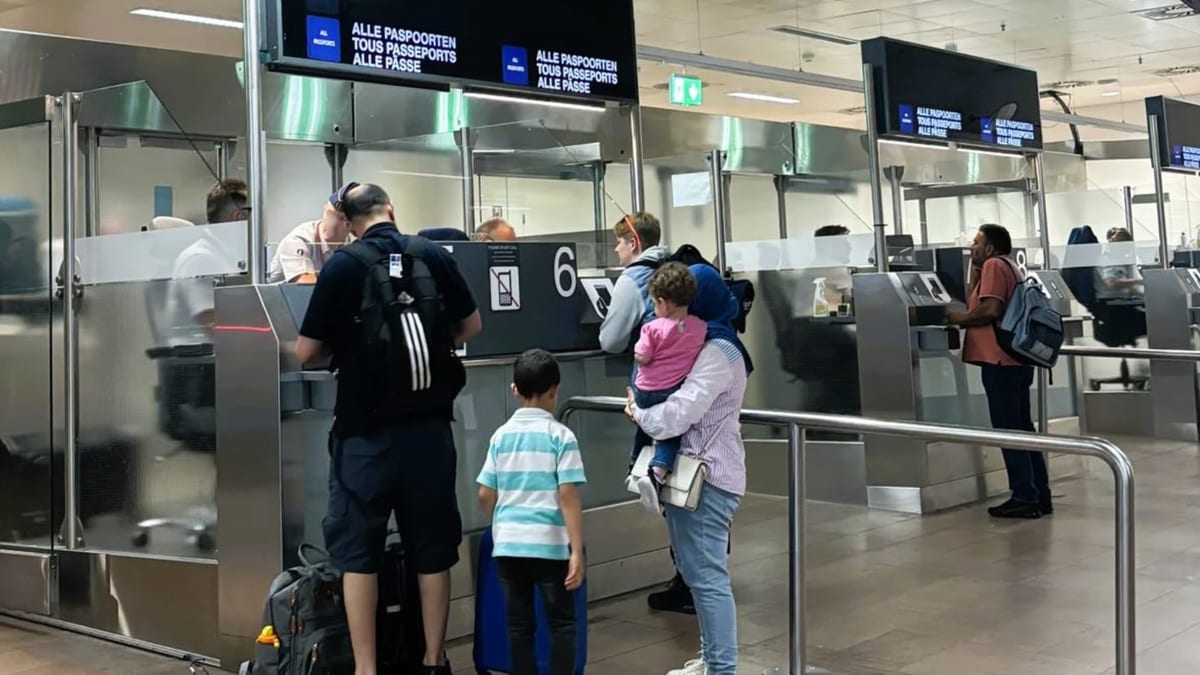
Image by travelwires.com
Digital border system reshapes arrivals and departures
The EU’s Entry/Exit System (EES) is designed to replace manual passport stamping for most non-EU nationals entering or leaving the Schengen area. Instead of ink stamps, the system records each border crossing in a central database, including biometric data such as facial images and fingerprints. Publicly available information indicates that EES has been in phased use at a limited number of border points since October 2025 and is now approaching wider application across European airports.
At Brussels Airport, the shift coincides with a busy spring travel period and long-running concerns about bottlenecks at border control. Airport communications ahead of the rollout stress that additional time may be needed for checks, particularly for travelers who are registering their biometric data for the first time. The advice reflects broader warnings from European aviation stakeholders who expect the changeover to be felt most acutely during peak holiday travel.
The system primarily affects passengers from non-EU and non-Schengen countries, including many long-haul visitors and connecting travelers flying through Brussels. EU and Schengen nationals, who typically use separate queues and automated e-gates, are expected to see less impact, although airport operators caution that any congestion at shared facilities can ripple across the terminal.
Belgian authorities have already adjusted local plans for biometric registration, with recent reports indicating that some pre-deployment sessions for non-EU nationals at Belgian border points have been pushed back. Those shifts underscore how individual countries and airports are still calibrating how to implement EES while trying to avoid severe disruption.
Industry fears queues as spring travel ramps up
Warnings from Brussels come amid mounting concern across Europe that EES could exacerbate existing staffing and infrastructure pressures at border control. Industry groups representing airports and airlines have repeatedly highlighted the risk of longer processing times at departure and arrival as systems bed in. Recent coverage from several outlets has pointed to trial experiences at other European airports, where early EES use has at times added minutes to individual checks and pushed total wait times at immigration close to or beyond two hours during busy periods.
In Belgium, Brussels Airport has for several years been under scrutiny from travelers for long lines at passport control, especially for non-EU passengers. Online accounts and local reports describe queues stretching deep into the arrivals hall on peak days. With EES now requiring biometric capture and verification for many of those travelers, Brussels Airport’s warning about potential new delays is being interpreted as an effort to set expectations before passenger volumes surge for Easter and early summer holidays.
Across the continent, recent travel reporting has highlighted congestion at major leisure gateways as the new rules take hold, including instances of multi-hour waits at southern European resorts. Those early examples are feeding concerns that northern hub airports such as Brussels could face similar pressure once EES is fully active on more lanes and for a larger share of travelers.
Despite these worries, EU institutions continue to present EES as a cornerstone of a more secure and efficient external border. The challenge for airports like Brussels will be to reconcile that long-term goal with short-term operational realities in terminals that already operate close to capacity.
What travelers using Brussels Airport should expect
For passengers passing through Brussels in the coming weeks, the most immediate change will be the possibility of additional steps at passport control. Non-EU travelers arriving in or departing from the Schengen zone via Brussels can be directed to counters or automated kiosks where their passport is scanned, a facial image is captured, and, in many cases, fingerprints are taken. The initial registration typically takes longer than subsequent crossings, meaning first-time visitors may experience the greatest delays.
Airlines serving Brussels are advising international passengers to arrive at the airport earlier than they might have in previous years, especially when connecting from or to long-haul flights. Travelers with tight connections that require a change of terminal and a fresh border check are being urged by travel advisers to review minimum connection times and, where possible, select longer layovers until the new system stabilizes.
Passengers can also expect more prominent signage and announcements in the departures and arrivals areas as the airport attempts to steer different nationalities into the correct lanes for EES processing. In practice, that could mean distinct queues for first-time biometric registration and for travelers whose details are already stored in the system, alongside existing e-gates for eligible EU and Schengen citizens.
Travel information platforms are recommending that visitors carry printed confirmations of onward travel and accommodation details, even though EES itself is based on biometric and passport data rather than advance authorization. Having documentation at hand can help minimize secondary questions at the counter, particularly during the early months of the rollout when officers and passengers alike are adjusting to the new workflow.
Balancing security ambitions with passenger experience
The Entry/Exit System is part of a broader transformation of how the EU manages its external borders, alongside plans for the European Travel Information and Authorisation System, which is due to follow at a later stage. Both initiatives respond to longstanding calls within the bloc for more reliable data on cross-border movements and a stronger ability to track overstays, identity fraud and other abuses of the visa-free regime.
For airports such as Brussels, however, these policy goals intersect with day-to-day operational constraints. Reports from recent trial phases at other hubs indicate that even modest increases in per-passenger processing time can translate into long queues when staffing levels and infrastructure do not expand in parallel. Brussels Airport’s pre-emptive warning about delays reflects an awareness that the margin for error is thin, particularly at a hub that has faced criticism in recent years over repeated congestion and occasional technical disruptions.
Industry observers note that some EU member states are experimenting with mitigation measures, such as additional staff deployment, expanded use of automated gates, and crowd-management tools that redirect travelers in real time. How quickly those solutions can be scaled at Brussels Airport will likely determine whether the transition to EES is remembered as a brief adjustment period or a prolonged source of frustration for passengers.
As spring and summer travel demand builds, Brussels will function as a high-profile test case for how a busy, politically symbolic airport copes with one of the most significant overhauls of European border procedures in decades. Travelers are being encouraged to plan ahead, expect more time at passport control, and monitor official airport communications for evolving guidance as the new system beds in.