

More news on this day
Brussels Airport will halt all departing passenger flights on Thursday, March 12, as Belgium braces for a sweeping national strike that is set to cripple transport networks and leave thousands of travelers stranded across Europe.
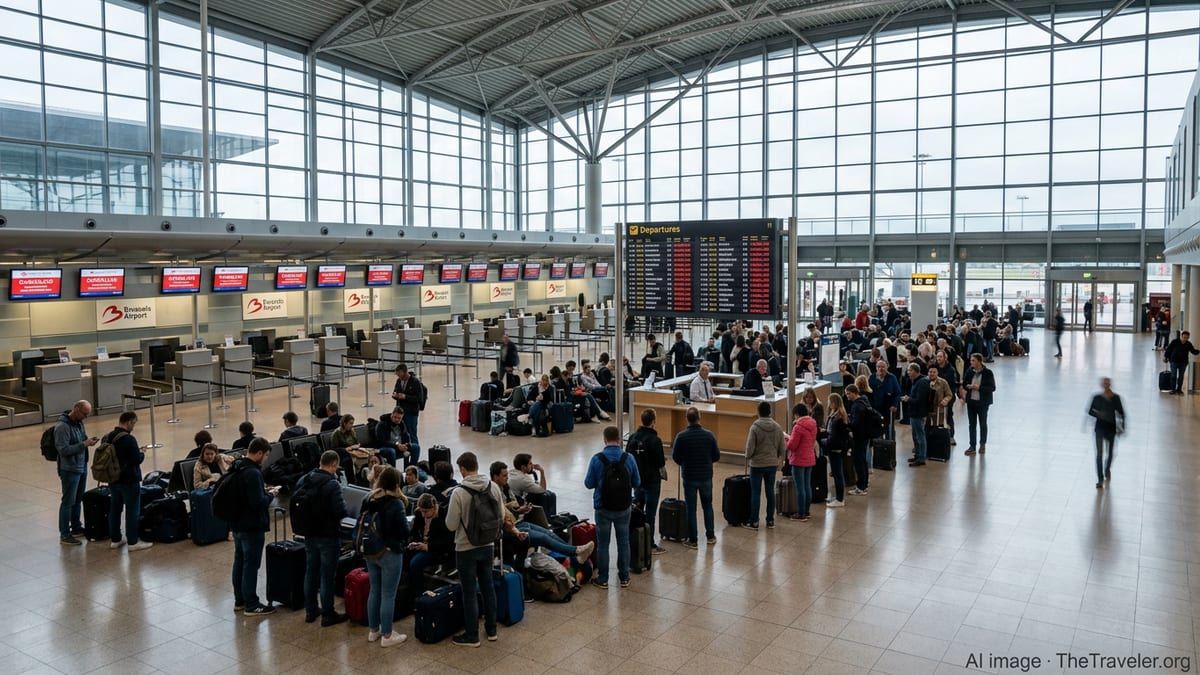
Nationwide Strike Forces Full Shutdown of Departures
The decision to ground all outbound flights from Brussels Airport on March 12 follows formal strike notifications by Belgium’s main trade unions, who have called for nationwide industrial action over pay, working conditions and cost-of-living concerns. Airport authorities say participation is expected to be so extensive among security staff, baggage handlers and ground operations crews that it will be impossible to maintain safe passenger flows.
Officials at the Zaventem hub, which normally handles tens of thousands of passengers a day, confirmed that no passenger flights will depart during the 24-hour action. While a limited number of arrivals may still be permitted, the airport has warned that inbound operations could also face cancellations and significant delays as staffing levels fluctuate and air traffic control capacity is reassessed.
Similar nationwide walkouts have repeatedly shut down Brussels Airport in recent years, but the latest stoppage comes at the start of the busy spring travel period, compounding the impact on business travelers, EU officials and leisure passengers connecting through the Belgian capital to destinations across Europe and beyond.
Belgian aviation unions argue that the disruption is a last resort after months of stalled negotiations, insisting that chronic understaffing, irregular schedules and high inflation have eroded wages and pushed frontline workers to breaking point.
How Many Travelers Are Affected and Which Routes Are Hit
On a typical Thursday in March, Brussels Airport processes around 60,000 to 70,000 passengers, many of them on short-haul European services operated by Brussels Airlines, Ryanair, easyJet and other carriers. With all departures now cancelled for March 12, industry analysts estimate that tens of thousands of ticket holders will either be stranded in Belgium or forced to re-route via alternative hubs such as Amsterdam, Paris, Frankfurt or London.
Key intra-European links are expected to be among the hardest hit, particularly high-frequency routes to major capitals and to regional business centers served by multiple daily rotations. Long-haul flights to North America, Africa and Asia originating in Brussels are also being scrubbed from schedules, disrupting complex itineraries and severing important diplomatic, institutional and cargo ties for the day.
The ripple effects will be felt far beyond Belgian borders. European airports that rely on feed from Brussels, especially those served by Star Alliance partners and low-cost carriers with tightly timed connections, are preparing for missed onward flights, unclaimed baggage and congested customer service desks as passengers scramble to repair disrupted journeys.
Belgium’s secondary airports are bracing for spillover. Charleroi, a major base for low-cost airlines, has already announced significant cancellations on the same day due to the nationwide action, making it harder for travelers to simply switch Belgian departure points to avoid the shutdown in Brussels.
What Airlines Are Doing for Stranded Passengers
Airlines operating from Brussels have begun contacting customers booked to depart on March 12, offering a mix of rebooking options, vouchers and refunds. Many carriers are waiving change fees and allowing free date or routing changes within a defined travel window, though fare differences may still apply on popular alternative flights around the strike period.
Passengers are being urged not to travel to the airport on the strike day unless explicitly instructed by their airline. With check-in counters and security checkpoints largely unstaffed, terminals are expected to operate on a skeleton basis, and officials say there will be little capacity to assist walk-up customers seeking last-minute changes.
Consumer advocates are reminding travelers that European air passenger rights rules entitle them to care such as meals and accommodation when flights are cancelled at short notice, depending on the circumstances and timing of notifications. However, compensation for strike-related cancellations can be more complex, as industrial action may be considered beyond the airline’s control, making it essential for passengers to read the specific terms provided by their carrier.
Given the scale of the shutdown, airlines warn that call centers, chat services and social media channels are likely to be overwhelmed in the days leading up to March 12. Travelers are advised to use airline apps and online booking tools where possible, monitor booking records closely and act quickly when rebooking options are offered, as alternative flights across Europe are already filling up.
Wider Disruption Across Belgium and Europe’s Transport Network
The aviation shutdown at Brussels Airport is only one element of a broader transport disruption expected across Belgium during the national strike. Rail services, local public transport and certain cross-border connections are likely to be heavily reduced, complicating travel even for those who attempt to bypass Brussels by flying through neighboring countries.
International rail links are also under pressure. Services on routes connecting Brussels to Paris, London, Amsterdam and Cologne face potential schedule changes or cancellations, with operators warning of slower journeys, fewer frequencies and crowded trains around the strike date.
The knock-on effects will filter through Europe’s aviation system throughout the week. Even after Belgian workers return to their posts, aircraft and crew rotations will be out of position, leading to residual delays and occasional cancellations as airlines work to restore normal operations. Travel industry observers note that earlier strikes at Brussels took several days to fully unwind, particularly for complex network carriers.
Tourism bodies and business associations in Belgium have expressed concern that repeated, high-impact strikes risk denting the country’s reputation for reliability as a gateway to the European Union’s institutions and headquarters. Nonetheless, union leaders insist that without decisive action now, staffing and safety at key infrastructure sites such as airports will continue to deteriorate.
Practical Advice for Travelers With Upcoming Trips
Passengers scheduled to depart from Brussels on or around March 12 are being urged to review their travel plans immediately. The first step is to confirm whether their flight is among those cancelled and to monitor their booking via airline websites or mobile apps, which are generally updated quicker than airport departure boards.
Travel planners recommend exploring alternative routings through nearby hubs in neighboring countries, but caution that these flights are already in high demand. Travelers may find more availability by adjusting dates, flying from or to secondary airports, or accepting longer layovers to secure a workable itinerary.
Those who cannot avoid travel on the strike day should keep all receipts for meals, accommodation, ground transport and incidentals, as some costs may be recoverable under airline policies or travel insurance, particularly if policies specifically cover strike-related disruption. It is also sensible to build generous buffers into any onward plans, such as cruises, tours or important meetings, to account for cascading delays.
For travelers who are still in the planning phase, industry experts advise avoiding nonrefundable bookings that hinge on precise timing through Brussels around March 12. Flexibility, whether through refundable hotel rates, changeable train tickets or comprehensive travel insurance, will be crucial to navigating one of the most disruptive strike days Belgium’s aviation sector has faced in recent years.