

More news on this day
Belgium’s main international gateway, Brussels Airport, will halt all departing passenger flights on Thursday, March 12, as a sweeping nationwide strike forces the hub to shut down outbound operations and triggers fresh travel turmoil across Europe.
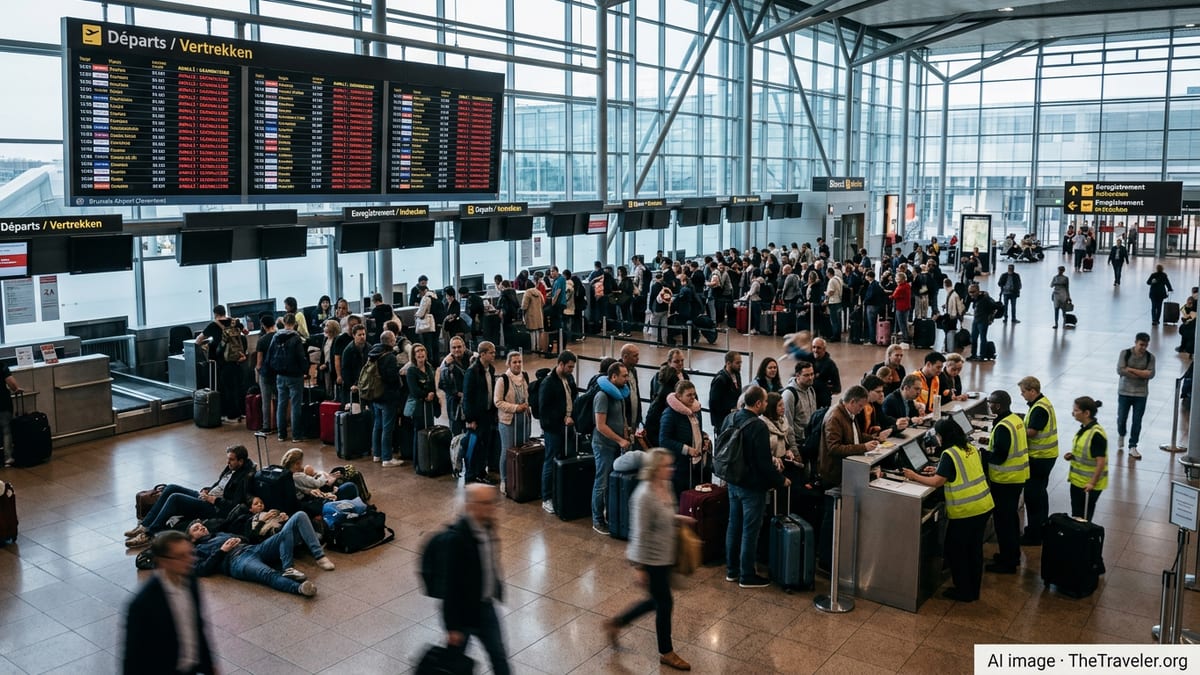
Nationwide Strike Brings Brussels Departures to a Standstill
Brussels Airport confirmed that every scheduled passenger departure on March 12 will be cancelled, citing a national day of industrial action called by Belgium’s main trade unions. The move, announced this week on the airport’s official channels, follows days of mounting warnings that security staff, ground handlers and other key operational teams would walk out in large numbers.
With too few staff available to safely process passengers, baggage and aircraft, airport authorities said it would be impossible to run normal operations. Arrivals may still operate on a limited basis, but airport officials and airlines are advising passengers to brace for delays, last-minute cancellations and long queues throughout the day as inbound schedules are adjusted.
The shutdown is the latest in a series of strike-related closures at Brussels Airport over the past two years, underscoring the fragility of Europe’s air travel network at a time of renewed demand. Previous national actions in 2025 led to several days in which all departures were scrapped, leaving thousands of travellers stranded and forcing airlines to rebuild their schedules over subsequent days.
Authorities say the decision to wipe the departure board in advance is intended to avoid chaotic scenes in the terminal, where previous industrial actions have produced hours-long security queues, crowded check-in halls and large groups of passengers sleeping on the floor while they waited for information.
Knock-On Disruption Across Europe’s Flight Network
While the strike is centred in Belgium, the impact will ripple well beyond Brussels. As the primary hub for both Brussels Airlines and numerous European and long-haul carriers, the airport handles tens of thousands of passengers on a typical weekday and serves as a key connection point for flights linking major European cities with North America, Africa and Asia.
With aircraft unable to depart Brussels, airlines are anticipating widespread disruption to rotations across the continent, affecting aircraft and crew availability at other major hubs. Travellers connecting via Brussels to destinations such as London, Paris, Frankfurt, Barcelona, Rome and multiple Nordic capitals are being rebooked onto alternative routings, adding pressure on already busy spring schedules.
Belgium’s secondary airport at Charleroi has also announced extensive cancellations for March 12, further limiting options for travellers hoping to switch departure points within the country. Some carriers are exploring the possibility of rerouting operations through neighbouring airports in the Netherlands, Germany and France, but the sheer volume of cancelled flights means many passengers will see their journeys pushed back by at least a day.
Travel agents and airline call centres across Europe reported a surge in calls as news of the shutdown spread, with passengers scrambling for remaining seats on services that bypass Belgian airspace or depart a day earlier. Industry analysts say the disruption once again highlights how national labour disputes in a key European state can quickly cascade through the wider aviation system.
What Stranded Passengers Can Expect on March 12
Travellers scheduled to depart from Brussels on March 12 are being urged not to go to the airport unless specifically instructed by their airline. Instead, carriers are contacting customers directly to outline options, which typically include free rebooking on a later date, rerouting via another airport, or requesting a refund where flights have been cancelled.
Despite early announcements, thousands of passengers are still expected to arrive at the terminal unaware that their flight has been grounded, particularly those who booked via third-party websites or smaller travel agencies. Airport staff and airline ground teams are preparing to manage long lines at information desks as they work through rebookings and compensation claims in accordance with European passenger rights regulations.
Hotels near the airport and in central Brussels are already reporting increased demand from travellers seeking last-minute accommodation, especially those who will now face overnight stays before newly arranged flights. Rail services and long-distance coaches linking Belgium with neighbouring countries are also likely to come under pressure as some passengers abandon air travel altogether and opt for overland routes.
At the airport itself, travellers can expect a subdued departures hall, with large swaths of the check-in area closed and many shops and services operating on reduced hours. However, airlines with inbound flights still operating may maintain a minimal presence to support arriving customers and manage connections onto non-Belgian services.
Why Belgian Aviation Keeps Getting Hit by Strikes
The March 12 shutdown reflects ongoing tensions between trade unions and employers in Belgium’s transport and public sectors. Union leaders say staff are frustrated over pay, workload and staffing levels, arguing that rising passenger numbers have not been matched by sustainable hiring and investment in front-line roles such as security screening, baggage handling and ground support.
Aviation unions have repeatedly chosen national strike days to apply pressure, leveraging the high visibility of airport disruption to amplify their message. For Brussels Airport, this has meant several full-day shutdowns in recent years, as well as partial actions that slowed operations to a crawl and forced airlines to thin out their schedules in advance.
Industry groups warn that the repeated cycles of disruption risk damaging Belgium’s reputation as a reliable gateway for business and leisure travel. Airlines have already pointed to increased operational complexity, with some carriers building in longer connection times or shifting capacity to neighbouring countries during periods when industrial unrest appears likely.
Unions, however, insist that without firm commitments on staffing and working conditions, strike action will remain a tool of last resort. Talks between labour representatives, airport authorities and government officials are expected to continue throughout the coming weeks, but for passengers caught in the middle, the immediate focus remains on getting to their destinations with as little additional disruption as possible.
How to Protect Your Travel Plans if You Are Affected
For travellers with tickets touching Brussels around March 12, experts recommend closely monitoring airline notifications and checking booking details at least 24 to 48 hours before departure. Many carriers are issuing flexible rebooking policies, allowing passengers to shift their travel to dates before or after the strike without extra fees, subject to seat availability.
Passengers starting their journeys outside Belgium should pay particular attention to connecting flights routed through Brussels, even if the first leg appears to operate normally. In most cases, airlines will proactively reroute itineraries through alternative hubs, but customers may find more convenient options by contacting carriers directly or working with a travel agent to explore different routings.
Those who do need to travel on March 12 and cannot change their plans entirely may have more success flying to or from nearby airports in Amsterdam, Paris, Düsseldorf or Luxembourg, then completing the journey by train. However, with a general strike underway and rail workers also expected to join the action within Belgium, any plan that relies on domestic Belgian trains that day carries additional risk.
With industrial disputes across Europe showing little sign of abating, travel specialists say the Brussels shutdown is a reminder for passengers to factor potential strikes into their planning, particularly for critical trips. Investing in travel insurance that explicitly covers strike-related disruption, allowing extra time for connections, and keeping itineraries as flexible as possible can all help reduce the stress when last-minute cancellations hit.