

More news on this day
Brussels Airport will suspend all departing passenger flights for 24 hours on Thursday, March 12, as a nationwide strike by Belgian trade unions triggers a shutdown of outbound operations and leaves thousands of travelers scrambling to rearrange their plans.
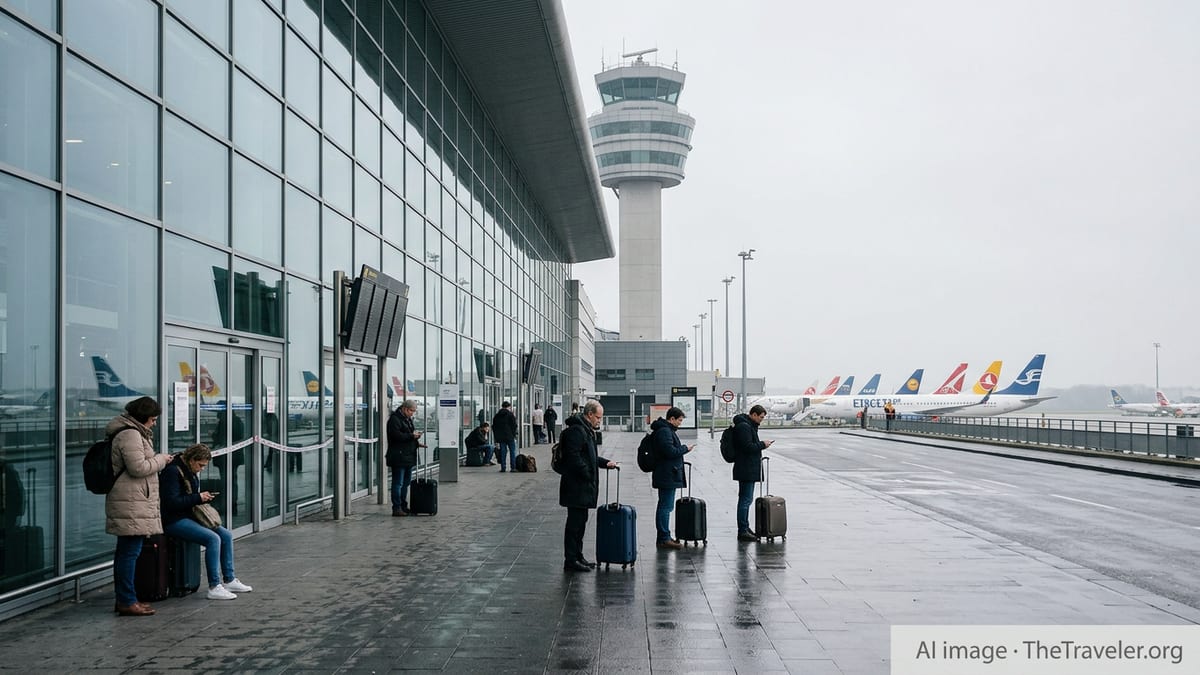
Nationwide Strike Forces 24-Hour Shutdown of Departures
Airport officials confirmed that no departing passenger flights will operate from Brussels Airport on March 12, citing an inability to guarantee the minimum staffing levels required for safe screening, baggage handling and ground operations. The move follows a call by Belgium’s main trade unions for a 24-hour national manifestation over pay, purchasing power and working conditions across multiple sectors.
The decision was taken in consultation with airlines after it became clear that a significant share of staff employed by security, handling and related service providers intended to join the industrial action. With checkpoints, baggage systems and ramp services all at risk of serious disruption, airport management opted for a blanket suspension of departures rather than attempting a reduced schedule.
While all outbound flights are cancelled, some arriving services may still operate on March 12. However, airport and airline representatives are warning that inbound operations are also likely to face delays, diversions and last-minute cancellations, particularly if the strike affects air traffic control staffing or if ground services become too limited to process arriving aircraft efficiently.
The 24-hour stoppage underscores the vulnerability of hub airports to coordinated labour disputes, particularly in Europe where tightly interconnected schedules leave little room to absorb large-scale disruption at short notice.
Thousands of Passengers Face Cancellations and Rebooking Chaos
Airlines serving Brussels are now in a race against time to contact affected passengers, rework schedules and secure alternative travel options where possible. Carriers have begun issuing travel waivers, allowing customers due to depart on March 12 to rebook without change fees, opt for vouchers, or request refunds on cancelled services.
Industry analysts expect the disruption to affect not only those booked to fly on the day of the strike, but also travellers with onward connections in the days that follow. Aircraft and crew will be displaced across networks, forcing airlines to adjust rotations, consolidate flights and, in some cases, cancel additional services while operations reset.
Passengers with nonflexible tickets, group reservations or complex itineraries involving multiple carriers may face longer waits to secure alternatives, particularly on popular European business routes and long-haul services that normally rely on Brussels as a feeder hub. Travel agents report increased call volumes as corporate clients seek to protect essential trips or reroute via nearby airports such as Amsterdam, Paris or Düsseldorf.
Travel insurers are monitoring the situation closely. While policies vary, cover for strike-related disruption often depends on when the trip was booked and whether the industrial action was a known risk at the time of purchase. Experts are urging passengers to read policy conditions carefully before incurring extra costs for hotels or alternative transport.
Impact Extends Across Belgium’s Transport Network
The airport shutdown comes amid broader warnings of severe disruption across Belgium’s transport system on March 12. Rail, metro, bus and tram services are all expected to run significantly reduced timetables, and some routes may be suspended entirely, complicating efforts for travelers who still need to reach or leave the capital.
Travel authorities are advising those with essential journeys on or around March 12 to allow considerably more time, to verify schedules repeatedly, and to plan backups where possible. Even services that are not formally cancelled are expected to be crowded, with knock-on delays as staff shortages ripple through operations.
Belgium’s latest strike adds to a growing list of recent labour disputes affecting European transport, from rail stoppages to airline and air traffic control walkouts. For inbound visitors and business travelers, the recurring unrest has become a significant planning factor, with many now building additional flexibility and buffer days into itineraries involving major European hubs.
Tourism stakeholders warn that repeated episodes of large-scale disruption risk damaging Belgium’s reputation as an accessible gateway to European institutions and city-break destinations. Hoteliers and local tour operators are bracing for last-minute cancellations and no-shows as would-be visitors abandon short trips rather than face the risk of being stranded.
Advice for Travelers With Upcoming Brussels Flights
Passengers booked to depart from Brussels Airport on March 12 are being urged not to travel to the airport unless they receive specific instructions from their airline. With no outbound flights operating, terminals are expected to be busy only with rebooked or misinformed travelers, and most check-in and security functions will be severely limited or closed.
Airlines are asking customers to wait for direct communication about their options rather than calling contact centers immediately, in an effort to avoid overwhelming already stretched customer service teams. Once a flight is officially cancelled, passengers should receive information about available rebooking dates, alternative routes from nearby airports, or refund processes.
Travel experts recommend that passengers with flexible plans consider voluntarily moving their trips to dates before or after the strike window if their carrier permits free changes. Those needing to travel on or close to March 12 may wish to explore overland alternatives, including high-speed rail or coach services, though these too may be affected by the broader national strike.
For travelers still planning to arrive in Brussels on March 12, close monitoring remains essential. While some inbound flights may continue to operate, reduced ground handling capacity, limited public transport and potential secondary impacts on immigration and baggage processing all raise the risk of extended delays and disruption on arrival.
Another Chapter in Belgium’s Ongoing Aviation Labour Disputes
The March 12 shutdown is the latest in a series of strike actions that have periodically brought Belgium’s aviation sector to a standstill in recent years. Previous walkouts by security staff, baggage handlers, air traffic controllers and airline crews have all triggered waves of cancellations, prompting calls from business groups and tourism bodies for more predictable dispute resolution mechanisms.
Union leaders argue that industrial action remains a last-resort tool to highlight concerns over staffing levels, workloads and wage growth that they say have not kept pace with inflation or with the recovery in passenger demand since the pandemic. Employers counter that margins remain under pressure from higher fuel costs, staff shortages and competitive fares, limiting their room for large pay rises.
For now, passengers remain caught in the middle of a complex negotiation between workers, airport operators and airlines. With Brussels Airport again forced to shutter its departures for a full day, industry observers suggest that all sides face mounting pressure to find more durable compromises that protect both working conditions and the reliability of a key European gateway.
As March 12 approaches, the message for travelers is clear: expect disruption, stay informed, and be prepared to adapt plans quickly as airlines and transport providers adjust to yet another day of industrial upheaval in Belgium.