

More news on this day
Brussels Airport is preparing a significantly expanded Summer 2026 flight program that connects Belgium directly to São Paulo, Chengdu, Halifax, Kilimanjaro, Asturias and a growing roster of global city-break destinations, strengthening its role as a one-stop gateway between Europe and the wider world.
Get the latest news straight to your inbox!
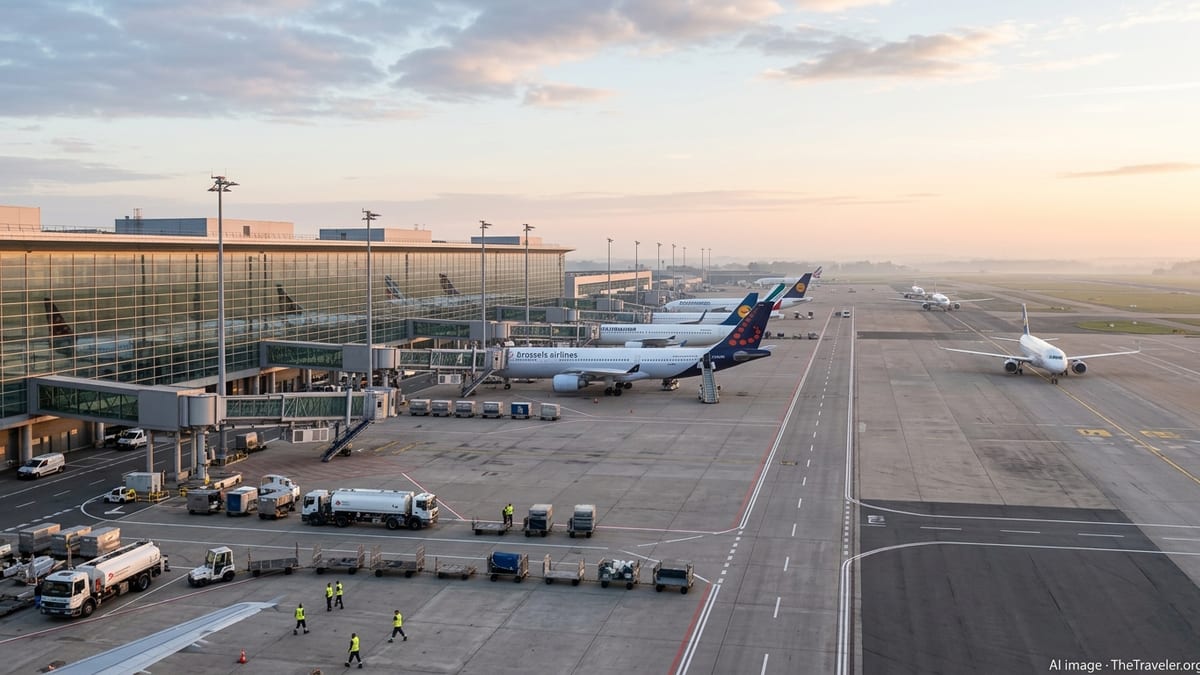
New long-haul links reshape Brussels as a global hub
Publicly available schedules and airline announcements show that Brussels Airport’s Summer 2026 season will introduce or reinforce several intercontinental routes that broaden the airport’s reach well beyond its traditional transatlantic and African strengths. New or relaunched connections to São Paulo, Chengdu, Halifax and Kilimanjaro are set to join the timetable between late March and June 2026, adding fresh city-break and adventure options on three continents.
According to route data and airport information, a new Brussels to São Paulo Guarulhos service is expected to begin around 1 June 2026, operated by LATAM Airlines Brasil, giving Belgium a direct link to South America’s largest metropolis. The route strengthens Brussels’ position within the wider Star Alliance and codeshare ecosystem, allowing Brazilian travellers to use the Belgian capital as a transfer point to dozens of European and African cities.
On the other side of the globe, Air China is preparing to launch service between Brussels and Chengdu Tianfu on 26 March 2026, as part of a wider expansion of its European footprint. Industry coverage indicates that the route will make Chengdu the latest Chinese city reachable non-stop from Brussels, consolidating the airport’s status as a major European gateway to mainland China and opening up access to western China’s fast-growing tech and cultural hub.
Towards Africa, Brussels Airlines plans to introduce a Brussels – Kilimanjaro – Nairobi rotation from 3 June 2026, based on schedules reported by specialist network publications. The twice-weekly Airbus A330 operation will restore a connection last served in the Sabena era, giving Belgian and European travellers a direct jumping-off point for northern Tanzania’s national parks and Mount Kilimanjaro, while preserving onward links to Nairobi.
Atlantic Canada and northern Spain join the short-break map
Across the Atlantic, Air Canada is adding a seasonal Brussels to Halifax service for Summer 2026, with corporate communications indicating a planned launch on 19 June and operations three times per week through early September. The route gives Belgium and neighbouring markets a direct window into Atlantic Canada, while also allowing Canadian travellers to reach Brussels without backtracking through Montreal or Toronto.
The Halifax connection is expected to play a dual role as both a leisure link and a feeder for wider transatlantic travel. Brussels Airport’s existing network of European and African destinations, operated by Brussels Airlines and partner carriers, creates new one-stop possibilities for passengers originating in Nova Scotia and surrounding provinces who are seeking city breaks in Europe or safaris in Africa using Brussels as a hub.
Closer to home, Asturias in northern Spain is set to appear on Brussels Airport departure boards from 30 March 2026. Route listings point to Volotea operating the new Brussels – Asturias service, which will tap into growing demand for lesser-known coastal and cultural destinations. The Asturias capital Oviedo, together with nearby Gijón and the region’s beaches and mountains, offers a contrasting short-break option to the more familiar Iberian city staples.
These additions follow a broader trend in European aviation, where airlines are targeting secondary cities with strong tourism potential but limited direct connectivity. For Brussels, Asturias enhances links to Spain’s Atlantic façade, complementing existing services to major hubs such as Madrid and Barcelona and reinforcing the Belgian capital’s profile as a starting point for more offbeat European itineraries.
Intercontinental network builds on earlier Asia and North America gains
The new Summer 2026 routes build on a multi-year expansion of Brussels Airport’s long-haul offering. Airport communications for the Summer 2025 season highlighted new flights to Atlanta, Curaçao, Bangkok and Hong Kong, alongside an Asia portfolio that already included Tokyo, Beijing, Shanghai, Shenzhen and Singapore. Together with the forthcoming Chengdu service, these developments create a dense mesh of connections between Brussels and key economic centres across Asia.
In North America, the addition of Halifax comes on top of existing links to major hubs, expanding options for both point-to-point and connecting traffic. For city-break travellers, the mix of large gateway cities and smaller, more niche destinations means Brussels can serve as an entry point not only to classic capitals but also to emerging urban and regional tourism hotspots.
Industry observers note that Brussels’ growing role as a China and transatlantic gateway may help the airport capture a larger share of connecting itineraries that previously flowed through other European hubs. With multiple Asian cities now on the network and more seasonal links to North America, airlines have additional scheduling flexibility to build itineraries that connect seamlessly through Belgium.
The wider context is a European market where legacy carriers and their partners are recalibrating networks after years of disruption, focusing on routes with a strong mix of business, visiting-friends-and-relatives and leisure demand. Brussels Airport’s strategy of adding both high-profile global cities and regionally significant secondary destinations appears aligned with this shift.
A one-stop springboard for multi-city European trips
Beyond the headline long-haul additions, Brussels Airport’s role as a one-stop hub is underpinned by an extensive short- and medium-haul network. Airport figures for recent summer seasons point to around 180 direct destinations served by dozens of airlines, ranging from major European capitals to Mediterranean resorts and smaller regional airports.
This breadth of service allows travellers arriving from São Paulo, Chengdu, Halifax or Kilimanjaro to build flexible multi-city itineraries via a single connection in Brussels. Popular combinations include pairing a Belgian city break with side trips to Amsterdam, Paris, Berlin or Barcelona, as well as short hops to Scandinavian, Central European or Mediterranean destinations that might otherwise require complex connections.
For Belgian travellers, the new Summer 2026 routes expand the list of places reachable with just one change of plane. A resident of Brussels or Antwerp can, for example, fly directly to Halifax and then continue domestically within Canada, or travel non-stop to Chengdu and connect deeper into western China, all while starting and ending their journeys at their local airport.
Travel analysts suggest that this pattern of connectivity is increasingly important for both leisure and business passengers, who often seek to combine several cities in a single trip. With its expanding map for Summer 2026, Brussels Airport positions itself as a compact but well-connected hub where such itineraries are relatively easy to assemble.
Infrastructure and access supporting hub ambitions
The planned route growth coincides with ongoing improvements to surface access and airport infrastructure, which aim to make transfers smoother and the airport more attractive as a connecting point. Rail links between Brussels Airport and major Belgian cities are already frequent, and previously announced plans for a high-speed connection towards Cologne in 2026 are expected to further enhance cross-border access once operational.
Enhanced ground connectivity means that travellers using Brussels as a hub for Summer 2026 flights will have more options for reaching the airport quickly from across Belgium and parts of neighbouring countries. This, in turn, broadens the potential catchment area for the new intercontinental routes to destinations such as São Paulo, Chengdu and Halifax.
As airlines progressively load their Summer 2026 schedules into reservation systems, booking data in the coming months will indicate how strongly travellers respond to the expanded network. Early publicity around the new destinations has focused on the variety of experiences on offer, from urban culture in São Paulo and Chengdu to natural landscapes near Kilimanjaro and along the coasts of Atlantic Canada and Asturias.
With these additions, Brussels Airport appears intent on consolidating its role as a mid-sized European hub that punches above its weight, offering a web of connections that can support anything from quick city breaks to complex multi-stop journeys spanning several continents.