

More news on this day
Brussels Airport is facing renewed scrutiny after the federal ombudsman reported more than 6,000 aviation-related infractions in 2025, including widespread breaches of night flight rules and regional noise limits that have reignited legal and political battles around one of Europe’s busiest hubs.
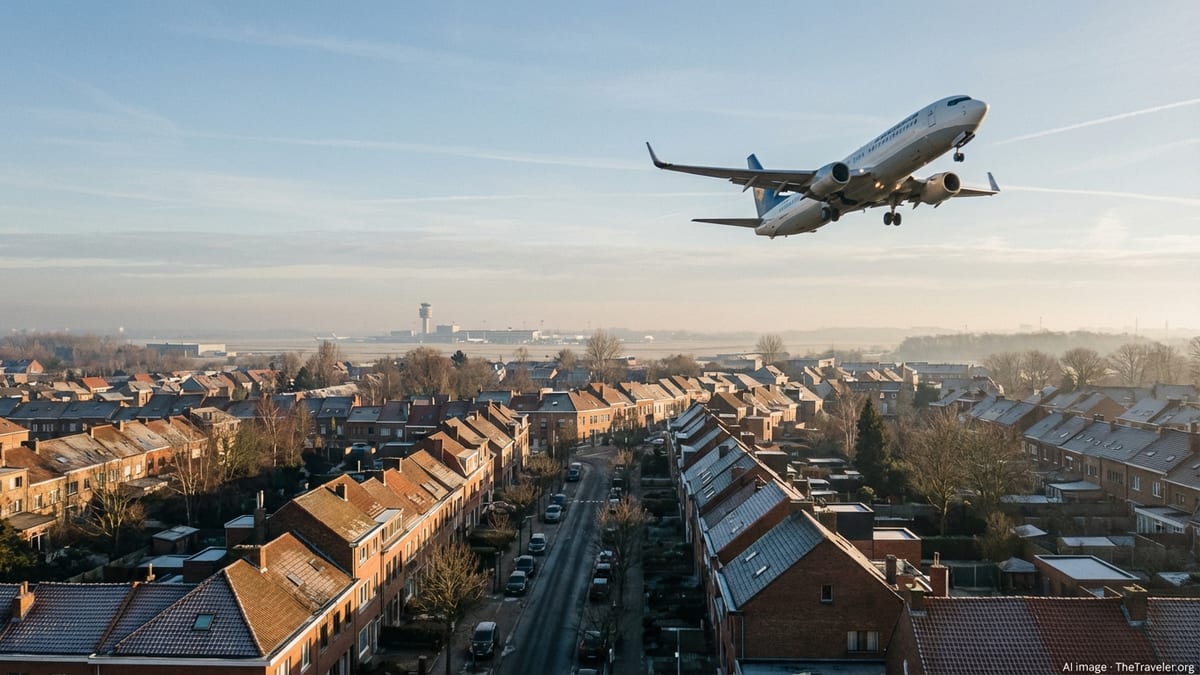
New Report Highlights Scale of Night Flight Breaches
The latest annual report from the federal ombudsman for Brussels Airport paints a stark picture of rule-breaking in the skies over the Belgian capital. According to figures presented on Wednesday, 1,317 federal aviation violations were logged in 2025, alongside 4,758 infractions of regional noise regulations, taking the total above 6,000 offences in a single year.
The federal breaches cover a range of offences, including prohibited night flights, operations without allocated time slots, failures to respect designated quiet periods and the use of daytime take-off procedures during night hours. An independent slot coordinator registered 1,032 night-time flights that operated without a valid slot, split between 558 landings and 474 departures.
On top of the federal figures, data from environmental monitoring equipment overseen by regional authorities showed thousands of violations of Brussels’ strict noise standards in the first ten months of 2025 alone. These findings suggest that, despite years of litigation and political debate, aircraft are still regularly breaking the limits intended to shield residents from nocturnal disturbance.
The number of infractions follows an already tense 2024 at the airport, when more than a thousand disputed night flights and tens of thousands of resident complaints were recorded. That trend, the ombudsman warned, demonstrates a pattern rather than an anomaly, raising questions over the effectiveness of existing enforcement tools.
Legal Rulings Tighten the Screws on the Belgian State
The surge in reported violations comes against a backdrop of mounting legal pressure on the Belgian state and airport operators. In a landmark judgment delivered in February 2025, a Brussels court again found the federal authorities liable for excessive night flight noise over the capital, concluding that certain flight paths and runway uses repeatedly breached regional noise norms.
The court confirmed that nighttime approaches using routes over the canal corridor, the ring road and runway 01 generated unacceptable levels of noise, with some exceedances measured more than 5 decibels above 2017 reference data. It ordered substantial penalty payments, with potential fines running into the tens of millions of euros if the state fails to curb the violations.
Judges also imposed strict deadlines for remedial action. The federal government must complete a final impact study on noise pollution by mid-2026, outline concrete measures and timelines to halt ongoing breaches by early October 2026, and justify its chosen actions by December of the same year. Each missed deadline carries daily financial penalties, underscoring the court’s impatience with years of partial compliance.
These rulings build on a broader legal battle surrounding the airport’s environmental framework. In July 2025, the Council for Permit Disputes annulled Brussels Airport’s renewed environmental permit, ruling that proposed caps on flights and tighter night operations rules breached European law because the required EU consultation procedure had not been correctly followed.
Political Tensions Between Regions and Regulators
The new wave of infractions has sharpened existing political divides between Belgium’s federal government and its regions over how far to go in restricting airport activity at night. The Brussels-Capital Region, where many of the most affected neighbourhoods lie, has long advocated a tougher stance on noise and has even floated the possibility of an outright night flight ban.
Regional officials in Brussels argue that the airport’s environmental conditions, which are set by the Flemish government as the competent permitting authority, have historically prioritised economic interests over residents’ health. In recent years, Brussels ministers have openly threatened further legal action if new permits and operating rules do not substantially cut the volume of night operations and enforce compliance with regional noise standards.
The Flemish authorities, meanwhile, have tried to balance environmental concerns with the economic importance of Brussels Airport, particularly its cargo operations and hub role for Belgian and international carriers. The annulment of the latest environmental permit has thrown that balancing act into uncertainty, forcing a fresh round of negotiations with airlines, neighbouring regions and the European institutions.
At federal level, mobility and environment policymakers are under pressure to reconcile court orders, regional demands and the aviation sector’s concerns about competitiveness. Airline representatives warn that sudden or unilateral restrictions could drive traffic to rival hubs, while community groups and local politicians insist that unchanged traffic patterns are no longer socially or legally acceptable.
Communities Demand Relief as Enforcement Gaps Emerge
For residents living under the approach and departure routes, the statistics in the ombudsman’s report translate into sleepless nights and anxiety about long-term health impacts. Complaints to the federal mediator and regional environment agencies number in the tens of thousands each year, many focusing on repeated awakenings during designated quiet hours and the perception that airlines act with impunity.
New data released in February 2026 on the collection of noise fines has reinforced that perception. Since 2000 the Brussels region has imposed about 1,580 administrative fines on aircraft exceeding noise standards, totalling almost 32 million euro. Yet less than a fifth of that amount has actually been collected, with many penalties written off as uncollectable or tied up in prolonged legal appeals.
Local advocacy groups say the low recovery rate undermines the deterrent effect of the fine system and effectively rewards airlines that contest or delay payment. They are calling for streamlined procedures, higher penalty ceilings and closer coordination between federal aviation regulators and regional finance departments to ensure that infringing operators feel the cost of non-compliance.
Brussels Airport itself has highlighted its investment in more detailed noise monitoring, including annual contour reports and new metrics on severely annoyed and sleep-disturbed residents. While these initiatives provide a more granular picture of the problem, critics argue that better data must now be matched by decisive operational changes, especially during the night period between 23:00 and 06:00.
Future of Night Flights at Stake as Brussels Seeks a New Balance
The ombudsman has urged all actors involved in Brussels Airport’s governance to treat the 2025 figures as a turning point. He called on the airport operator, airlines and the federal state to align operational practices with the letter and spirit of court judgments and environmental law, warning that continued non-compliance risks both heavier sanctions and a collapse in public trust.
Industry observers say several scenarios are on the table for the coming years, ranging from tighter but still significant night activity, to a de facto curfew for most passenger flights combined with a limited number of quieter cargo operations. Any new framework will have to respect European rules on airport capacity management and the balanced approach to noise, while also accommodating the demands of neighbouring regions.
As negotiations begin on a revised environmental permit and the federal government works to satisfy court-imposed deadlines, airlines are closely watching for signals that could affect fleet planning and route choices. Low-cost and long-haul carriers alike are wary of abrupt changes to runway use or departure routes that could reduce connectivity from Belgium’s main hub.
For travellers, the implications may ultimately be felt in less visible ways: schedule shifts away from the most sensitive night hours, route realignments to avoid densely populated districts, and a stronger focus on quieter aircraft types. For residents beneath the flight paths, however, the priority remains clear. After years of complaints, court cases and contested permits, many see the newly revealed thousands of infractions as proof that Brussels Airport’s approach to night flights is nearing a decisive crossroads.