

More news on this day
Brussels Airport is urging passengers to allow extra time for passport control as the European Union’s new biometric Entry/Exit System approaches full deployment, raising concerns over longer queues for non-EU travelers at one of the bloc’s key hubs.
Get the latest news straight to your inbox!
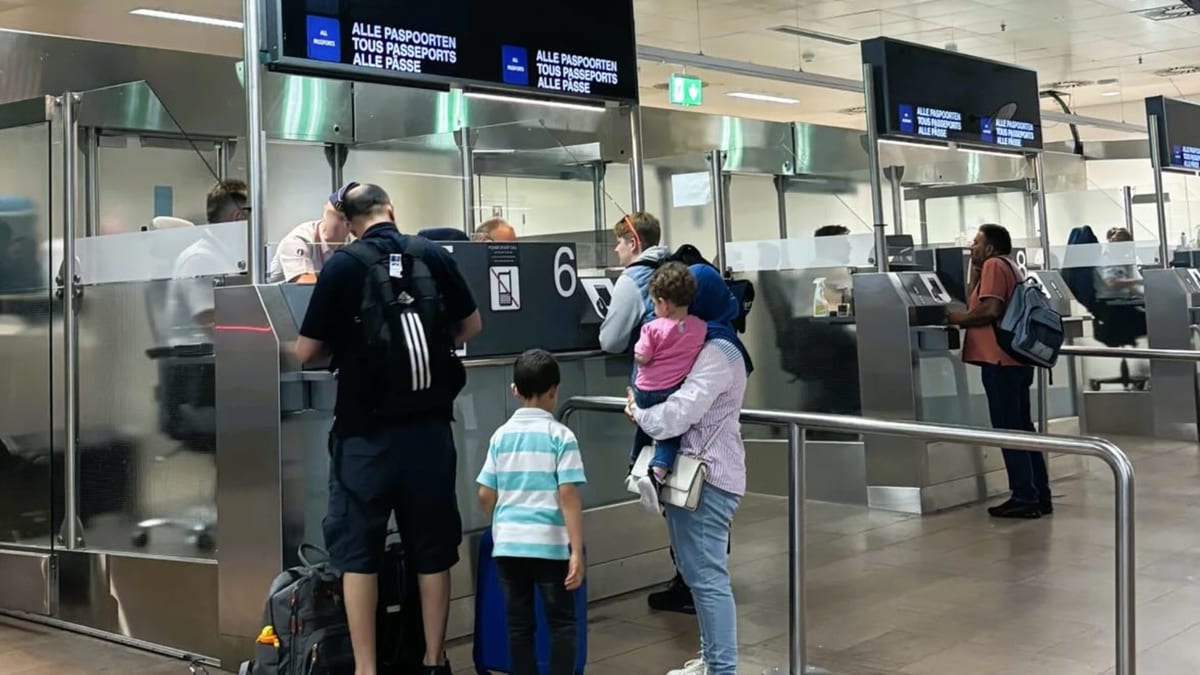
Image by Travel Wires
New EU border rules reshape checks at Brussels Airport
The EU’s Entry/Exit System is gradually replacing manual passport stamping with automated biometric registration for non-EU, non-EFTA and non-Swiss nationals crossing the Schengen Area’s external borders. The system records fingerprints, facial images and travel details each time an eligible traveler enters or leaves, with the aim of tightening security and tracking overstays across 29 participating countries.
According to publicly available EU documentation, EES has been in phased operation since October 2025 at selected airports and land crossings, including Brussels. During this initial phase, some travelers have already been asked to provide fingerprints and facial scans at dedicated kiosks before proceeding to border officers, while others have continued to receive traditional passport stamps.
Recent coverage indicates that Brussels Airport has emerged as one of the locations most exposed to early bottlenecks. Travel industry reports describe queues at immigration stretching well beyond normal peak levels as new equipment is introduced and travelers adjust to unfamiliar procedures.
Airport communications now highlight the risk of longer processing times at border control, particularly for passengers from the United Kingdom, United States and other visa-exempt countries who will need to enroll in the digital system on their first trip after it becomes fully operational.
Warnings of queues as EES moves toward full operation
With the EU’s legal deadline approaching for all Schengen external borders to use EES, Brussels Airport is stepping up efforts to prepare passengers for potential disruption. Public guidance recommends arriving earlier than usual for flights involving an external Schengen border, especially at busy morning and evening banks when long-haul services coincide with short-haul traffic.
Industry analysis notes that the first registration under EES typically takes several minutes per person, compared with a quick passport stamp in the previous system. Multiplied across wide-body aircraft arriving within the same time window, this has already translated into significant waiting times at other major hubs, and Brussels Airport is signaling that similar pressure cannot be ruled out.
Published travel reports from late 2025 described immigration queues in Brussels running to around three hours at times, particularly for non-EU visitors. While processes have been refined since then, airport-focused briefings suggest that staffing, training and passenger familiarity with the new steps will remain critical factors as EES expands from a partial pilot to routine daily use.
Travel trade bodies and airport associations have repeatedly warned that, without careful management, the combination of biometric capture, peak-season demand and existing infrastructure constraints could produce what some analyses call a “capacity crunch” across Europe’s busiest border points.
Belgium’s cautious rollout amid EU-wide concerns
Belgium has adopted a cautious stance in deploying the new system at its borders. Local coverage indicates that authorities have already adjusted their national timetable once, postponing full biometric registration to avoid introducing additional complexity before operational issues were better understood.
Policy documents shared by Belgian aviation and border stakeholders outline a strategy that includes redistributing passenger flows, adding more EES kiosks and training additional personnel at Brussels Airport. Some guidance also points to the possibility of temporarily suspending biometric checks and reverting to passport stamping if waiting times rise beyond certain thresholds, within the flexibility allowed by EU rules.
Across the bloc, several aviation and tourism organizations have publicly raised alarms about the risk of widespread delays as EES becomes mandatory at all external crossings. Reports from France, Spain and Portugal describe trial periods in which some airports paused use of the system during peak hours after queues built up, prompting renewed calls for a more gradual approach ahead of the main summer holiday season.
In that broader context, Brussels Airport’s warning fits into a pattern of European hubs seeking to reset traveler expectations. The messaging emphasizes that the new process is part of an EU-wide overhaul rather than a local change, but that each airport must adapt its facilities and staffing to cope with the additional steps.
What travelers through Brussels Airport should expect
For passengers, the most immediate change at Brussels Airport will be the presence of dedicated EES kiosks near passport control. Non-EU travelers who have not yet been registered in the system may be directed to these machines to scan their passports, provide fingerprints and capture a facial image before they can proceed to an officer’s booth.
Travel guidance suggests that the initial enrollment is the most time-consuming part. Subsequent trips are expected to move more quickly, as the system will already hold biometric data and need only validate a traveler’s identity and travel history. However, border officers will still retain discretion to conduct additional checks or revert to manual processes where necessary.
Airlines and tour operators are beginning to update their customer information to reflect the new requirements. Many are now recommending that non-EU passengers passing through Brussels Airport allow extra time at departure and be prepared for longer lines on arrival, particularly when connecting from long-haul flights that deliver large numbers of first-time EES users at once.
Passenger experiences reported from early rollout phases in Brussels and other European airports point to a learning curve on both sides of the counter. While some travelers have cleared the new formalities relatively quickly, others have encountered confusion over where to queue or how to use the kiosks, underlining the importance of clear signage and staff on hand to assist.
Impact on summer travel and longer-term outlook
The timing of the EES expansion is especially sensitive for Brussels Airport, which serves as a major gateway for both business and leisure traffic. Travel analysts note that any additional friction at the border could ripple through airline schedules and connection windows, particularly during the height of the summer season when terminals are already operating near capacity.
Recent reports on European aviation trends highlight that Brussels has previously experienced congestion at passport control during busy periods, even before the introduction of biometric checks. Layering EES on top of this baseline risk has prompted calls from some in the travel industry for continued flexibility in how and when the system is applied.
Looking further ahead, EU institutions and industry stakeholders generally portray EES as a long-term investment intended to deliver smoother and more secure journeys once the initial transition passes. Advocates argue that, after the first enrollment, automated verification should allow border authorities to process travelers more efficiently than under manual passport stamping.
For now, though, the immediate message to travelers using Brussels Airport is pragmatic: expect the possibility of delays at border control, factor additional time into itineraries, and be prepared to follow new biometric procedures as the EU’s digital border regime takes full shape.