

More news on this day
A long-awaited sleeper train linking Brussels and Milan is now scheduled to start running in September 2026, promising a fresh boost for low-carbon tourism across Belgium, Germany, Switzerland and Italy after a summer delay tied to rail works and safety certification.
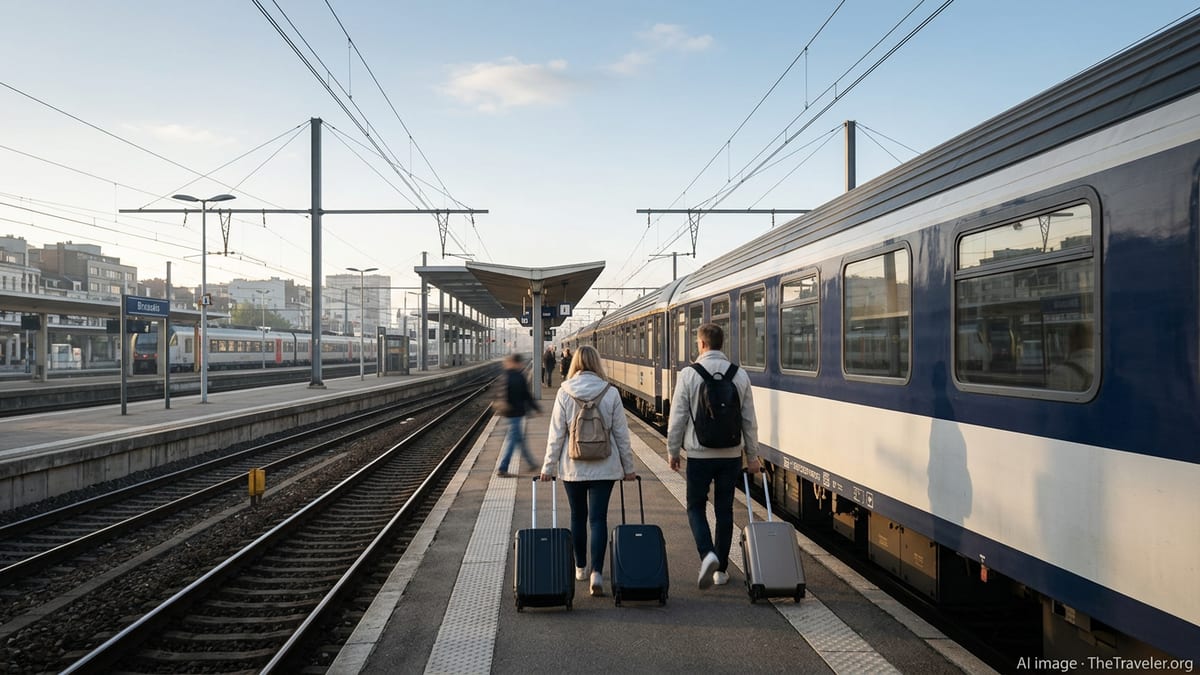
September Start for New North–South Night Link
Open-access operator European Sleeper has confirmed that its new overnight service from Brussels to Milan, originally slated for June, will now launch on 9 September 2026. The route was postponed by almost three months after extensive track works in Germany and ongoing certification procedures in Switzerland made the initial timetable unworkable.
The train will depart Brussels three nights a week, running south through Germany and across the Alps to reach Zurich and Milan the following morning. In the opposite direction, services will leave Milan on three alternate nights, giving travellers a regular, if not yet daily, night-train option between the Benelux region and northern Italy.
The Brussels–Milan connection forms part of a wider expansion of European Sleeper’s network, which already links Brussels with Prague and will soon connect Paris and Berlin. The Milan route is being positioned as a flagship north–south spine that ties together major cultural and economic centres while fitting squarely into European climate and rail-mobility goals.
Ticket sales are due to open in mid-March 2026, with the company set to offer its usual range of seating, couchettes and sleeper compartments to appeal to both budget-conscious backpackers and business travellers seeking to reclaim overnight travel time.
Eco-Friendly Travel Through Germany and Switzerland
The night train will traverse four countries in a single trip, using existing electrified rail corridors to offer an alternative to short- and medium-haul flights. From Belgium, the service is expected to route via key hubs in Germany before entering Switzerland, then continuing through the Alps into northern Italy. This alignment allows passengers to board in Brussels and wake up the next morning close to the heart of Milan without passing through airport security queues or motorways.
Germany’s dense rail network provides crucial capacity and connections along the way, even as the same infrastructure works that prompted the delay highlight the challenge of threading new international services through busy national systems. For Switzerland, which is new territory for European Sleeper, the train underscores the country’s role as a central Alpine crossroads and as a market where rail is already the dominant mode for domestic long-distance travel.
The route has been adjusted in response to infrastructure constraints, temporarily sending the train via Zurich rather than an earlier-planned alignment that would have used a different Alpine pass. While this change was forced by long-term engineering work, it also creates opportunities to serve Zurich’s tourism and business markets and to showcase classic Alpine scenery to passengers waking up on board.
Rail advocates say the cross-border partnership between infrastructure managers in Belgium, Germany, Switzerland and Italy is a test case for how Europe can knit together more climate-friendly long-distance services, especially on routes that are heavily travelled by air today.
New Eco-Tourism Opportunities Across Four Countries
Tourism boards in Belgium, Switzerland and northern Italy are already highlighting the sleeper train as a chance to promote slower, lower-impact travel that spreads visitor spending beyond traditional city breaks. By arriving in central Brussels or Milan at the start of the day, passengers can connect onwards to smaller destinations by regional train rather than domestic flights or long car journeys.
In Switzerland, an intermediate Alpine stop is expected to offer easy links to mountain resorts and lakeside towns, positioning the night train as an appealing option for skiers, hikers and nature-focused visitors who want to minimise their carbon footprint. From Italy’s side, Milan’s role as a gateway to the lakes region and to cities such as Turin, Verona and Bologna means the sleeper could become part of multi-stop itineraries that lean heavily on rail.
Belgium’s tourism sector stands to benefit from better overnight access from the south, making Brussels a more convenient starting point for trips to historic cities such as Bruges, Ghent and Antwerp. German destinations along the corridor may also gain from stopover tourism, as rail travellers increasingly choose to break their journeys in secondary cities rather than flying directly between capitals.
Industry observers note that the service also supports business and conference travel looking for credible alternatives to short-haul flights. The timing of arrivals and departures is being designed to allow full working days at each end, with the night on the train effectively replacing a hotel stay while cutting emissions.
Comfort, Classes and Pricing on Board
European Sleeper plans to offer a familiar mix of travel classes on the Brussels–Milan train, ranging from standard seats to shared couchette compartments and more private sleeper options. Entry-level fares will target price-sensitive travellers who value the environmental and time-saving benefits of overnight rail but may otherwise opt for low-cost airlines.
Couchettes will provide flat bunks in shared compartments, aimed at solo travellers, small groups and families seeking a balance between comfort and affordability. Higher-category sleeper compartments, some with more privacy and added amenities such as breakfast service, are geared towards those who want hotel-like comfort while avoiding the hassle of late-night check-ins and early-morning transfers.
The service is designed with practicalities such as secure luggage storage and the ability to move around on board, appealing to travellers who prefer to keep their bags with them instead of checking them into an aircraft hold. For many passengers, being able to board in the evening after work, have dinner before or shortly after departure and then wake up at their destination is expected to be a key selling point.
Travel experts say that competitive pricing relative to air and conventional day trains will be critical to the route’s success, particularly in shoulder seasons when leisure demand can fluctuate. The operator is expected to introduce promotional fares when bookings open, to familiarise new customers with the concept of modern night-train travel.
Symbol of Europe’s Night-Train Revival
The Brussels–Milan sleeper is emerging as a symbol of the broader renaissance of night trains across Europe, driven by growing concern over aviation emissions and renewed public interest in slower, more experiential travel. Once considered a legacy product in decline, overnight services are now being reimagined with upgraded rolling stock, digital booking platforms and stronger branding around sustainability.
By linking Belgium, Germany, Switzerland and Italy on a single route, European Sleeper is aligning with EU-level ambitions to shift more passenger traffic to rail on distances where it can realistically compete with air. The delayed launch underlines the complexity of stitching together multi-country operations, but also reflects mounting pressure on infrastructure managers to support climate-friendly services.
With some traditional night-train lines elsewhere in Europe being scaled back or restructured, the Brussels–Milan launch stands out as an expansion that could re-route travel patterns between northwestern Europe and the Alps. If successful, it may strengthen the case for additional night links, including future extensions and more frequent departures once rolling stock and paths become available.
For travellers planning trips from late 2026 onward, the new sleeper promises not only a practical way to cross half of Europe while they sleep, but also a tangible opportunity to make long-distance holidays and business trips more compatible with their environmental values.