

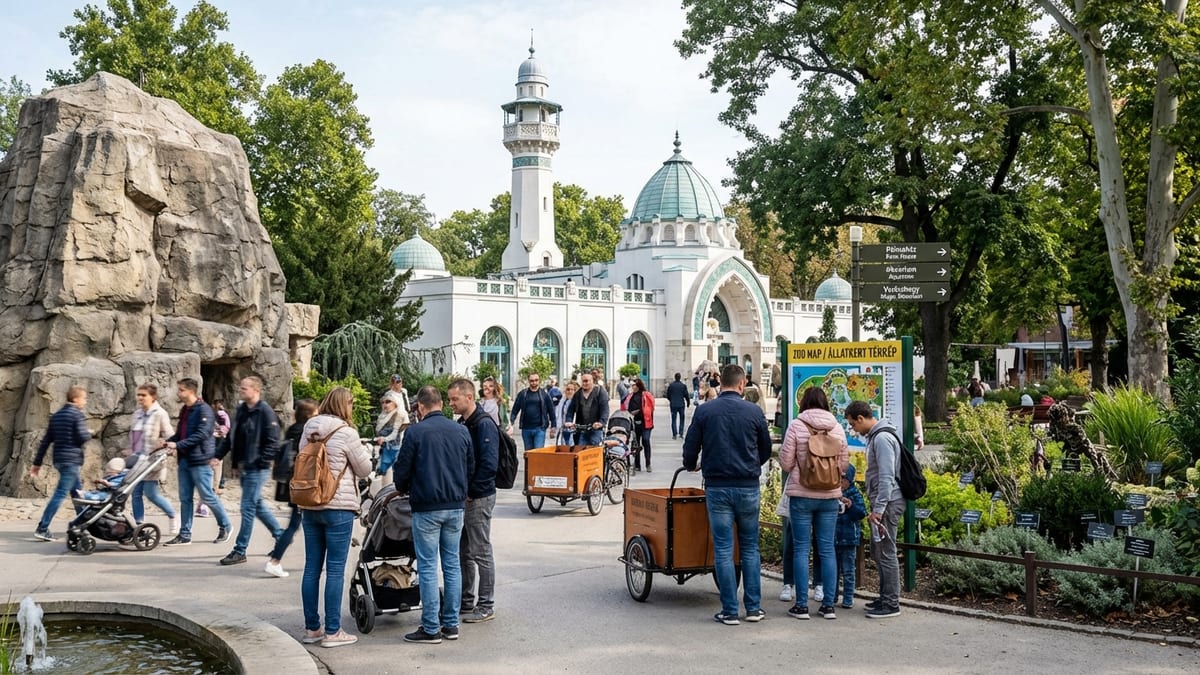
Budapest Zoo and Botanical Garden is one of the Hungarian capital’s most family friendly attractions, a historic green oasis set inside City Park with more than a thousand animal species, lush botanical areas and striking Art Nouveau architecture.
Planning a visit is straightforward once you understand how tickets work, what the seasonal opening hours look like, and how to navigate the grounds efficiently. This guide brings together the latest practical information on Budapest Zoo tickets, opening times and on the ground visitor tips so you can make the most of your day among lions, lemurs and palm trees.
Why Visit Budapest Zoo & Botanical Garden
Opened in 1866 and continuously developed since, Budapest Zoo and Botanical Garden ranks among the oldest zoos in the world and has grown into one of the city’s top attractions. Set in the heart of Budapest’s Városliget (City Park), the zoo combines over 8,000 animals with a carefully curated botanical collection across roughly 18 hectares, all framed by notable early 20th century architecture. The result is a rare mix of heritage and modern animal care that feels more like a living museum than a simple animal park.
Visitors encounter classic crowd pleasers such as elephants, big cats, giraffes and apes alongside more unusual residents including Komodo dragons and wombats. Many exhibits are integrated into themed zones so you can move from Australian habitats to a palm house and aquarium, to the vast Great Rock and Magic Mountain complex without leaving the grounds. For travelers short on time, this density of experiences in a central location makes the zoo especially appealing.
Beyond the animal collection, the site functions as a botanical garden and architectural showcase. The elephant house and palm house, for example, are celebrated Art Nouveau structures that reward close inspection even if you are not a dedicated architecture fan. Families appreciate the playgrounds, interactive exhibits and regular feeding demonstrations, while adults tend to linger in the quieter garden sections and along the lake.
Because the zoo sits just a short walk from Heroes’ Square and Széchenyi Thermal Bath, it fits naturally into a broader City Park itinerary. You can easily combine a half day at the zoo with a thermal soak, museum visit or a stroll around the park’s lakes and monuments, which is especially convenient for first time visitors trying to maximize limited days in Budapest.
Ticket Types, Prices and What They Include
Budapest Zoo operates with a clear set of ticket categories that cover most visitor profiles. As of early 2026, a standard adult ticket costs 5,900 Hungarian forints (HUF), while children’s, student and senior tickets are priced at 4,200 HUF. Children’s tickets apply to ages 2 to 18, and children under 14 must be accompanied by an adult. Babies under 2 require a nominal “baby ticket” of 400 HUF, which helps the zoo track overall visitor numbers. Students and seniors benefit from the same reduced rate as children, provided they present a valid photo ID or international student card where required.
For families, combination tickets offer worthwhile savings and simplify entry. The zoo sells a range of family tickets, for example 1 adult plus 1 child, 1 adult plus 2 children, and up to 2 adults plus 4 children, each priced on a sliding scale. A typical 2 adults plus 2 children combination, for instance, is significantly cheaper than buying four individual tickets. Additional adults or children can be added on to some family ticket types at a discounted supplementary rate, which is useful if you are traveling with grandparents or extra friends.
Groups of at least 15 people qualify for reduced per person pricing on adult, child, student and senior tickets. These group tickets do not require advance booking, which is handy for school groups or tour groups that may be adjusting their schedule in real time. For every 10 paying children or students in a group, one accompanying adult may enter free of charge, easing costs for schools and youth organizations.
Frequent visitors, whether local or long stay guests, can purchase annual passes. An adult season pass is typically around 18,000 HUF, with children, student and senior passes notably cheaper. There is also a child plus attendant pass that lists only the child’s photo and allows any adult family member to accompany them on each visit. All standard tickets and passes include access to major on site attractions such as the Great Rock and Magic Mountain, the Palm House and the Aquarium, which means there are few unexpected extras to budget for beyond food, souvenirs and optional services like the zoo minibus.
Buying Tickets: Online vs On Site
Visitors can purchase Budapest Zoo tickets in two primary ways: online in advance or in person at the ticket offices just inside the main gate. Buying online is increasingly encouraged by the zoo, both to reduce waiting times at peak hours and to help regulate daily visitor flow. For travelers visiting during summer, on weekends or during Hungarian school holidays, online purchase is particularly sensible, as it lets you bypass potentially long lines at the ticket windows.
The online system sells the same core ticket types you find at the ticket booths, including adult, child, discounted, family and group options. Once purchased, tickets are usually issued as electronic vouchers that can be presented on a smartphone screen or printed out. Be sure the QR code or barcode is clearly visible and that your phone has enough battery, as this code will be scanned at the entry turnstiles. Buying online does not normally lock you into a specific entry time within the day, but you should confirm any date restrictions at the time of purchase.
Purchasing at the gate remains straightforward for those who prefer spontaneity. There are multiple cash desks at the main entrance, and staff generally speak at least basic English and German. Payment can be made in Hungarian forints by cash or by major debit and credit cards. If lines are long, you can often reduce waiting by avoiding the busiest mid morning window between roughly 10:00 and noon, arriving earlier or later instead.
Tourist discount cards, such as the Budapest Card, typically entitle holders to a percentage discount on regular ticket prices when buying directly from the zoo. You will need to present your valid card at the counter. Most third party resellers and local tour operators can also book zoo tickets, sometimes in combination with city sightseeing passes, but for price transparency and the most up to date conditions it is generally best to book through official or directly affiliated channels.
Opening Hours, Seasonal Patterns and Best Time to Visit
Budapest Zoo is open every day of the year, including national and religious holidays, but opening hours vary by season. As a baseline, winter hours from roughly November through February are shorter, with the zoo typically operating from 9:00 to 16:00 and the ticket office closing one hour earlier. During shoulder months such as March, April and October, closing extends to around 17:00. Peak summer months see significantly later closing times, with the grounds usually open until 18:00 or 19:00 depending on the exact period and whether it is a weekday, weekend or public holiday.
Two dates stand out as exceptions: December 24 and December 31, when the zoo closes early in the afternoon. On those days last entry is usually around midday, to allow staff and visitors to observe winter holiday traditions. Regardless of the season, the last possible entry to the zoo is one hour before the posted closing time, and some indoor animal houses may open later in the morning than the main gates, commonly at 10:00. This staggered schedule gives keepers time to complete early feeding and cleaning routines.
For planning, it is wise to allow at least four to five hours for a reasonably thorough visit, and longer if you are traveling with young children or plan multiple breaks. In summer, consider arriving soon after opening in the morning or mid to late afternoon when the strongest heat has passed. Animals are often more active in cooler parts of the day, and you will avoid the densest crowds. In winter, daylight is limited, so arriving early is important; the shorter opening window also means it is easier to cover the highlights in a single pass without lingering too long.
Weekends, public holidays and school vacations are predictably busier. If your schedule is flexible, visiting on a weekday outside high season offers a more relaxed experience, with quieter viewing areas and less competition for playgrounds and indoor exhibits. The zoo occasionally hosts temporary evening events such as lantern festivals or themed nights with extended hours; if such events coincide with your visit dates they can provide a very different atmosphere after dark, though they may require separate or specially timed tickets.
Getting to the Zoo and Navigating the Grounds
One of Budapest Zoo’s key advantages is its location inside City Park, just behind Heroes’ Square on the Pest side of the city. This makes it easy to reach by public transport from almost anywhere in Budapest. The most iconic option is the historic M1 Millennium Underground line, which connects central Deák Ferenc Square to the park. You can ride the M1 to the Széchenyi fürdő or Hősök tere stations and walk a few minutes to the zoo’s main entrance along Állatkerti körút.
Several bus and trolleybus services run close to the zoo, including routes that stop around Heroes’ Square and Dózsa György Road. From these stops, signposts and obvious zoo landmarks, such as the Great Rock and the ornate main gate, make orientation simple. For visitors arriving by car, there are parking areas in and around City Park. Spaces can fill quickly in high season, particularly on sunny weekends, so arriving early or relying on public transport can spare you the stress of circling for a spot.
Once inside, navigation is aided by prominent maps at key junctions and a printed or downloadable zoo map that shows the main paths, animal houses, restrooms, playgrounds, eateries and services. The layout is essentially loop based, which makes it difficult to get truly lost, but the high density of exhibits means it is easy to underestimate walking time. Families with strollers may want to plan a roughly circular route, focusing on one broad section at a time, such as the Great Rock and Magic Mountain area followed by the African savanna, then the lakeside and botanical sections.
For visitors who prefer less walking, a seasonal zoo minibus operates regular circuits around the grounds, typically departing every half hour from near the main gate. Tickets for this service cost a small additional fee and the ride lasts about 20 to 25 minutes, passing main zones such as the Great Lake, Australian Trail, Predator Row, Shark School, Savanna House and the Great Ape House before returning to the entrance. This is particularly helpful for visitors with mobility concerns, older travelers or families with tired children late in the day.
Facilities, Services and Accessibility
Budapest Zoo is reasonably well equipped with facilities that make a visit smooth for families, seniors and travelers with specific needs. Near the entrance and throughout the grounds you will find clearly marked restrooms, many with baby changing tables. A dedicated baby care room is located in the reception area of the Magic Mountain complex, and additional changing facilities are integrated into all major restroom blocks, allowing parents to choose the most convenient stop as they move around.
For those visiting with young children, the zoo offers pull along carts that can be rented from the zoo shop at the main gate. These are especially popular with families who prefer not to bring a stroller or who want extra capacity for bags, jackets and stuffed animals acquired along the way. A refundable cash deposit is required, along with a modest hourly rental fee, with each started hour counting as a full hour. Many families find that a half day’s rental strikes a good balance between cost and convenience.
Wheelchairs are available on request at the entrance for visitors with reduced mobility, provided on a first come, first served basis. While the zoo cannot supply a wheelchair attendant, the terrain inside is largely level or gently sloped, and key buildings such as the aquarium and Magic Mountain have accessible entrances. Some older structures may still present occasional challenges due to their historic architecture, but overall the site strives to cater to mobility needs. It is wise to mention any concerns to staff at the gate, who can point out the easiest routes and accessible toilets on the map.
Additional facilities include locker storage in the Magic Mountain reception area, where visitors can secure smaller personal items, and multiple playgrounds that meet modern safety standards. The main playground near the savanna enclosure is particularly well equipped, giving children a chance to burn off energy between animal encounters. First aid supplies are available at points near the playground and the aquarium, and staff on duty can provide basic assistance in case of minor scrapes or insect stings. Finally, a gift shop located by the main entrance sells plush animals, books and souvenirs, and its opening hours mirror the zoo’s daily schedule.
Food, Drink and Time Saving Strategies
Spending several hours at Budapest Zoo inevitably raises the question of meals and refreshments, particularly for families with young children. The grounds host a variety of kiosks and casual dining options where you can pick up snacks, drinks and simple hot dishes. Offerings may include sandwiches, grilled items, pastries, ice cream and coffee. Availability and opening times of some stands vary by season, with the most extensive choice during warm weather and holiday periods when visitor numbers peak.
Visitors are generally allowed to bring their own snacks and non alcoholic drinks, which can be a cost effective choice for families or those with dietary restrictions. There are numerous benches and quieter corners where you can pause for a picnic style break, often with pleasant views of animal enclosures or garden areas. When packing your own food, remember that feeding zoo animals is strictly prohibited, both for their health and safety and to maintain proper behavior patterns.
To save time and avoid the most crowded viewing points, consider planning your route around typical visitor flows. Many people start by heading directly for the most famous animals such as the elephants, big cats or apes. If you arrive at opening time, you might instead explore less visited areas first, such as certain botanical sections or smaller exhibits, and circle back to headline enclosures slightly later when early crowds have dispersed. Indoor houses such as the aquarium and palm house can also provide welcome shelter during midday heat or sudden rain showers, so you may want to time their visit around the forecast rather than following them strictly in order on the map.
Finally, check the schedule of feeding times or keeper talks posted at the entrance or on boards inside the zoo. These short presentations offer insight into animal behavior and care, and they can be highlights for children in particular. However, they also draw crowds, so if you prefer quieter viewing, deliberately visit different sections while the talks are underway, then approach those enclosures later when the audience has moved on. Balancing these considerations can help you fit a surprising amount into a single day without feeling rushed.
Etiquette, Safety and Responsible Wildlife Watching
Budapest Zoo emphasizes education and conservation as part of its mission, and visitor behavior plays an important role in achieving those goals. Basic zoo etiquette begins with respecting barriers and fences, which are designed to protect both animals and people. Leaning over railings, climbing on walls or attempting to touch animals can be dangerous and is strictly forbidden. Likewise, tapping on glass or shouting at animals is discouraged since it can cause unnecessary stress, particularly for nocturnal or shy species.
Feeding animals with outside food is not allowed under any circumstances, even if the food seems harmless. Animal diets are carefully balanced by keepers, and many species have sensitivities that are not obvious to casual observers. In some cases, there may be supervised feeding opportunities or interactive sessions with certain domesticated species, which are clearly signposted and managed by staff. Participating only in these sanctioned activities ensures animals remain healthy and predictable in their behavior.
For families, it is helpful to brief children on these ground rules before entering and to model calm, respectful observation. Drawing their attention to information boards about each species can turn the visit into an informal lesson in biology and conservation. Many signs explain the animals’ natural habitats, threats they face in the wild and the role zoos play in breeding and research. Taking a few minutes to read these plaques can deepen your understanding and make the experience more rewarding than a quick photo stop.
General safety at Budapest Zoo is good, with visible staff presence and clear signage in multiple languages. Nevertheless, as with any busy attraction, keep an eye on your belongings and agree on a meeting point in case anyone becomes separated from the group. On hot days, remember to drink plenty of water and seek shade regularly, particularly with young children and older travelers. In cold weather, layering clothing is advisable, as you will be moving between warm indoor houses and cooler outdoor paths throughout your visit.
The Takeaway
Budapest Zoo and Botanical Garden offers a rich, multi layered experience that goes far beyond a quick look at a few exotic animals. With historic architecture, botanical displays, ambitious habitats and a steady program of seasonal events, it can easily fill a half day or more, especially for families and animal lovers. Its position inside City Park makes it simple to combine with other Budapest highlights, while clear ticketing, regular opening hours and solid visitor facilities keep the logistics manageable even for first time visitors.
By understanding the current ticket prices, seasonal schedules and transport options, you can plan your visit to avoid crowds, stay comfortable and see the species that interest you most. Whether you are watching giraffes stride across the savanna, wandering beneath palm trees in the glasshouse or simply enjoying a coffee while children play, Budapest Zoo serves as a reminder of how thoughtfully designed urban green spaces can balance entertainment, education and conservation in the heart of a European capital.
FAQ
Q1: How much do tickets to Budapest Zoo cost in 2026?
The standard adult ticket is currently 5,900 HUF, while children, students and seniors pay 4,200 HUF. Babies under 2 years have a nominal 400 HUF ticket. Various family combinations and group tickets offer discounted per person rates.
Q2: Do I need to buy tickets in advance or can I purchase them on arrival?
You can do either. Tickets are sold online and at the main gate ticket offices. Buying in advance is recommended for weekends, school holidays and summer, as it helps you avoid queues and ensures smoother entry.
Q3: What are the zoo’s opening hours and are they the same all year?
The zoo is open every day of the year, but hours change seasonally. In winter it typically opens from 9:00 to 16:00, in spring and autumn from around 9:00 to 17:00, and in summer up to 18:00 or 19:00 on many days. Last entry is always one hour before closing.
Q4: How long should I plan for a visit to Budapest Zoo?
Most visitors spend between four and five hours exploring the grounds, which is enough to see many highlights at a relaxed pace. Families with small children or keen animal enthusiasts may easily fill a full day, especially if they stop for meals and playground time.
Q5: Is Budapest Zoo suitable for young children and strollers?
Yes. Paths are mostly level and stroller friendly, and there are several playgrounds plus a dedicated baby care room and changing facilities. You can also rent pull along carts near the entrance to help transport toddlers or bags.
Q6: How do I get to the zoo using public transport?
The easiest way is to take the M1 Millennium Underground to Széchenyi fürdő or Hősök tere, then walk a few minutes to the zoo entrance in City Park. Several buses and trolleybuses also stop near Heroes’ Square and Dózsa György Road within short walking distance.
Q7: Are there food and drink options inside the zoo?
Yes. There are kiosks and casual eateries offering snacks, drinks and simple hot meals, especially during the warmer months and holidays. Many visitors also bring their own food for a picnic style visit, although feeding animals with outside food is not allowed.
Q8: Is the zoo accessible for visitors with mobility issues?
The zoo provides wheelchairs on request at the entrance, and most paths are suitable for wheelchairs or mobility aids. Some historic buildings may have limitations, but major attractions such as the aquarium and Magic Mountain have accessible entrances and nearby accessible restrooms.
Q9: Does my ticket include all attractions inside the zoo?
Standard tickets and passes include access to main on site attractions such as the Great Rock and Magic Mountain, the Palm House and the Aquarium. Optional extras, such as the zoo minibus or certain seasonal events, may require small additional fees.
Q10: Are there any discounts for tourists with city cards or for large groups?
Yes. Holders of certain Budapest city cards receive a percentage discount on regular tickets when buying from the zoo, and groups of at least 15 people qualify for reduced group pricing. For every 10 paying children or students in a group, one accompanying adult can usually enter free of charge.