

More news on this day
Bulgaria is stepping up efforts to revive Black Sea cruise tourism, using a high-profile regional forum in Trabzon to promote new routes linking its coastal ports with key destinations across the sea and to position the country as a more competitive stop on Eastern Mediterranean and regional cruise itineraries.
Get the latest news straight to your inbox!
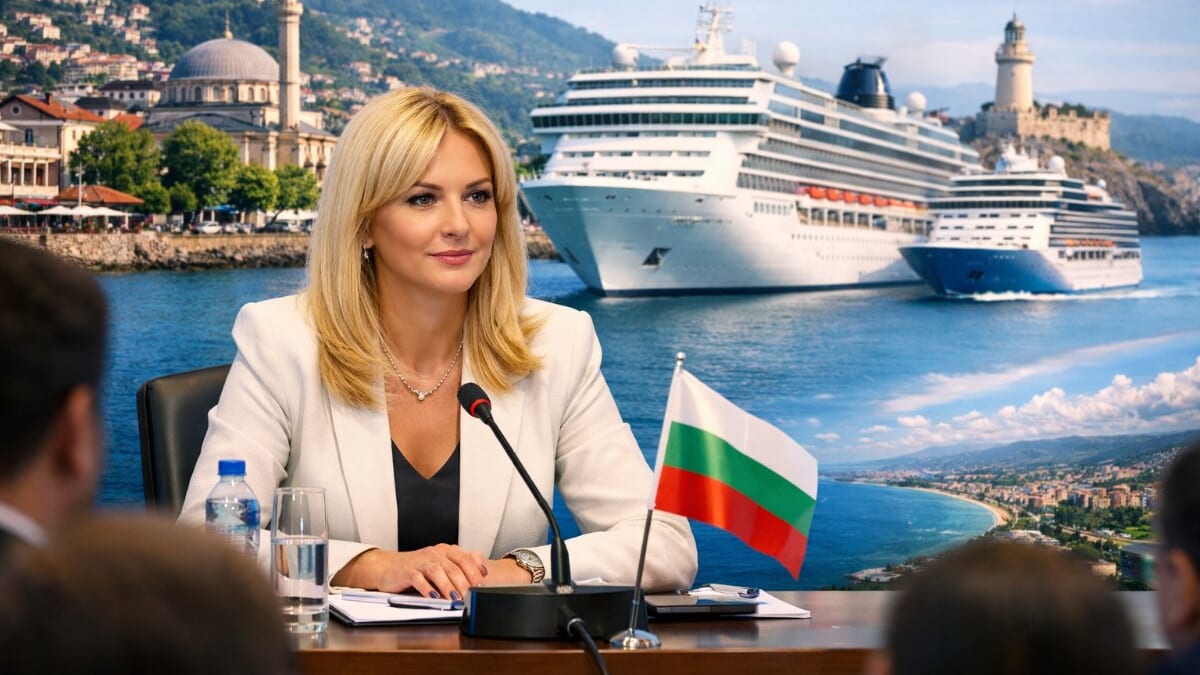
Image by International Cruise News: Latest Cruise Line & Cruise Ship News
Trabzon Forum Puts Black Sea Cruises Back on the Agenda
A regional maritime and tourism forum in the Turkish city of Trabzon has brought renewed attention to the long-discussed but slow-moving revival of Black Sea cruise tourism. The gathering, framed within broader talks on the so-called blue economy and sustainable shipping, has highlighted how far cruise traffic in the region has fallen since its pre-2014 peak and what it would take to restore momentum.
Industry presentations referenced data showing that major Black Sea ports, including Varna, Burgas, Trabzon, Constanta and others, have seen cruise passenger numbers contract sharply over the past decade, reflecting geopolitical tensions, pandemic disruptions and shifts in deployment by global cruise lines. Regional stakeholders at the Trabzon discussions have focused on rebuilding confidence by emphasizing safety, diversified itineraries and coordinated marketing rather than relying on any single marquee port.
Publicly available information about the Trabzon forum indicates that cruise tourism is being treated as part of a wider maritime development push, alongside cargo, short-sea shipping and port logistics. This broader framing is seen as important for attracting investment into port infrastructure and transport links that can serve both cruise passengers and freight operators while reinforcing the Black Sea’s role in European and Eurasian trade corridors.
Against this backdrop, Bulgaria has emerged as one of the more vocal proponents of a structured roadmap for cruise revival, arguing that improved connectivity, consistent service standards and year-round tourism offerings along its coast can help rebuild demand for itineraries that include multiple Black Sea countries.
New Route Concepts Linking Varna, Burgas and Trabzon
Concept proposals discussed around the Trabzon forum point to a series of potential new and revived routes that would connect Bulgarian ports with destinations in Türkiye, Romania and the South Caucasus. Varna and Burgas, Bulgaria’s principal Black Sea ports, are being promoted as flexible homeports or transit calls that can anchor shorter regional circuits or form part of longer Eastern Mediterranean sailings that reach into the Black Sea for several days.
According to publicly available route sketches and trade bulletins, one focus is on developing compact cruise products that originate in Istanbul or Trabzon and loop through Burgas and Varna before returning via other regional ports. These itineraries are envisioned as appealing to both international guests and regional travelers, with durations of five to seven days and a mix of cultural, culinary and nature-focused shore experiences.
Industry publications also highlight interest in pairing Bulgarian ports with lesser-used terminals along the Turkish and Georgian coasts, creating themed cruises that showcase Byzantine and Ottoman heritage, wine regions, birdwatching sites and spa resorts. The underlying idea is to reduce reliance on any single high-profile destination and instead market the Black Sea as a multi-country region where several compact cities and mid-sized ports combine into a compelling cruise package.
Such route concepts remain at the planning stage, but the Trabzon discussions have given them a clearer platform. Regional tourism and maritime bodies are now expected to refine feasibility studies, timetable options and shore excursion frameworks that would make it easier for cruise operators to slot Black Sea segments into existing fleet schedules from 2027 onward.
Bulgaria Positions Its Ports for a Cruise Comeback
Within Bulgaria, preparations for a Black Sea cruise revival intersect with broader efforts to upgrade coastal infrastructure and enhance the appeal of seaside destinations. Varna and Burgas already handle diverse maritime traffic, and both ports have facilities suitable for receiving small and mid-sized cruise ships, though larger vessels may still face operational constraints that require careful planning.
Recent policy documents and transport reports from Bulgarian authorities outline ongoing and planned investments in port modernization, intermodal connections and safety systems. These initiatives, while not limited to cruise operations, are presented as essential prerequisites for attracting more passenger vessels. Better road and rail links between the ports and inland cities, as well as improved terminal services, are seen as particularly important for enabling smooth turnaround days and shore excursions.
Tourism strategy papers for the 2025 to 2026 period indicate that Bulgaria views its coastal segment as lagging behind national averages in terms of post-pandemic recovery, even as the country overall reports rising international arrivals. This context helps explain the renewed emphasis on cruise tourism: a successful return of ships to Varna and Burgas could bring higher-spending visitors to city centers, historic sites and coastal resorts at the beginning and end of the summer season, when hotel occupancy typically softens.
Port stakeholders and tourism organizations are also signaling a greater focus on quality standards and visitor experience. Discussions around minimum accommodation ratings, improved public spaces and upgraded cultural programming are framed as part of a broader effort to ensure that cruise passengers encounter a polished, welcoming environment that encourages longer stays or repeat visits.
Regional Cooperation and Marketing Challenges
While new route ideas and infrastructure plans appear promising, the Trabzon forum has underscored that no single country can revitalize Black Sea cruises on its own. Cruise operators generally require a cluster of ports that can offer diverse experiences within manageable sailing distances, and they remain highly sensitive to security perceptions and logistical complexity across an entire region.
Reports on the forum proceedings and related industry commentary describe efforts to strengthen coordination among Black Sea coastal states on scheduling, port formalities and joint marketing. For Bulgaria, this cooperative track is vital. Without synchronized visa regimes, clear communications on navigational safety and aligned health and environmental protocols, even the best-designed itineraries may struggle to gain traction with global brands.
Marketing also remains a key challenge. The Black Sea competes with well-established cruise regions such as the Western Mediterranean and the Adriatic, which offer dense networks of ports, strong brand recognition and a long track record with major cruise lines. To stand out, Bulgarian and regional partners are looking at campaigns that emphasize the Black Sea as a smaller, less crowded alternative, with cityscapes, archaeological sites and natural areas that are still relatively under-exposed on mainstream cruise routes.
Industry observers note that success may initially come from boutique and expedition-style lines willing to test smaller ships in the region. Positive guest feedback from these early deployments could then help persuade larger operators to reintroduce or expand Black Sea programs, gradually increasing calls to Burgas, Varna and Trabzon over several seasons.
Outlook: Gradual Growth Rather Than a Quick Surge
Expectations around the timing and scale of a Black Sea cruise rebound remain cautious. Published analyses suggest that regional geopolitical dynamics, insurance costs and operational planning cycles all argue for a gradual build-up rather than a rapid return to previous peaks. For Bulgaria, the near-term priority is to ensure that when cruise ships do come, even in modest numbers, the local experience meets or exceeds international standards.
This measured outlook aligns with broader tourism planning for summer 2026 and beyond, which emphasizes sustainable growth, infrastructure integrity and higher-quality visitor services instead of purely volume-driven targets. By approaching cruise development through this lens, Bulgarian coastal cities aim to secure long-term benefits, such as improved urban amenities and more resilient local economies, rather than short-lived spikes in passenger arrivals.
In practical terms, the discussions in Trabzon have given Bulgaria and its neighbors a clearer framework for cooperation. If follow-up actions on port investment, route design and joint promotion proceed as outlined, the Black Sea could re-emerge over the next several years as a niche but attractive cruise region, with Bulgarian ports playing a central role in the network.
For travelers, this would translate into more itinerary options that combine well-known Mediterranean hubs with lesser-visited Black Sea cities. For Bulgaria, it represents an opportunity to reposition its coast not only as a traditional beach destination but also as a gateway to a wider maritime region gradually returning to the cruise map.