

More news on this day
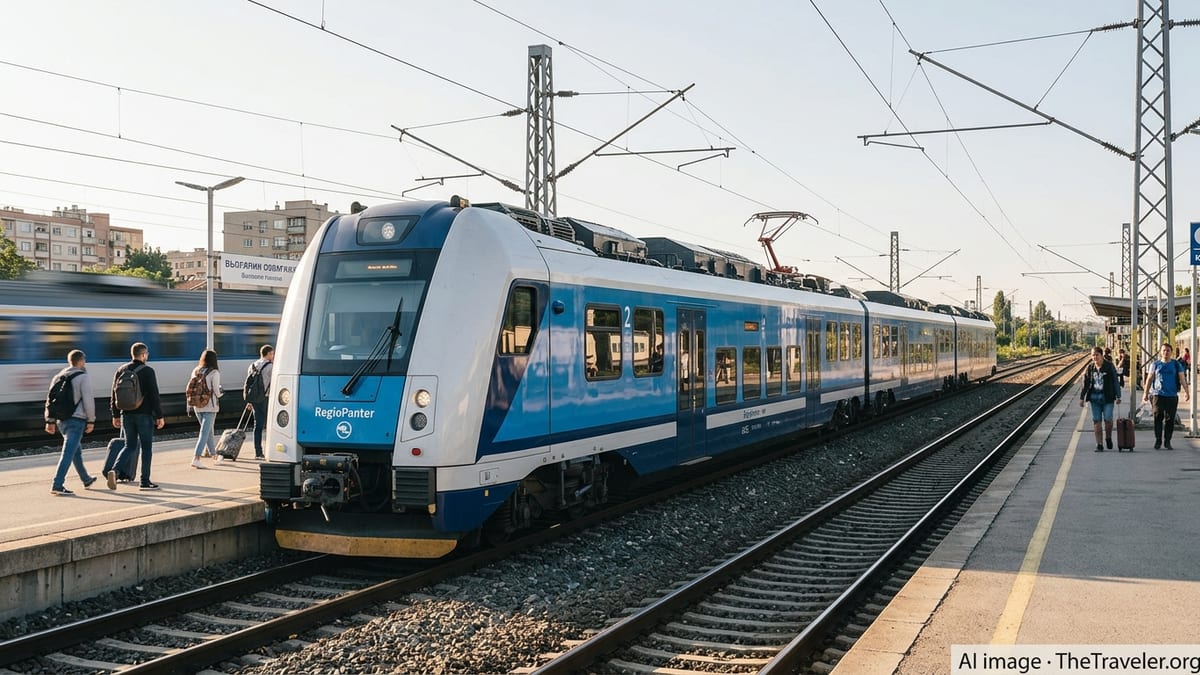
Bulgaria’s rail network is entering a new era of electric mobility as Škoda’s new high-speed electric multiple units move from factory floor to Bulgarian tracks, promising faster, more comfortable journeys for commuters on some of the country’s busiest intercity corridors.
Get the latest news straight to your inbox!
A Landmark Contract Brings Modern Trains to Bulgaria
The rollout of Škoda’s new electric multiple units, based on the RegioPanter platform, follows a major contract signed with Bulgaria’s Ministry of Transport and Communications in September 2024 for 20 four-car trains, later expanded to 25 units. Publicly available information values the order at close to 13 billion Czech crowns, or just over 500 million euro, making it one of the largest rolling stock investments in Bulgaria’s recent history.
According to published coverage from specialist rail media and company materials, Škoda completed the first train for Bulgaria roughly 14 months after the contract was concluded, an unusually rapid turnaround for a fully tailored fleet. The pace underlines the urgency of Bulgaria’s effort to renew an aging passenger fleet that still relies heavily on diesel traction and locomotives dating back several decades.
The trains are designed for a maximum operating speed of 160 kilometers per hour, aligned with current and planned infrastructure upgrades on Bulgaria’s main electrified lines. While this speed falls below Western Europe’s fastest high speed services, it represents a step change for many domestic routes where older stock and line conditions have historically held back journey times.
Rail industry reports indicate that the project is being supported through European Union funding instruments focused on green and sustainable transport, reflecting Brussels’ push to shift more passengers from road and air to rail. For Bulgaria, channeling these funds into new trains is seen as essential to making public transport a credible alternative to private cars and long-distance buses.
Features Aimed at Today’s Commuters and Long-Distance Travelers
The new four-car trainsets have capacity for more than 300 seated passengers, allowing Bulgarian State Railways to serve both regional commuters and long-distance travelers with the same platform. Layouts combine first and second class areas, open saloon seating and multifunctional spaces, with a particular focus on accessibility and flexible use.
Technical specifications published by the manufacturer highlight low-floor entrance areas designed for level boarding at compatible platforms, an important step for passengers with reduced mobility, parents with strollers and travelers carrying luggage. Dedicated spaces for wheelchairs, bicycles and prams are built into the design, bringing Bulgaria into line with accessibility standards common across the European Union.
Onboard comfort has also been prioritized. The trains are equipped with full air conditioning, modern LED lighting, power outlets, and wireless internet connectivity, responding to growing expectations that rail travel should support remote work and continuous connectivity. Video surveillance and modern passenger information systems are integrated throughout the train, improving both security perception and real-time guidance for riders.
Behind the scenes, the new fleet is fitted for operation on Bulgaria’s 25 kilovolt AC electrified network and incorporates modern signalling interfaces, including preparation for European Train Control System Level 2 where available. These systems are intended to support shorter headways, more reliable timetables and higher overall capacity on key routes as infrastructure upgrades progress.
Transforming Key Corridors Across the Country
Operational plans described in rail sector coverage indicate that the Škoda units are slated for some of Bulgaria’s most strategic electrified corridors, including lines radiating from Sofia toward the Black Sea and the Danube. Routes such as Sofia to Burgas, Sofia to Varna and Sofia to Ruse have been cited as priority candidates, reflecting their importance for both domestic mobility and international tourism.
These long intercity journeys have traditionally been associated with slow timings, older coaches and unpredictable comfort levels. The introduction of faster-accelerating electric multiple units with higher top speeds is expected to cut door-to-door times, particularly where upgraded track and signalling allow sustained 160 kilometer per hour operation. Even where infrastructure constraints remain, better acceleration and deceleration can trim a significant number of minutes from end-to-end journeys.
For commuters around Sofia and other regional centers, the new trains are likely to be used in semi-fast and regional services that connect suburbs and satellite towns with major employment hubs. Higher reliability, modern amenities and improved punctuality are seen as key levers to draw daily travelers away from congested highways and into rail-based mobility.
Tourism stakeholders are also watching the rollout closely. Improved rail links between the capital and Black Sea destinations could support more sustainable travel choices for both domestic and international visitors, aligning with broader efforts to position Bulgaria as a year-round, climate-conscious tourism destination.
Maintenance, Reliability and Long-Term Service Support
The Škoda contract includes 15 years of full-service maintenance for the new fleet, a structure that has become increasingly common in European rolling stock projects. Public information shows that Škoda Group is establishing a dedicated maintenance base in Bulgaria, with the aim of keeping the trains available at high levels and reducing lifecycle costs for the national operator.
Bundling supply and maintenance is intended to ensure that manufacturer expertise remains closely connected to daily operations. For passengers, this approach should translate into fewer cancellations, shorter downtimes and interiors that remain in good condition throughout the trains’ service life. For Bulgarian State Railways, it offers predictability in budgeting and performance metrics at a time when public scrutiny of service quality is intense.
The arrival of the new fleet also comes as Bulgaria continues to modernize its existing rolling stock through separate contracts for refurbished coaches and locomotives. Observers note that combining new trains with upgraded legacy equipment can help bridge capacity gaps while infrastructure works are still under way, smoothing the transition toward a more fully modernized network.
Railway analysts point out that the success of the Škoda units will depend not only on train quality but also on station accessibility, timetable design and ongoing investment in track, signalling and power supply. As a result, the EMU rollout is being watched as a test case for how well rolling stock renewal and infrastructure programs can be coordinated in Bulgaria.
A Symbol of Bulgaria’s Shift to Cleaner, Faster Mobility
Beyond technical specifications and contract values, the new electric trains have quickly become a symbol of Bulgaria’s intent to align with European standards for sustainable transport. Compared with older diesel-powered services, the fully electric RegioPanter-based units offer significantly lower local emissions and, when powered by low-carbon electricity, substantially reduced greenhouse gas footprints per passenger.
Public commentary and rail community discussions suggest that many Bulgarians view the trains as a visible sign that years of underinvestment are giving way to a more ambitious rail policy. Images of the sleek, blue-and-white trains testing on Bulgarian tracks have circulated widely, reinforcing the perception that the country is catching up with its Central European neighbors.
At the same time, experts caution that new trains alone will not resolve every challenge facing Bulgaria’s railways. Continued funding for infrastructure, integration with urban public transport and transparent performance monitoring will be needed if the benefits of the Škoda fleet are to be fully realized. Nevertheless, the deployment of modern high-speed-capable electric units marks a clear departure from the era of aging rolling stock and slow, unreliable services.
As additional trainsets are delivered and introduced into regular service over the coming months and years, passengers on Bulgaria’s main lines are likely to experience a noticeably different standard of rail travel. For many commuters and long-distance travelers, the shift may redefine expectations of what Bulgarian rail can offer in a decade increasingly shaped by sustainability and digital connectivity.