

More news on this day
The U.S. State Department has placed Burkina Faso in its highest Level 4 “Do Not Travel” category, joining Russia, Venezuela, Iran, Mali, Libya, Haiti, South Sudan, Ukraine and a growing roster of countries where conflict, terrorism and humanitarian crises have made travel perilous for American visitors.
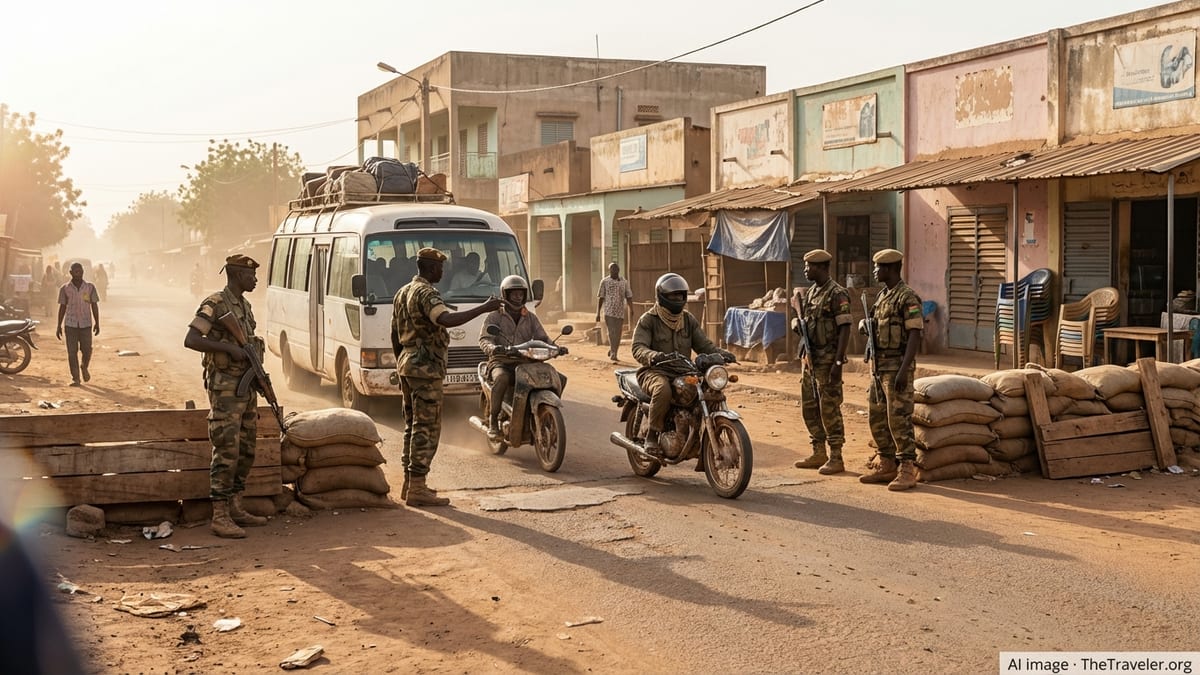
Burkina Faso’s Security Crisis Triggers Top-Level U.S. Warning
The State Department’s Level 4 advisory for Burkina Faso, updated in April 2025, explicitly urges Americans not to travel to the West African nation due to terrorism, crime and kidnapping. U.S. officials warn that extremist groups operate across large swaths of the country, with attacks possible at short notice in urban centers and remote regions alike.
Embassy officials note that terrorists have repeatedly targeted hotels, restaurants, police and military facilities, places of worship, schools and areas near mining sites. The threat of kidnapping is described as persistent, including in the capital Ouagadougou, and particularly acute in the Sahel and eastern regions, where the government has struggled to maintain effective control.
Other governments have echoed these concerns. Recent travel advice from Australian authorities continues to classify Burkina Faso as “do not travel,” citing a volatile security situation, high risks of terrorism and kidnapping, and very limited capacity to provide emergency consular help. Together, these warnings underscore how far the security environment has deteriorated for foreigners and local residents alike.
For U.S. travelers, the Level 4 designation signals that the government’s ability to assist in a crisis is restricted. Officials urge anyone already in Burkina Faso to maintain detailed contingency plans, avoid known targets, and be prepared to leave as soon as conditions allow.
A Growing Global Map of Level 4 “Do Not Travel” Destinations
Burkina Faso’s elevated risk status comes as the U.S. State Department maintains Level 4 advisories for a wide array of countries stretching from the Sahel to Eastern Europe and the Middle East. As of early 2026, at least 22 destinations carry the “Do Not Travel” label, reflecting an international landscape shaped by wars, insurgencies, state collapse and pervasive criminal violence.
Russia, Ukraine, Iran, Venezuela, Mali, Libya, Haiti, South Sudan and Yemen are among the states currently at Level 4. The list also includes Afghanistan, Belarus, Myanmar, the Central African Republic, Niger, North Korea, Somalia, Sudan, Syria, Iraq and Lebanon, as well as Gaza as a designated territory. In many of these places, the combination of active fighting, terrorism, rampant kidnapping and limited emergency services makes even short visits exceptionally hazardous.
Officials emphasize that Level 4 is reserved for situations where the threat to personal safety is severe and where the U.S. government’s capacity to help citizens is sharply constrained. In practice, that often means active combat zones, areas partially controlled by armed groups, or states where police, courts and hospitals function only sporadically.
News outlets and travel analysts note that the list has gradually lengthened over the past several years, tracking the spread of entrenched conflicts and state fragility. For many Americans who once sought remote or politically complex destinations, the new advisories are forcing a fundamental reconsideration of where and how to travel.
Conflict, Terrorism and Fragile States Behind the Warnings
The specific reasons behind a Level 4 warning vary by country, but the broad pattern is clear: intense violence, terrorism and weak or fragmented state institutions lie at the core of most advisories. In Burkina Faso and neighboring Mali and Niger, militant groups linked to al Qaeda and the Islamic State have exploited porous borders, long-standing grievances and under-resourced security forces to expand their reach.
In Russia and Ukraine, full-scale warfare and the risk of missile and drone strikes have led U.S. officials to advise against any travel, citing the inherent dangers of operating in or near active front lines and the potential for sudden escalations. In places such as Syria, Yemen and Libya, overlapping civil wars, foreign interventions and fragmented authority have left civilians and visitors vulnerable to bombardment, arbitrary detention and kidnapping.
Iran and Venezuela present a different but related risk profile. The State Department points to concerns about wrongful detentions, political instability, extensive sanctions and degraded infrastructure that can complicate basic logistics such as transport, medical care and communications. Haiti, meanwhile, has seen its advisory driven by spiraling gang violence, kidnappings for ransom and near-paralysis of formal law enforcement in parts of the capital.
Across these diverse contexts, a common thread is the limited ability of local authorities to guarantee security or reliably protect foreigners. For U.S. officials tasked with evaluating risk, that weakness is as consequential as the presence of armed groups or crime networks themselves.
Travel Bans, Diplomatic Strains and Reciprocal Restrictions
The expanding Level 4 map coincides with a broader tightening of U.S. immigration and security policies targeting nationals of certain high-risk states. A presidential proclamation issued in December 2025, and effective at the start of 2026, imposed full entry suspensions on citizens from Burkina Faso, Mali, Niger, South Sudan, Syria and several other countries, citing high rates of visa overstays, deficient identity documentation and security concerns.
The move added a layer of geopolitical tension to an already fraught environment. Mali and Burkina Faso have both responded with reciprocal measures, announcing bans on American travelers that mirror the U.S. restrictions. Officials in Bamako and Ouagadougou framed their decisions as a matter of sovereignty and fairness, arguing that their citizens should not face unilateral limits without consultation.
Diplomats and migration experts warn that such reciprocal bans can complicate crisis response and humanitarian engagement. When both sides restrict entry, it becomes more difficult to deploy specialists, evacuate vulnerable individuals or maintain the kinds of face-to-face dialogue that often underpin conflict de-escalation and aid negotiations.
For individual travelers and diaspora communities, the convergence of Level 4 travel advisories and immigration bans can be deeply disruptive. Families face obstacles to visiting relatives, and businesses that once relied on cross-border mobility struggle to sustain operations in affected regions.
Humanitarian Crises Intensify Risks for Civilians and Travelers
Beyond armed conflict and terrorism, worsening humanitarian conditions in many Level 4 countries amplify the dangers highlighted by the State Department. Burkina Faso is grappling with large-scale internal displacement as communities flee violence in rural areas, placing intense pressure on limited food supplies, health services and schools.
Similar dynamics are visible across the Sahel and in other conflict zones such as Yemen, South Sudan and parts of eastern Congo, where food insecurity, disease outbreaks and infrastructure collapse pose grave risks to residents. For visitors, those same conditions translate into fewer functioning hospitals, unreliable clean water, scarce fuel and limited telecommunications, all of which can quickly turn a minor emergency into a life-threatening situation.
In Haiti, United Nations agencies and aid groups have highlighted soaring rates of displacement and hunger as gangs expand their territorial control. Attacks on clinics, kidnappings of health workers and blocked roads have hampered medical outreach, leaving entire neighborhoods underserved. These realities underpin the U.S. advisory that warns not only of crime but of the government’s inability to guarantee basic safety and services.
Humanitarian organizations stress that while foreign tourists are urged to stay away, millions of civilians do not have that option. They continue to depend on fragile assistance pipelines that are themselves vulnerable to the same insecurity that drives the Level 4 warnings.
How the State Department Assesses and Communicates Risk
The State Department’s travel advisory system, which ranges from Level 1 “Exercise Normal Precautions” to Level 4 “Do Not Travel,” is built on regular security assessments that combine intelligence reporting, open-source information and consultations with U.S. embassies and consulates overseas. Analysts review indicators such as conflict intensity, terrorism trends, crime levels, political unrest, health threats and the ability of both local and U.S. authorities to respond in emergencies.
When several risk factors align at high levels, officials may raise a country to Level 4. For some destinations, that status has persisted for years, reflecting protracted crises with no clear resolution. In others, sudden events, such as a coup, a major terror attack or an abrupt collapse in public order, can trigger rapid changes.
Advisories are posted and updated on the State Department’s travel portal, which provides country-specific breakdowns of threats along with recommended precautions. For Level 4 countries, the language is unambiguous: Americans are told not to travel, and those already in-country are advised to depart as soon as it is safe to do so.
Officials also stress that conditions can change faster than advisories are updated. Travelers are encouraged to monitor local media, enroll in government alert systems and maintain close contact with family or employers who can assist in an evacuation if necessary.
Impact on Global Tourism and Traveler Decision-Making
The surge in Level 4 advisories has coincided with robust demand for travel in many safer regions, creating a split-screen picture for the global tourism industry. Reports from U.S. travel associations suggest that overall travel spending has risen modestly, with strong interest in trips to destinations viewed as stable and accessible.
At the same time, long-haul and adventure operators that once marketed itineraries in parts of the Sahel, the Middle East or conflict-affected areas of Eastern Europe have been forced to recalibrate. Some have shifted to neighboring countries that remain relatively secure, while others have paused operations entirely, citing insurance constraints and the ethical implications of promoting leisure travel in or near active crisis zones.
For individual travelers, the existence of a Level 4 advisory often carries practical consequences beyond personal risk calculations. Many travel insurance policies exclude coverage for countries under the highest warning level, airlines may adjust or cancel routes, and employers frequently bar staff from work-related trips to those destinations.
Travel analysts say the net effect is a steady concentration of tourist flows into a narrower set of perceived safe havens, with implications for local economies in both high-risk and low-risk countries. Destinations placed on the Level 4 list can see rapid declines in foreign visitors, depriving communities of income at a moment when humanitarian and reconstruction needs may be greatest.
What Travelers Should Do as the List Continues to Evolve
The inclusion of Burkina Faso alongside Russia, Venezuela, Iran, Mali, Libya, Haiti, South Sudan, Ukraine and other crisis-affected states highlights an important reality for would-be travelers: the global risk environment is fluid, and advisories can shift quickly as political and security conditions change.
Security experts recommend that travelers planning international trips begin by checking the State Department’s latest advisory for their destination and then cross-referencing that information with guidance from other governments and reputable news outlets. For countries near Level 4 destinations, they advise paying close attention to border regions, transit hubs and areas with heightened military activity.
For those with family ties or essential business in Level 4 countries, consular officials and risk consultants emphasize the importance of detailed contingency planning. That includes identifying multiple exit routes, securing reliable local contacts, understanding curfews or movement restrictions and preparing for disruptions to flights, fuel supplies or mobile networks.
With new crises emerging and existing conflicts deepening, few observers expect the Level 4 list to shrink dramatically in the near term. For now, Burkina Faso’s addition is another marker of a world in which the intersection of security, politics and humanitarian strain is reshaping not only where Americans can safely travel, but how they think about crossing borders at all.