

Spain’s cities are built for public transport. In Madrid, Barcelona, Valencia and dozens of regional capitals, dense metro and bus networks make it possible to explore without ever renting a car. For visitors, however, the mix of tickets, cards, apps and regional rules can feel confusing at first glance. With a little context and a few practical tips, Spain’s bus and metro systems become one of the easiest and best-value ways to travel.
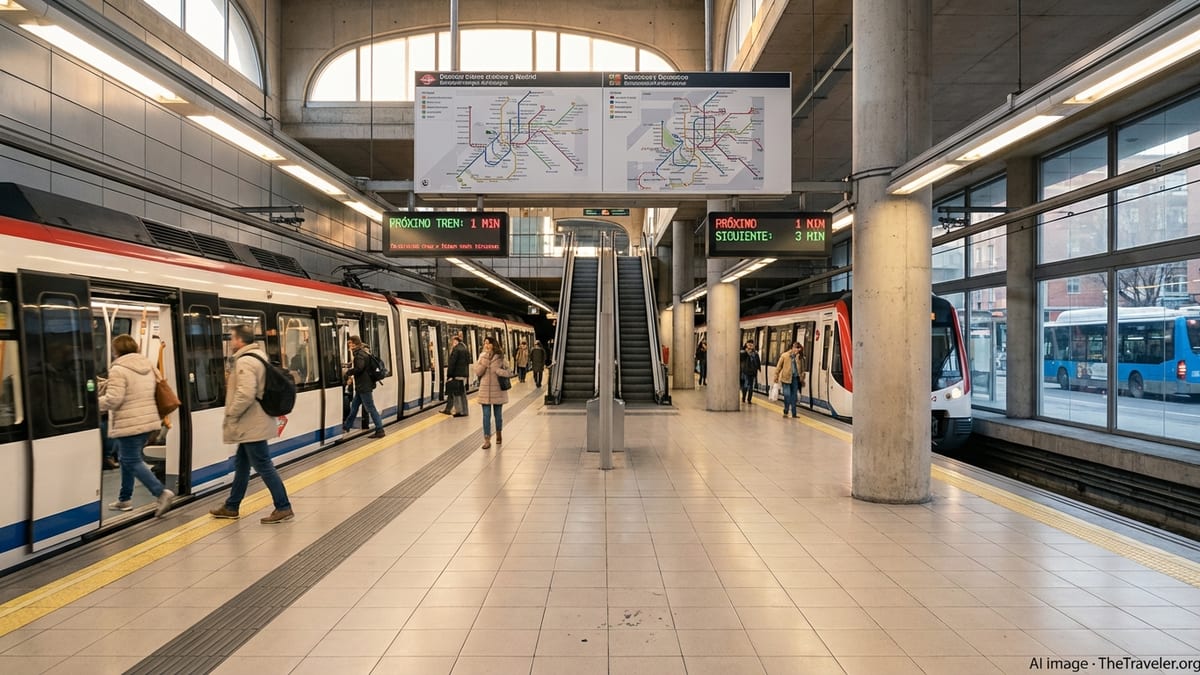
How Urban Transport Works Across Spain
Spain’s public transport is highly decentralized. Instead of one nationwide system, each region or metropolitan area manages its own network of metro, urban buses, suburban trains and tram lines. In practice this means that Madrid, Barcelona, Valencia, Seville, Bilbao and other cities all have slightly different tickets and names for similar services, but they share some common principles that make them relatively easy to understand.
In the largest cities, the backbone of urban mobility is the metro, supported by extensive bus networks that reach neighborhoods and hilltop districts where rail cannot go. Madrid and Barcelona have some of the most comprehensive metro systems in Europe, while cities such as Valencia, Bilbao, Malaga and Zaragoza combine light rail or tram lines with city buses. Smaller provincial capitals tend to rely primarily on buses, sometimes branded as EMT, TUS, TUSSAM or similar local acronyms.
Most urban areas operate under integrated fare systems, where a single ticket or travel card lets you use several modes within a zone structure. In Barcelona, a metropolitan authority coordinates fares between metro, buses, trams and some regional trains. A similar transport consortium in Madrid covers metro, city buses, suburban buses and Cercanías commuter rail, with travel passes valid across the network. For visitors, this integration means fewer decisions at the ticket machine and smoother transfers between bus and metro.
Although policies change periodically, the long-term trend has been toward easier, more digital and more sustainable mobility. Contactless payments, mobile ticketing, integrated apps and investment in zero-emission buses are now standard priorities. At the same time, paper single tickets still exist in most systems, so you can always fall back on a simple one-trip ticket if technology or language become a barrier.
Understanding Tickets, Zones and Payment Methods
To use Spain’s metros and city buses you will usually need to understand two things: the zone system and the medium on which your ticket is loaded. Zones divide metropolitan areas into concentric rings. Travel within the central zone is cheaper, while journeys that reach outer suburbs or nearby towns cost more. Madrid, for example, has central urban zones around the core and outer bands that extend into the wider region. Barcelona follows a similar model for the integrated area around the city.
Instead of printing a ticket for every ride, many cities use rechargeable smart cards or contactless media. In Madrid, most residents rely on a personal or anonymous transport card that they top up with monthly passes or ten-trip tickets. Barcelona has migrated much of its fare range to a contactless platform that allows loading season passes and multi-trip tickets onto plastic cards or cardboard supports that you tap at validators. These cards are usually sold and recharged at metro stations, tram stops and designated tobacco shops or kiosks.
For casual visitors, the most practical options are either a tourist pass that offers unlimited travel for a set number of days, or a multi-trip ticket shared among a small group. Many cities allow up to several people to travel together using the same ten-trip card, provided they validate it once per person when boarding or entering the metro. This can significantly lower the cost per journey compared with buying individual single tickets, which are often the most expensive way to ride.
Payment methods are evolving rapidly. Traditional ticket machines accept cash and bank cards, but more systems are now installing readers that allow you to tap a contactless bank card, phone or watch directly at the gate or on the bus without buying a separate ticket in advance. This type of EMV payment is already common in parts of Madrid’s regional bus network and in several other Spanish cities, particularly on airport or tourist-focused lines. Where it is available, fares are usually capped daily or per journey so that you pay the correct price automatically.
Metro Networks in Major Spanish Cities
Madrid and Barcelona offer the most extensive metro networks in Spain, and they shape how visitors move around these cities. Madrid’s metro forms a dense grid beneath the capital and its suburbs, connecting historic neighborhoods, business districts and outlying residential areas. It links directly with Cercanías commuter trains and intercity rail stations, making it easy to arrive by high-speed train and continue underground to your hotel or rental apartment. Recent projects have focused on extending lines into growing suburbs and improving interchanges with bus stations and park and ride facilities.
Barcelona’s metro covers the city proper and nearby municipalities with a combination of older central lines and more modern automatic lines. Its role is complemented by a suburban rail system and tram lines that serve coastal areas, technology districts and newer developments. Ridership in Barcelona’s integrated public transport area has grown steadily in recent years, reflecting both local commuters and visitors choosing metro and tram over private cars. For travelers, the network is particularly useful for accessing key sights such as the Sagrada Família, Park Güell, Montjuïc and the waterfront.
Elsewhere, Valencia’s Metrovalencia system blends metro-style underground sections with surface tram lines that reach beach districts and university zones. Cities such as Bilbao and Seville offer modern metro or light rail systems that are smaller but efficient, often paired with funiculars or suburban trains that connect surrounding towns. Malaga, Zaragoza and Palma de Mallorca are expanding tram or metro-style systems, gradually improving rail access to neighborhoods previously reached only by bus.
The design of Spanish metro stations tends to favor practicality over spectacle, but there are exceptions. Some newer stations in Madrid and Barcelona feature art installations, wide platforms and full accessibility, with elevators, escalators and tactile paving. In Barcelona, a sustained effort has made most metro and bus services step-free or largely accessible for people with reduced mobility, and Madrid has been progressively installing more elevators and signage in recent years. This investment directly benefits travelers with luggage, strollers or mobility devices.
City Buses, Night Buses and Regional Connections
While metros handle the highest volumes of passengers in central areas, buses remain the workhorses of Spanish urban transport. City buses weave through historic centers, climb steep hills, cross rivers and reach industrial zones that rail cannot easily serve. In Madrid and Barcelona, color coded lines and high frequency services mean that you rarely wait long at central stops, especially during weekday daytime hours. Timetables are posted at most stops, and digital displays are increasingly common on main routes.
Night buses, often branded with an N in their route number, take over when metro lines close around midnight or shortly after. In Madrid, a hub of night buses departs from central plazas, radiating to suburban neighborhoods into the early morning. Barcelona offers a similar night network that maintains connectivity between the center and outer districts. For travelers staying out late at restaurants, concerts or festivals, these services can be the safest and most economical way to return to your accommodation without relying on taxis.
Beyond city limits, regional and interurban buses knit together Spain’s commuter belts and smaller towns. In the Madrid region, a web of green intercity buses links the capital with satellite cities, business parks and rural villages, coordinated under a regional transport consortium. In Catalonia, metropolitan and interurban buses integrate with the wider rail network, enabling seamless trips from Barcelona to surrounding towns with a single ticket in many cases. Other regions, such as Andalusia, Valencia and the Basque Country, operate their own regional bus systems that often meet long-distance coach services at central stations.
For longer journeys between cities without high-speed rail connections, long-distance coaches operated by private companies serve national routes from major bus terminals. These should not be confused with local city buses, although stations are often adjacent. Travelers can easily switch from a long-distance coach to a metro or city bus using local tickets or cards, so planning a door to door trip that combines several modes is usually straightforward.
Buying Tickets, Using Apps and Reading Signage
Navigating Spanish bus and metro systems is considerably easier if you become familiar with ticket machines and official apps. Most metro stations have self service machines where you can select language options, choose between single tickets, passes or tourist cards, and pay by cash or card. Instructions are generally available in Spanish and English, and sometimes in additional languages such as French or Catalan depending on the region. Machines display zone maps and indicate which tickets are valid for metro, bus, tram or commuter rail.
Official transport apps have progressed beyond simple timetable listings. In many cities, they now combine real time information on train and bus arrivals, planned disruptions, alternative routes and mobile ticketing. Some regional apps allow you to load passes or tickets onto a virtual card on your phone, validate with a QR code or NFC, and check your remaining balance. Even where mobile ticketing is not fully deployed, journey planner functions help you compare options and estimate travel times between neighborhoods or nearby towns.
Understanding signage is key to stress free travel. On the metro, each line is identified by a number or letter and a distinct color. Platforms, wall maps and digital displays show the direction of travel by naming the final station on the line. Inside the trains, diagrams above doors indicate upcoming stops and transfer options. On buses, electronic signs at the front usually show the route number and main destinations or neighborhoods served. At stops, route maps list all intermediate stops so you can confirm you are heading in the right direction.
Most systems display service updates at stations and inside vehicles when maintenance work or modernization projects temporarily close sections of track. In large networks such as Madrid’s, it is common for certain line segments to be suspended for a few weeks in summer while signaling or tunnel improvements are carried out, with replacement bus services bridging the gap. Paying attention to these announcements, or checking the operator website or app on travel days, helps you avoid surprises and reroute efficiently if needed.
Accessibility, Safety and Etiquette
Spain’s cities have invested steadily in making metros and buses more accessible. Barcelona’s bus network, for example, is fully adapted for people with reduced mobility, with low floor vehicles, kneeling functions and ramps. Metro and tram networks across the country are progressively adding elevators, tactile paving, audio announcements and wide gates. Not every station in older parts of the system is yet step free, but accessible journeys can usually be planned by choosing specific stations with full facilities and using apps or maps that indicate accessibility features.
From a safety perspective, Spanish urban transport is generally considered secure and well monitored. Stations and vehicles are equipped with cameras and emergency intercoms, and security staff or local police patrol busy nodes. Crowding can occur at peak times, particularly on commuter corridors, but trains and buses are frequent enough that you can often wait for the next service if a vehicle feels uncomfortably full. As in any major city, petty theft such as pickpocketing is the main risk, especially in tourist heavy areas and at interchanges.
Basic etiquette goes a long way toward a pleasant journey. Queuing at platform markings, allowing passengers to alight before boarding, and moving away from doors once inside are all expected behaviors. Priority seats near doors are reserved for older adults, pregnant passengers and people with disabilities, and it is courteous to offer your seat if someone appears to need it more. Eating full meals is discouraged on most metros, although a small snack or bottled drink is rarely an issue. Loud phone calls and music without headphones are frowned upon, particularly in quieter suburban sections.
On buses, you normally board at the front door unless local signage indicates otherwise, tap or scan your card near the driver, and exit through the middle or rear doors. Tapping again when you exit is not always required, but some integrated systems do use tap on and tap off to calculate distance based fares. If you are unsure, watch what locals do or ask the driver with a simple question in Spanish or English. Drivers are used to visitors and usually happy to indicate when and where you should get off.
Tourists, Discounts and Sustainability Trends
Visitors to Spain can take advantage of a wide range of tourist oriented tickets and passes. Most major cities sell one to five day cards that include unlimited travel on metro, bus and tram within certain zones, sometimes bundled with airport journeys and discounts at museums or attractions. These can be particularly cost effective if you plan several journeys per day spread across different modes. Some passes can be purchased online in advance and collected at ticket machines or airport counters, while others are sold only in destination.
Discounted transport for residents has significant effects on the overall fare environment. In the Madrid region, for instance, capped monthly fares and youth passes subsidized by national and regional authorities have kept the cost of season tickets relatively low compared with other European capitals. Policies in recent years have extended free or heavily discounted travel to children, older adults and students in certain zones. While these measures are aimed primarily at residents, they help sustain high ridership and frequent service levels that benefit all passengers, including short term visitors.
Sustainability is another defining theme in Spain’s bus and metro systems. Urban bus fleets are steadily incorporating electric and hybrid vehicles, reducing emissions in dense areas and around tourist corridors. In Madrid, city authorities have redesigned tourist bus routes to relieve pressure on core public transport lanes and to require cleaner vehicles for sightseeing services. Similar environmental strategies in Barcelona and other cities emphasize limiting private car access to central districts while improving alternatives by metro, bus, tram and bicycle.
Some innovations go beyond passenger transport. In Madrid’s metro, for example, pilot projects have begun to use certain lines for so called last mile logistics, moving parcels underground during off peak hours and transferring them to bikes or walking couriers near final destinations. The goal is to cut the volume of delivery vans circulating in the city center each day, easing congestion and improving air quality without disrupting regular passenger services.
Practical Itineraries and City to City Comparisons
Although every Spanish city has its quirks, a few practical patterns can help you compare and choose the best way to move around. In Madrid, the metro is usually your first choice for cross city journeys, particularly between the historic core, business districts such as AZCA and the Nuevos Ministerios area, and transport hubs including Atocha and Chamartín stations. Intercity buses fill gaps where metro lines end, getting you to suburban towns, out of town shopping centers or hiking trailheads in the surrounding mountains.
Barcelona’s combination of metro, tram and bus means you can easily design itineraries that avoid steep climbs or long walks. For example, a visitor might take the metro to a foothill station, transfer to a bus or funicular to reach a viewpoint, then descend via tram and walk through a waterfront neighborhood back to the hotel. Integrated tickets allow all of these changes within a limited time frame without paying extra for each vehicle, as long as you stay within the defined zones.
In coastal cities like Valencia or Malaga, trams and light rail often provide the most scenic rides, hugging beachfronts or crossing modern bridges before diving into tunnel sections. Buses then connect from tram termini to historic quarters tucked away from the shoreline. In inland regional capitals such as Zaragoza or Valladolid, bus systems tend to be more dominant, but they frequently include high frequency corridors where buses operate almost like surface metros, with dedicated lanes and platform style stops.
As a traveler, it can be helpful to treat each city’s network as a separate puzzle that follows familiar rules. Upon arrival, locate a current network map, identify key lines that intersect near your accommodation and main sights, and select one or two ticket types that match your stay. Once you have a metro or bus card in hand and understand which zones you will use most, you can move between Spanish cities with confidence that their systems, although differently branded, will feel intuitively similar.
FAQ
Q1. Do I need a different ticket for every Spanish city I visit?
Yes. Transport is managed regionally, so tickets and cards from Madrid, Barcelona or other cities are not interchangeable, even though the systems work in similar ways.
Q2. Are Spain’s metro systems safe to use at night?
In general they are considered safe, with cameras and staff present, but you should take usual big city precautions and keep valuables secure, especially in busy central stations.
Q3. Can I pay directly with my contactless bank card on buses and metros?
Contactless bank card payment is increasingly available, especially on some regional and airport bus lines and selected metro gates, but it is not yet universal, so carrying a local transport card is still advisable.
Q4. How late do metros run in Spain?
Hours vary by city, but many metros operate from early morning until around midnight on weekdays, with extended hours on Friday and Saturday nights. Night buses usually cover the gap when the metro is closed.
Q5. Are Spanish metros and buses accessible for wheelchairs and strollers?
Newer stations and almost all modern buses are accessible, with low floors and ramps. Some older metro stations still have limited step free access, so planning routes with accessibility in mind is important.
Q6. Is it cheaper to buy a tourist pass or pay per trip?
For short stays with several journeys per day, tourist or day passes often work out cheaper and more convenient than buying single tickets, especially if they include airport transfers or multi mode travel.
Q7. Do buses announce stops in English?
Stop announcements are normally in the local language, but digital displays show stop names clearly. In major tourist areas staff and drivers are used to helping visitors who are unsure where to get off.
Q8. Can I share a multi trip ticket with friends or family?
In many cities multi trip cards can be shared by several people traveling together, provided you validate once for each person, but this is not universal, so always check the rules printed on the card or at machines.
Q9. What is the best way to get from the airport into the city?
Most large Spanish airports are linked by metro, suburban rail or dedicated buses, often with integrated fares. It is usually cheaper than a taxi and reasonably fast except in peak traffic.
Q10. How can I find out about disruptions or strike action?
The most reliable sources are official transport apps, station announcements and local news outlets, which publish updates about planned works, service changes or industrial action affecting bus and metro services.