

More news on this day
As the wider Middle East wrestles with closed airspace, rerouted flights and volatile headlines in 2026, Türkiye continues to present a striking contrast, with commercial air traffic, hotels and major tourist hubs reporting largely normal operations and the government still targeting fresh tourism records.
Get the latest news straight to your inbox!
Tourism Momentum Carries Into 2026 Despite Regional War
Publicly available data for 2024 and 2025 show that Türkiye entered 2026 from a position of unusual strength in global tourism. Official statistics and analyst summaries indicate that the country welcomed more than 62 million visitors in 2024 and over 64 million in 2025, with tourism receipts rising from about 61 billion dollars to roughly 65 billion dollars over the two years. This placed Türkiye among the world’s top tourism destinations by arrivals and cemented travel as a core pillar of its economy.
Industry reports in early 2026 describe that growth as continuing even as a new conflict centered on Iran unsettles parts of the Middle East. Aviation and tourism briefings emphasize that the main impacts on regional travel are being felt in and around active conflict zones and in neighboring airspace, while Türkiye’s primary gateways, including Istanbul, Antalya and İzmir, remain fully operational with standard commercial schedules. Airlines are routing around closed corridors further east, but traffic to and from Turkish airports is largely continuing as planned.
Forecasts prepared by tourism analysts and trade publications suggest that Türkiye is still targeting tourism revenue in the high sixty billion dollar range for 2026. Government strategy papers and investment promotion material highlight a multi‑year shift away from pure volume towards higher‑spending visitors, expanded cultural and nature products, and year‑round tourism. In that context, current regional tensions are described as a headwind to be managed, rather than a decisive break in trajectory.
Commentary from sector associations notes that Türkiye has already navigated overlapping shocks in recent years, including the pandemic, the Russia Ukraine war and the Gaza conflict, while still posting record numbers. Analysts argue that this track record, combined with diversified source markets across Europe, the Middle East and Asia, helps explain why tour operators and airlines continue to schedule Türkiye as a cornerstone destination even in a turbulent regional environment.
Operational Picture: Flights, Airports and Key Hubs
The wider Middle East conflict has led to widespread airspace closures over several states and intermittent missile and drone incidents that have affected routing through the Gulf and Levant. Aviation monitoring published in March 2026 shows multiple countries in the immediate conflict zone restricting or suspending commercial traffic, which has forced airlines to adopt longer routings between Europe and parts of Asia.
By contrast, Istanbul’s dual airports, along with major coastal gateways such as Antalya and Bodrum, continue to appear on schedules with normal or near‑normal frequencies. Flight‑tracking snapshots for late March 2026 show dense traffic over western and central Türkiye, with carriers still using the country as a bridge between Europe and destinations further east where routes remain viable. While some long‑haul operations have adjusted timings or routings to avoid conflict airspace, Türkiye itself is functioning as a safe detour rather than a no‑go zone.
Travel advisories from several Western governments updated in early 2026 generally distinguish between Türkiye and states directly involved in the fighting. Publicly accessible guidance typically urges heightened awareness near Türkiye’s land borders with Syria, Iraq and Iran, as well as in certain southeastern provinces, while indicating that Istanbul, Ankara, Cappadocia and the main Aegean and Mediterranean resorts are operating normally. Security commentary also underlines that Türkiye is not a party to the latest phase of the conflict, even as it remains diplomatically and rhetorically engaged.
Travel‑risk consultancies tracking corporate itineraries in the region report that multinational firms continue to approve business trips, conferences and trade fairs in Istanbul and other large cities, even as they cancel or postpone meetings in some Gulf and Levant locations. For leisure travelers, airline and hotel booking platforms still show strong availability across spring and summer 2026, suggesting that demand remains resilient, although some operators note a slight softening from markets most sensitive to geopolitical headlines.
“Business as Usual” on the Ground in Tourist Hotspots
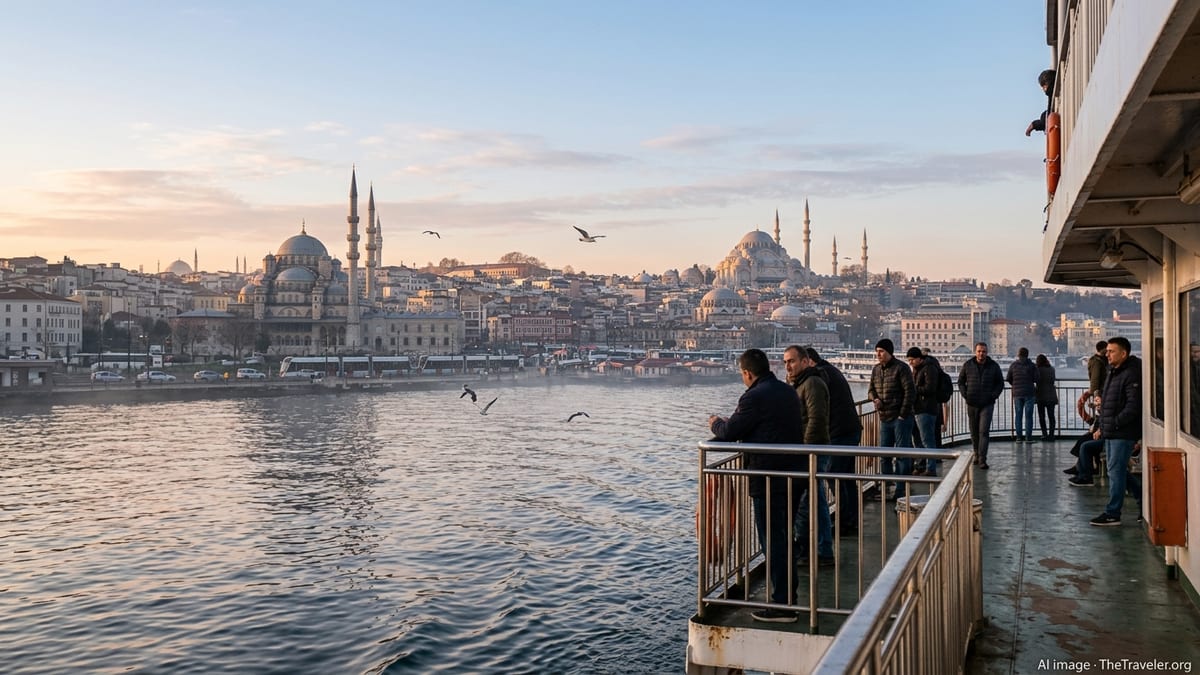
On the ground in Türkiye’s main visitor hubs, the picture that emerges from local press coverage, social media posts and traveler reports is one of daily routines continuing largely uninterrupted. Images and descriptions from Istanbul in early 2026 depict crowds around Sultanahmet, Beyoğlu and the Galata Bridge, ferries crossing the Bosphorus at regular intervals and restaurants and rooftop terraces doing brisk trade.
In Cappadocia, national and regional outlets continue to showcase sunrise balloon flights over the valleys and full tour rosters for popular hiking routes. Along the Mediterranean and Aegean coasts, regional news coverage highlights preparations for the 2026 summer season, from hotel refurbishments and marina upgrades to new beach infrastructure. Travel commentators note that, while some properties are offering modest promotions to reassure hesitant markets, there is no sign of a wholesale pullback or closures driven by the regional conflict.
Visitor feedback circulating on public forums in March 2026 often contrasts the intensity of international news about the Middle East with the atmosphere in Turkish cities, which many describe as calm and focused on tourism as usual. Several posts frame Türkiye as a separate and comparatively stable environment on the edge of the conflict, rather than as part of a single undifferentiated danger zone. These perceptions appear to be contributing to a flow of last‑minute bookings from travelers re‑routing from more directly affected countries.
At the same time, local authorities in major cities continue to support high‑visibility cultural and sporting events designed to underline normality. Istanbul’s arts festivals, marathon and international fairs, together with international exhibitions in Antalya and İzmir, remain on the 2026 calendar, according to promotional materials and events listings. Such programming is being presented domestically as both an economic necessity and a signal that Türkiye remains open and confident despite instability in its broader neighborhood.
Source Markets, Bookings and Shifting Demand Patterns
Türkiye’s performance during earlier crises has been closely linked to the breadth of its source markets, and publicly available figures for 2024 and 2025 suggest that this diversification is continuing. Analyst reports point to strong visitor flows from Germany, Russia, the United Kingdom and Eastern Europe, together with growing arrivals from Gulf states and Asia. The domestic market has also remained an important buffer, particularly during shoulder seasons.
As the 2026 Middle East conflict disrupts outbound travel from parts of the region and complicates connections through some Gulf hubs, booking data cited in trade publications indicates that European and Russian markets are once again anchoring demand for Türkiye. Tour operators in those countries reportedly continue to package Turkish beach resorts and city breaks as safe alternatives to destinations perceived as closer to the fighting. Some carriers are also leaning more heavily on Türkiye’s airports as transfer points for rerouted traffic between Europe and South Asia.
At the same time, there are signs of a modest rebalancing within Türkiye itself. Industry commentary notes that coastal resorts along the Aegean and Mediterranean remain the main engine of growth, but that cultural, gastronomic and nature‑based tourism is gaining share, especially in central Anatolia and the Black Sea region. This shift is in line with strategic plans published by Turkish tourism authorities before the latest crisis, which emphasized higher‑value, experience‑driven travel over simple sun‑and‑sea volume.
Economic observers caution that the broader regional war, higher fuel costs and currency volatility could still affect traveler behavior as 2026 progresses. Yet current projections from sector bodies and consultancy reports suggest that Türkiye is more likely to see changes in composition and spending patterns than a dramatic collapse in arrivals, especially if fighting remains geographically contained.
Practical Considerations for Travelers Weighing Türkiye in 2026
For travelers trying to interpret mixed signals from news headlines and booking platforms, the main message emerging from 2026 coverage is that Türkiye’s tourism infrastructure is operating normally but requires informed decision making. Travel and security advisories consistently recommend monitoring official guidance from home governments and airlines, paying particular attention to any updates concerning border regions or airspace changes linked to the conflict.
Travel‑risk specialists advise that visitors planning trips to Türkiye in 2026 consider flexible booking conditions, comprehensive insurance that explicitly covers disruption from geopolitical events where possible, and itineraries that avoid unnecessary overland travel near conflict‑adjacent borders. In practice, most international leisure itineraries focus on Istanbul, Cappadocia and coastal resorts, which remain far from current hostilities and continue to function as established tourist environments.
Observers also stress the value of distinguishing between Türkiye and other states more directly affected by the conflict when assessing risk. While airlines and tour operators have significantly reduced or suspended operations to certain Middle Eastern destinations, Türkiye continues to appear as a primary alternative in many European and Asian markets. For now, evidence from flight schedules, hotel performance data and on‑the‑ground reporting supports the notion of “business as usual” in much of the country’s tourism sector.
How long that dynamic holds will depend on the trajectory of the conflict, global economic conditions and traveler sentiment. Yet, as of late March 2026, Türkiye’s blend of geographic distance from active fronts, mature tourism infrastructure and diversified demand is allowing it to maintain a rare status in the region: a major Middle Eastern‑adjacent destination where, for visitors, the defining experience remains travel itself rather than the surrounding tensions.