

More news on this day
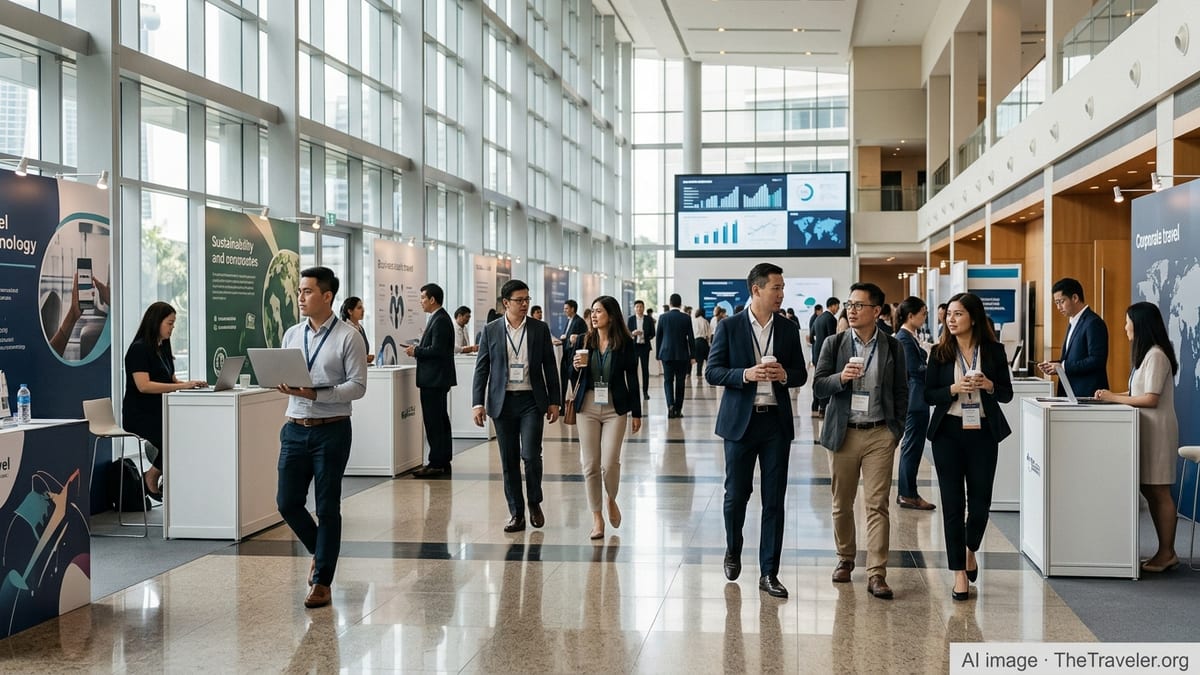
Singapore is cementing its status as a regional hub for corporate travel innovation as technology providers, travel managers and suppliers converge for the Business Travel Show Asia Pacific at Marina Bay Sands, with new tools and programs aiming to reshape how companies plan, book and manage business trips across the region.
Get the latest news straight to your inbox!
Asia Pacific’s Corporate Travel Hub Gathers in Singapore
The Business Travel Show Asia Pacific, returning to Marina Bay Sands on 14 to 15 April 2026, is positioning itself as a focal point for the region’s fast-evolving corporate travel sector. Organisers describe the event as a premier meeting place for travel managers, procurement leaders and senior decision-makers seeking to navigate Asia Pacific’s complex mix of markets, regulations and supplier landscapes, according to publicly available information about the conference programme.
Launched in 2025 and now entering its second edition, the show responds to what industry observers see as a gap for an Asia Pacific-focused counterpart to established European corporate travel events. Reports indicate that the 2025 debut brought together hundreds of corporate buyers from across Asia Pacific, North America and Europe, along with dozens of airlines, hotel groups, travel management companies, technology providers and ground transport specialists.
The 2026 edition takes place against a backdrop of resilient business travel demand in Asia Pacific and an industry-wide push to embed technology and sustainability into travel programmes. Conference content is being shaped to reflect these pressures, with sessions expected to focus on risk management, programme optimisation and regional strategy for multinational organisations.
Innovation Faceoff Puts New Travel Tech in the Spotlight
Innovation is a central theme at the Singapore show, with the Business Travel Innovation Faceoff returning after its inaugural run in 2025. Event materials describe the programme as a dedicated platform where selected suppliers demonstrate breakthrough tools and services to an audience of corporate buyers and industry experts.
Companies taking part span a wide range of specialisations, from booking and expense platforms to data analytics, duty-of-care solutions and payment technologies. The format aims to give travel managers concise, practical insight into how emerging products could plug into their existing ecosystems, rather than high-level demonstrations detached from day-to-day programme needs.
According to published coverage of last year’s edition, Asia Pacific’s first Innovation Faceoff attracted strong interest from both regional start-ups and established global brands seeking to tailor offerings for local markets. The 2026 call for applications highlights areas such as automation, traveller experience, sustainability tracking and programme visibility as priority topics, signalling where buyers are likely to focus their technology budgets in the coming cycle.
Organisers also promote post-event visibility for participating innovators, including digital showcases and on-demand recordings, indicating that the Faceoff is being positioned as an ongoing discovery channel rather than a one-off stage presentation.
AI, Data and Payments Lead the Next Wave of Tools
Across the broader exhibition floor and conference sessions, business travel innovation in Singapore is increasingly defined by artificial intelligence, advanced data use and integrated payment solutions. Publicly available information from exhibitor previews points to a growing number of AI-enabled tools designed to automate policy checks, personalise itineraries and flag risks in real time.
Travel management platforms are emphasising their ability to aggregate data from multiple sources, giving buyers clearer insight into spending patterns, supplier performance and traveller behaviour across Asia Pacific markets. This visibility is seen as critical in a region where programme fragmentation is common and local content often resides in separate booking channels.
Virtual and single-use card solutions, along with enhanced corporate card platforms, are also playing a prominent role. Suppliers are promoting capabilities that link payment data directly to booking and expense systems, aiming to reduce reconciliation work and fraud exposure while improving compliance.
For travel managers, the concentration of these offerings at a single Singapore event provides an opportunity to benchmark vendors side by side and understand how global solutions are being adapted to address local requirements such as currency controls, invoicing norms and tax rules in different Asia Pacific jurisdictions.
Sustainability and Duty of Care Shape Purchasing Decisions
Alongside technology, sustainability and traveller wellbeing are emerging as decisive factors in corporate travel purchasing decisions highlighted at the show. Conference tracks are set to address topics such as emissions reporting, sustainable aviation fuel partnerships, greener hotel sourcing and responsible ground transport options.
Suppliers are increasingly presenting carbon dashboards, emissions calculators and reporting capabilities built into booking tools and management platforms. These features are intended to help companies measure the impact of their Asia Pacific travel and align itineraries with broader environmental, social and governance goals.
Duty-of-care considerations are equally prominent. Risk management providers and travel management companies are showcasing solutions that integrate traveller tracking, real-time alerts and incident response support, particularly relevant in a region exposed to weather disruptions, health concerns and geopolitical tensions.
Observers note that corporate buyers in Asia Pacific are under growing pressure from senior leadership and employees to demonstrate that travel is both purposeful and supported by robust safety frameworks. The Singapore show’s agenda reflects this shift, treating sustainability and duty of care not as optional add-ons, but as core components of programme design.
Singapore’s Expanding Role in Regional Business Travel Events
The prominence of business travel innovation at the Asia Pacific show also underscores Singapore’s wider role as a hub for trade and travel events. In addition to the Business Travel Show Asia Pacific, the city-state is hosting a succession of industry gatherings across 2026, including an Asia Pacific conference by the Global Business Travel Association and technology-focused trade shows that draw corporate travel and meetings professionals.
Marina Bay Sands in particular has become a focal venue for these events, with its integrated resort, convention facilities and air connectivity making it a preferred base for regional meetings. Industry briefings suggest that organisers benefit from Singapore’s positioning as a gateway to Southeast Asia, steady air links and supportive policy environment for business events.
As Asia Pacific business travel continues to recover and evolve, stakeholders indicate that gatherings in Singapore are likely to remain influential in setting priorities for technology investment, sustainability targets and traveller experience standards. The Business Travel Show Asia Pacific, with its emphasis on practical innovation and regional nuance, is emerging as one of the key platforms where those conversations take shape.