

More news on this day
Once known mainly as a summer holiday spot for Western Australians, Busselton is rapidly evolving into a high-end cruise gateway and wine tourism hub that is attracting visitors from around the world.
Get the latest news straight to your inbox!
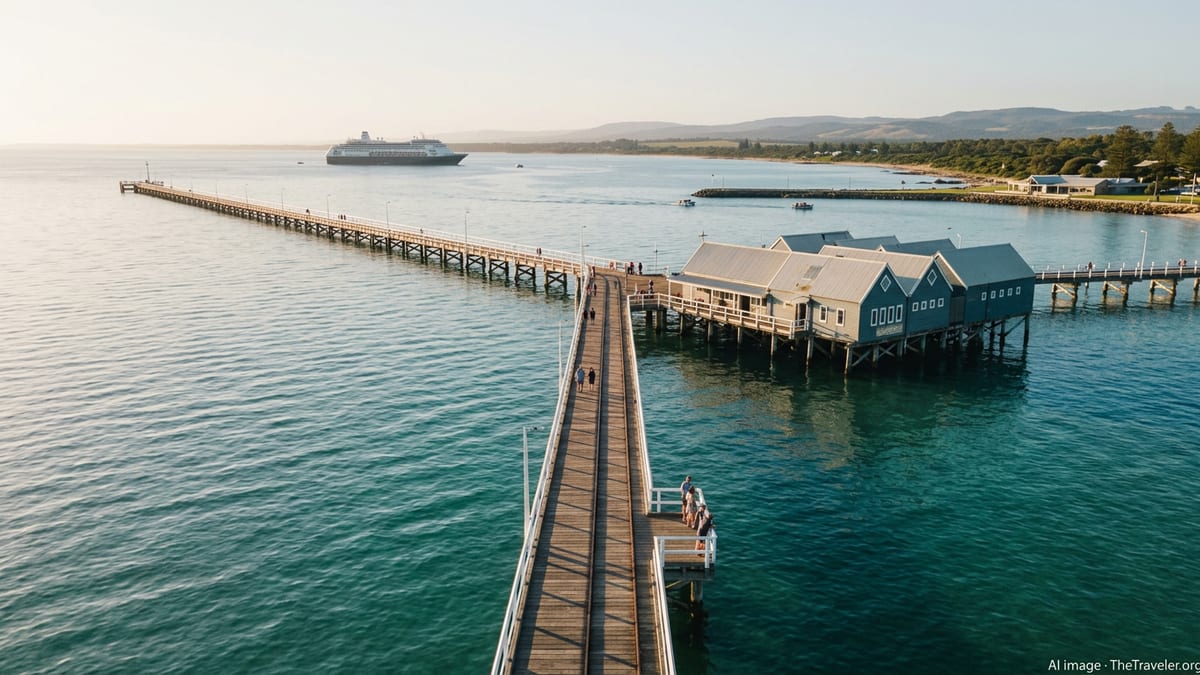
A New Star on Australia’s Cruise Map
Busselton’s transformation has been accelerated by a surge in cruise ship visits positioning the coastal city as a key regional port of call. Tourism reports indicate that the 2024–25 season brought around 10 cruise ship calls to Busselton, carrying more than 12,000 passengers and a further 5,000 crew, a sharp rise for a destination that only recently entered mainstream cruise itineraries.
Cruise lines are marketing Busselton as the access point for the Margaret River wine region, branding calls as “Margaret River (Busselton)” to highlight the city’s proximity to one of Australia’s most prestigious wine areas. Industry information shows that major operators promote Busselton as a tender port, with passengers ferried ashore close to the compact town centre and the heritage-listed jetty, before dispersing to vineyards, coastal lookouts and gourmet food experiences.
Local tourism data points to strong spending patterns from cruise visitors, who often have limited time in port but high discretionary budgets. Shore excursion programs are increasingly focused on premium themes such as private wine tastings, chef-led lunches and small-group tours to boutique producers, reflecting growing demand for higher-value, curated experiences rather than mass-market sightseeing.
With more lines scheduling future calls and the cruise season stretching from spring through late autumn, Busselton is shifting from a niche inclusion to a regular feature on Australia and New Zealand routes. Industry coverage suggests this momentum is helping the city reposition itself from a primarily domestic beach destination to an internationally recognised coastal gateway.
Gateway to the Margaret River Wine Region
Busselton’s boom is closely tied to the global reputation of the surrounding Margaret River wine region, which is widely cited as producing a significant share of Australia’s premium wines despite its relatively small output. The combination of cool maritime climate, boutique cellar doors and acclaimed chardonnay and cabernet sauvignon has made the region one of the country’s most visited wine areas for both domestic and international travellers.
Publicly available tourism profiles describe Busselton as the northern entry point to this wine corridor, with the city’s hotels, waterfront venues and visitor centre acting as the first stop on many itineraries. From the foreshore, visitors can reach dozens of wineries, craft breweries and farm-to-table restaurants within an hour’s drive, while still returning to Busselton’s beaches and jetty precinct by evening.
The region’s appeal is not limited to wine. Marketing material highlights more than 130 kilometres of coastline, limestone caves, surf breaks and national parks, which are increasingly being packaged together with cellar door visits in multi-stop itineraries. This combination is helping Busselton attract younger, experience-focused travellers as well as traditional wine tourists, broadening the city’s visitor base.
Industry bodies also note that the wider Margaret River region, from Busselton to Augusta, records millions of visitor nights annually, underlining the scale of tourism now anchored by the coastal city. Busselton’s role as the transport and accommodation hub at the northern end of the region positions it to capture a growing share of this high-yield market.
Infrastructure Investment Fuels a Coastal Revival
Behind Busselton’s rise as a luxury travel destination lies a series of infrastructure upgrades spanning aviation, accommodation and visitor experiences. The Busselton Margaret River Airport has been a pivotal development, with direct flights from major east-coast cities such as Melbourne and Sydney drastically reducing travel time to the region. Coverage from tourism and aviation sectors indicates that these routes have improved access for both domestic and international visitors connecting through eastern hubs.
On the waterfront, new hotels and hospitality venues are reshaping the city’s profile. Tourism Western Australia has highlighted the opening of a branded hotel on the Busselton foreshore, alongside venues such as a pavilion-style dining and beverage complex featuring a restaurant, bar, distillery and local wine store. These additions are designed to appeal to higher-spending visitors seeking contemporary design, ocean views and curated local food and wine offerings within walking distance of the cruise tender point.
At Busselton Jetty itself, one of the city’s signature attractions, investment in new experiences is reinforcing the destination’s premium positioning. Recent reports on the jetty’s operations highlight strong ticket sales and the introduction of attractions such as an expanded marine discovery centre and enhanced train and underwater observatory experiences. These upgrades are contributing to record visitor numbers and providing all-weather activities that extend visitation beyond the traditional summer peak.
Combined, these developments are reshaping Busselton’s skyline and service offering. The city is now marketing a product mix that blends heritage structures and relaxed beach culture with new-build hotels, design-led venues and year-round experiences that align with the expectations of international cruise guests and wine-focused travellers.
Rising Visitor Numbers and Economic Impact
Tourism indicators show that Busselton and the broader Margaret River region have recorded sustained growth in visitation and visitor nights in recent years. Regional tourism organisations report that the area receives millions of visitor nights annually, with intrastate, interstate and international travellers all contributing to the total. Digital visitation to official destination websites has also surged, suggesting strong interest at the trip-planning stage.
Recent media coverage from Western Australian outlets points to a particularly strong 2024–25 summer period, with Busselton Jetty operators citing double-digit percentage increases in visitation over peak holiday weeks. These surges are mirrored across key natural attractions near Busselton and further south, where state government briefings have highlighted significant growth in visitor numbers to coastal lookouts and lighthouses over the past three years.
Economic analysis from tourism agencies suggests that this rising visitation is translating into higher expenditure in accommodation, hospitality and tour operations. Cruise passengers, in particular, are viewed as an important segment for off-peak and shoulder seasons, helping to smooth demand across the year. High-value wine and food experiences, including degustation menus and premium tastings, are further lifting per-capita spend compared with more traditional beach tourism.
Local businesses, from boutique hotels to cellar doors, are responding with tailored offers for cruise guests and fly-in visitors, including same-day wine tours, private transfers and tasting experiences timed around ship schedules and flight arrivals. This level of coordination is reinforcing Busselton’s image as a destination that is ready to welcome global travellers seeking seamless, higher-end itineraries.
Balancing Growth with Coastal and Community Values
Busselton’s rapid evolution is also prompting discussion about how to manage growth in a way that preserves the region’s coastal character and environmental assets. Regional media reports note that strong holiday seasons have brought pressure on beaches, roads and popular natural sites, while local planning documents emphasise the need for sustainable tourism development across the Margaret River region.
State and regional tourism strategies increasingly reference a focus on dispersing visitors across a wider range of towns and attractions, encouraging longer stays and less concentrated pressure on marquee sites. Busselton’s role as a transit and accommodation hub is seen as central to this approach, as the city can host visitors in well-serviced urban areas while promoting day trips to surrounding coastal and wine destinations.
Environmental initiatives at Busselton Jetty and along the foreshore, including marine education programs and investment in accessible, low-impact infrastructure, are being positioned as part of a broader effort to protect the marine and coastal environment that underpins the city’s appeal. Tourism operators are also increasingly marketing small-group and nature-based experiences that highlight conservation efforts and Indigenous cultural narratives alongside traditional wine and food themes.
As cruise itineraries expand and air links deepen, Busselton faces the challenge of sustaining its boom without losing the relaxed, small-city atmosphere that attracted visitors in the first place. For now, the combination of luxury cruise calls, world-class wine country and a wave of new investment is propelling this coastal community into the global travel spotlight.