

Buying property in Dubai as an expatriate is relatively straightforward compared with many other global cities, but it is governed by specific ownership rules and generates a distinct set of fees and charges. Understanding these regulations and costs in advance is essential for any international professional evaluating Dubai as a potential relocation or investment destination.
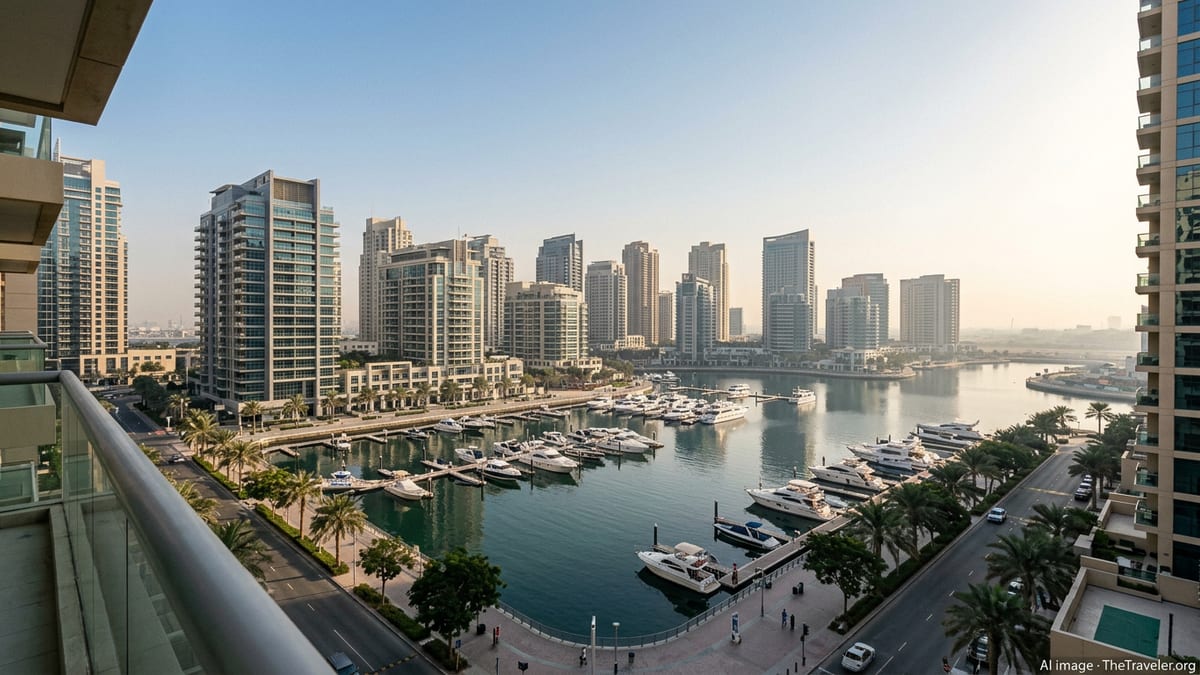
Legal Framework for Expat Property Ownership in Dubai
Dubai permits foreign nationals to own property, but only within clearly defined categories and geographic zones. Expatriates who are not citizens of the United Arab Emirates or other Gulf Cooperation Council states may acquire freehold ownership or long leasehold rights in designated areas that have been approved by the emirate’s authorities. Outside these zones, expatriates are generally limited to usage rights rather than full ownership.
The core legal basis for foreign ownership stems from local property laws that distinguish between freehold, usufruct, and long-term lease interests. For practical purposes, most individual expatriate buyers focus on freehold apartments and villas in master-planned communities that explicitly allow foreign ownership. The legal framework continues to evolve incrementally, but the headline rule that foreign ownership is confined to specific areas has remained stable for more than a decade.
Property rights in Dubai are registered with the Dubai Land Department through a centralised electronic system. Once a transaction is completed and the relevant fees are paid, the buyer receives a title deed that confirms legal ownership or, in the case of off-plan projects, an interim registration certificate. These records are the definitive evidence of ownership and are routinely checked by banks and other institutions.
Importantly, the right to buy property in Dubai does not automatically confer any immigration status. While ownership may be one factor in certain residence by investment or long-term residence schemes, the property transaction itself is legally separate from visa and immigration processes and must be evaluated on its own terms.
Types of Ownership Available to Expatriates
Expatriate buyers most commonly encounter three main types of property interests. The first is freehold ownership, which grants the buyer full and indefinite ownership of the unit and a share in the common areas, subject to community rules. This is standard for apartments and villas in many of the major master developments that are open to foreign ownership.
The second category is leasehold, typically in the form of a long-term lease that can run up to 99 years. Here, the buyer effectively acquires a time-limited right to occupy and use the property, which can often be sold or transferred during the lease term. Leasehold arrangements may be offered in certain developments where the underlying land remains owned by a master developer or government-related entity.
The third relevant structure for some expatriate buyers is usufruct or similar usage rights, which allow occupation and use of a property for a long period without transferring underlying land ownership. These arrangements can exist in mixed-use or special-purpose developments and may be attractive to corporate or institutional buyers that prioritise long-term control rather than permanent ownership.
From a practical relocation perspective, individual expatriates tend to prioritise freehold apartments or villas, as these assets are more straightforward to finance, resell, and use as collateral. Leasehold and usufruct interests can still be viable, but buyers should be clear on the duration, renewal conditions, and resale restrictions associated with these rights before committing.
Designated Freehold Areas and Market Segments
Foreign ownership in Dubai is geographically concentrated in so-called designated areas, which include many of the emirate’s master-developed communities. These zones cover a broad spectrum of residential products, from studio apartments to luxury villas. Examples include master-planned waterfront districts, inland gated villa communities, and high-rise clusters that have been structured specifically with international buyers in mind.
Within these designated freehold areas, expatriates can typically purchase completed properties on the secondary market or buy off-plan units directly from developers. The choice between these segments has cost and risk implications. Completed units provide immediate occupation and clearer visibility on service charges and building quality, while off-plan purchases can offer staged payment plans and sometimes financial incentives such as partial fee waivers.
Prices in designated areas vary widely based on location, property type, age, and finishing quality. At the lower end, smaller apartments in emerging communities can be accessible to mid-income professionals, while prime waterfront or central urban addresses command significantly higher price points. For decision-making, the crucial point is that most stock realistically available to expatriate buyers falls within these designated zones, and this structural reality shapes both pricing and liquidity patterns.
Buyers evaluating relocation should assess not only headline purchase prices but also the maturity of the community, the likely stability of service charges, and the existence of active resale and rental markets. These factors influence the long-term practicality of owning a property during and after an expatriate posting in Dubai.
Key Government Fees and Transaction Charges
Beyond the property price itself, Dubai imposes a number of mandatory government fees on real estate transactions. The most significant is the Dubai Land Department transfer fee, which currently stands at 4 percent of the property’s sale price or assessed value. In principle this fee is split equally between buyer and seller, but in practice it is common for the buyer to bear most or all of this cost.
In addition to the 4 percent transfer fee, buyers pay fixed administrative fees for title deed issuance and registration. These are relatively modest in absolute terms, often in the low hundreds of dirhams per transaction, but they are mandatory at the time of transfer. Where the purchase involves a mortgage, the Dubai Land Department also charges a mortgage registration fee of approximately 0.25 percent of the loan amount plus a small administrative charge.
Most buyers also incur trustee office fees when completing the transaction at an approved registration trustee office. Typical trustee fees are tiered by property value and generally fall in the low thousands of dirhams, with higher fees applied to properties above a certain price threshold. These fees normally attract value added tax at the prevailing rate.
When these items are combined with brokerage commissions, bank fees, and miscellaneous charges, expatriate buyers are commonly advised to assume that total transaction costs will fall in the region of 6 to 10 percent of the purchase price. The exact percentage depends on whether a mortgage is used, whether any promotional incentives such as a waived Land Department fee are obtained, and the level of professional services engaged.
Brokerage, Bank and Professional Costs
Real estate brokerage commissions represent a major non-government cost component in Dubai property purchases. On secondary market transactions it is standard for the buyer to pay a brokerage commission of around 2 percent of the purchase price, plus value added tax. In certain circumstances this fee may be negotiated, but the 2 percent benchmark remains widely observed in the market.
For off-plan purchases, it is common for developers to pay the brokerage commission, which means the buyer does not incur a separate agency fee. However, buyers should still treat the total package price and payment plan as the primary variables of interest, since marketing incentives can be reflected in overall pricing.
Where bank financing is involved, expatriate buyers incur several layers of cost. In addition to the mortgage registration fee payable to the Dubai Land Department, banks usually charge processing or arrangement fees that are often structured as a percentage of the loan amount, frequently around 1 percent. There can also be valuation fees payable to independent surveyors engaged by the bank, typically in the low thousands of dirhams per valuation, depending on the property type.
Finally, many buyers choose to engage a conveyancing firm or legal advisor to manage contract review, compliance verification, and completion logistics. Professional conveyancing fees vary by provider and transaction complexity but can add a further low single-digit percentage or a fixed amount in the mid- to high-thousands of dirhams. While not mandatory, such services can reduce procedural risk for expatriates unfamiliar with local practices.
Ongoing Ownership Costs and Property Taxes
Dubai does not currently levy an annual municipal property tax on residential owners in the way many other global cities do. Instead, the main recurring costs associated with ownership are service charges payable to the building or community management company, plus utilities and routine maintenance. Service charges are typically calculated per square foot and can vary significantly depending on amenities, building age, and maintenance standards.
For apartments in amenity-rich developments with multiple pools, gyms, and 24-hour security, annual service charges can represent a noticeable proportion of the property’s value over time. In more basic or low-density communities, charges can be lower in absolute and relative terms. Buyers should always request recent service charge budgets and payment histories for the specific building or community before committing.
On the tax side, Dubai has introduced value added tax, which applies to many of the professional and administrative fees associated with property transactions, but completed residential sales themselves are generally treated as exempt from VAT. Certain commercial and off-plan transactions may be treated differently, which is relevant for mixed-use projects and investors purchasing properties that are not purely residential.
Expatriate buyers should also be aware that while there is no recurring property tax at the emirate level, broader national and home-country tax implications may still arise. Those considerations depend on personal tax residency status and the interaction between Dubai property ownership and foreign tax systems, and they require separate specialist analysis beyond the scope of local real estate rules and costs.
Financing Conditions and Leverage Limits for Expats
Mortgage availability is an important practical factor for expatriates considering a property purchase in Dubai. Local regulations distinguish between first home purchases and subsequent or purely investment purchases, as well as between residents and non-residents. For resident expatriates purchasing a first property below a certain value threshold, maximum loan to value ratios often reach approximately 75 to 80 percent, meaning a minimum 20 to 25 percent cash down payment is typically required.
For higher-value properties or second and subsequent properties, maximum loan to value ratios are lower, frequently in the range of 60 to 70 percent. Off-plan purchases are generally financed more conservatively, with loan to value caps sometimes closer to 50 percent. Non-resident buyers often face stricter criteria, lower maximum leverage, and more conservative income assessments than resident borrowers.
Interest rates are commonly linked to local interbank benchmarks plus a bank-specific margin and are subject to periodic review according to the mortgage type. Buyers should evaluate not just the headline rate but also early settlement fees, rate reset mechanisms, and any caps on variable rates. Over a multi-year expatriate posting, changes in interest rates can materially affect the affordability of a leveraged property purchase.
Prospective buyers weighing a relocation decision should model both a cash purchase scenario and a leveraged scenario using realistic down payment, rate, and amortisation assumptions. Given the scale of upfront transaction costs, a relatively short expected holding period can make highly leveraged purchases less attractive unless strong capital appreciation is anticipated and tolerated from a risk perspective.
The Takeaway
For expatriates, buying property in Dubai is structurally facilitated by a clear legal framework for foreign ownership in designated areas and a relatively efficient registration system. At the same time, the process entails a concentrated set of upfront costs dominated by the 4 percent Dubai Land Department transfer fee, brokerage commissions, and bank and trustee charges. Total transaction costs of roughly 6 to 10 percent of the purchase price are realistic for many buyers once all elements are included.
Decision makers evaluating a relocation to Dubai should therefore treat property acquisition as a medium- to long-term commitment rather than a short-term experiment. The cost structure and fee burden become more justifiable when spread over a multi-year holding period or when the property has clear utility as a primary residence that replaces rental expenditure. For those uncertain about duration of stay or long-term intent, renting first and reassessing a purchase once plans stabilise can be a prudent approach.
Ultimately, the practicality of buying property in Dubai as an expatriate depends on combining an accurate understanding of the legal rules and costs with realistic assumptions about financing, holding period, and exit options. Careful pre-transaction analysis, supported by professional advice where appropriate, enables relocation candidates to determine whether ownership supports or undermines their broader mobility strategy.
FAQ
Q1. Can expatriates legally own freehold property in Dubai?
Yes, expatriates can own freehold property in Dubai, but only within designated areas that are officially approved for foreign ownership by the authorities.
Q2. What is the main government fee when buying property in Dubai?
The principal government charge is the Dubai Land Department transfer fee, which is currently set at 4 percent of the property’s purchase price or assessed value.
Q3. How much should an expat budget for total buying costs above the purchase price?
When government fees, brokerage, bank charges, and professional costs are combined, many expatriate buyers incur total transaction costs of roughly 6 to 10 percent of the purchase price.
Q4. Are there annual property taxes on residential homes in Dubai?
Dubai does not currently levy an annual municipal property tax on residential owners, but owners pay recurring service charges for building and community maintenance.
Q5. Do off-plan buyers pay the same fees as buyers of completed properties?
Off-plan buyers pay the same 4 percent transfer fee and related charges in principle, although developers sometimes offer incentives such as partial or full waivers of select fees.
Q6. What level of down payment is typically required for an expat mortgage?
Resident expatriates purchasing a first home commonly need to provide at least 20 to 25 percent of the property value as a down payment, with higher contributions for larger or additional properties.
Q7. Are brokerage commissions negotiable for buyers?
Brokerage commissions for secondary market purchases are typically around 2 percent of the price plus value added tax, but in some cases these fees can be negotiated depending on market conditions and the specific transaction.
Q8. What ongoing costs should expat owners expect after purchase?
Key ongoing costs include service charges to the building or community, utilities, routine maintenance, and any mortgage repayments if the purchase was financed.
Q9. Is it necessary to hire a lawyer or conveyancer when buying in Dubai?
Engaging a lawyer or conveyancing firm is not legally mandatory but is often advisable for expatriates, as these professionals help review contracts, verify compliance, and manage the transfer process.
Q10. Does owning property in Dubai automatically grant a residence visa?
No, property ownership does not automatically grant residence rights. Visa and immigration status are governed by separate regulations and must be assessed independently of the property transaction.