

Foreigners can legally buy real estate in Mexico, but the legal framework is structurally different from North America and Europe and carries distinct risks. Understanding restricted zones, ownership mechanisms such as bank trusts, and frequent problem areas like ejido land is essential before committing to a purchase tied to a relocation plan.
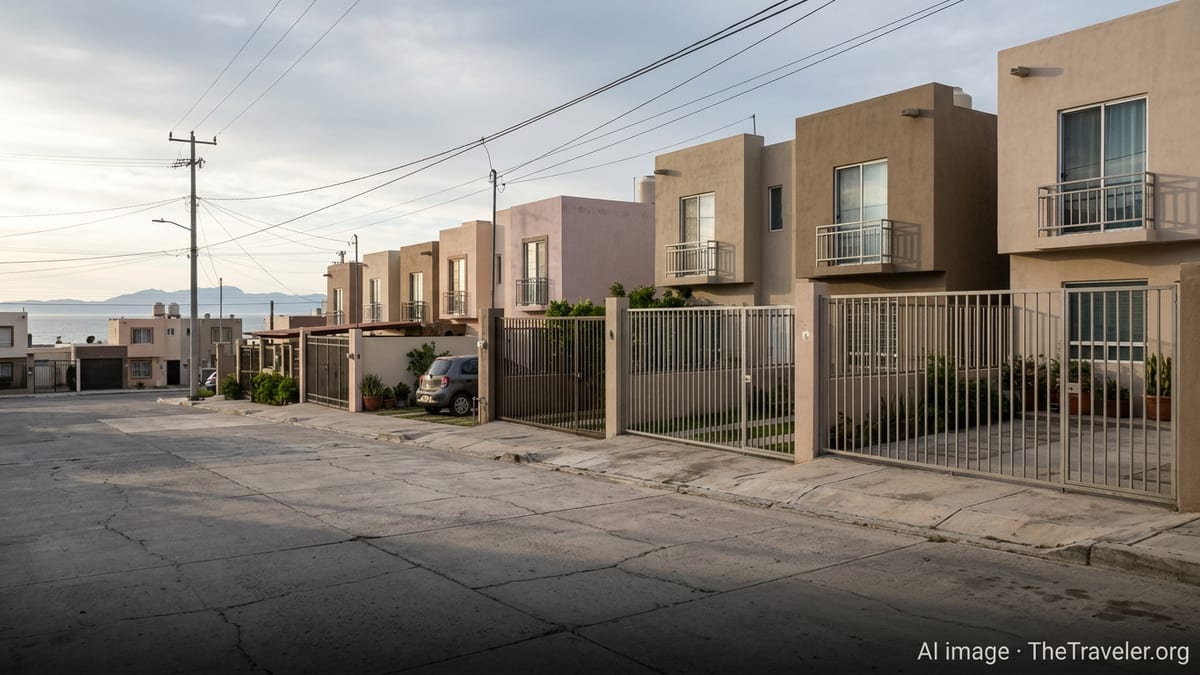
Legal Framework for Foreign Property Ownership in Mexico
The starting point for foreign buyers is Article 27 of the Mexican Constitution, which states that the Mexican nation owns all land and water and may transfer private property rights subject to conditions. One of those conditions is that foreigners must accept, by formal declaration, to be treated as Mexicans in relation to the property and agree not to invoke diplomatic protection from their home state concerning that asset. In practice this is implemented through a standard clause processed with the Ministry of Foreign Affairs and incorporated into the deed or trust documentation.
Outside certain sensitive areas, foreigners may hold full title to real estate in their own name. Mexico’s 32 states each have their own civil codes and property registries, so procedural details and timelines vary by location, but the core principles are broadly similar nationwide. Foreign nationals can generally buy, sell, lease, mortgage, and bequeath property located outside the constitutionally defined restricted zone once the proper formalities are observed.
The main constraint is that foreigners cannot directly hold title to residential property in specific coastal and border strips without using a special vehicle. This single constitutional limitation drives most of the distinctive ownership structures foreign buyers encounter, including the widely used bank trust mechanism for coastal homes and apartments.
Foreign corporate ownership is also possible and is sometimes used for commercial projects or development plays. However, corporate structures introduce separate regulatory and tax implications and usually do not simplify ownership for individuals relocating primarily for residential purposes.
The Restricted Zone and Where Foreigners Can Hold Title
Mexico designates a “restricted zone” that covers all land within 50 kilometers of any coastline and 100 kilometers of international borders. This comprises roughly 40 percent of Mexican territory and includes many of the locations most attractive to foreign buyers, such as major resort cities and border urban areas. Within this zone, foreign individuals are constitutionally barred from holding direct legal title to land for residential purposes.
Foreigners may, however, purchase property directly in their own names in all areas outside the restricted zone. For example, many colonial interior cities and inland industrial hubs fall completely outside the restricted zone, allowing freehold ownership to foreigners similar to that available to Mexican nationals. In these locations, once due diligence is complete and the notary formalizes the deed, the property is registered directly to the foreign buyer in the Public Registry of Property.
Within the restricted zone, foreigners gain residential property rights indirectly through a bank trust, known as a fideicomiso, or through a Mexican company. The corporate route is generally reserved for commercial or mixed-use ventures and is not usually advisable when the primary purpose is a personal residence, because it may conflict with rules limiting corporate ownership of residential property for foreigners and can have additional compliance burdens.
For relocation planning, this geographic distinction is critical. Prospective movers targeting coastal or border communities must be comfortable with a trust-based structure and its ongoing costs, while those willing to live further inland can often acquire property under a more familiar freehold model.
Bank Trusts (Fideicomisos) and Ownership Rights
The fideicomiso is the dominant mechanism allowing foreigners to acquire beneficial ownership of residential property in the restricted zone. Legally, a Mexican bank acts as trustee and holds title to the property, while the foreign buyer is the trust beneficiary. The beneficiary has the right to use, lease, improve, mortgage (subject to lender policies), and sell the property, and can designate heirs to receive beneficial rights upon death. In practice, these rights are broadly equivalent to ownership, even though the legal title is in the name of the bank.
Fideicomiso terms are typically authorized for an initial period of up to 50 years, renewable for additional 50 year terms. Renewal is a key long term consideration for relocation buyers: while renewals are routinely granted, they involve administrative steps and additional fees. A typical trust involves several cost components, including government permits, bank setup fees, and an annual administration fee. Market reports as of early 2026 indicate that initial setup for a fideicomiso often falls in the range of roughly 2,000 to 3,000 US dollars, with ongoing annual fees commonly between about 500 and 1,000 US dollars, depending on the bank and location.
Operationally, the bank’s role is largely administrative. The trustee must approve certain acts, such as sale or granting of a mortgage, but this is usually a formality once documentation is in order and outstanding fees are paid. Some buyers perceive the presence of the bank as an additional layer of security, while others view it as a potential point of friction if the bank is slow to process instructions or increases fees over time.
There are also practical limitations. Transferring the trust to a new buyer, changing beneficiaries, or moving the trust to a different bank all trigger additional legal work and costs. Buyers planning to relocate long term should understand not only the initial trust configuration but also the procedural steps and fees involved in future changes, including potential sale, inheritance, or refinancing scenarios.
Key Legal Risks: Title, Ejido Land, and Documentation Gaps
The most prominent legal risk for foreigners buying in Mexico is defective or unclear title. Mexico’s property registry system is state based, paper heavy in many areas, and in some regions historically underfunded. This increases the importance of meticulous due diligence. Foreigners who assume that a signed private contract or a seller’s assurances are sufficient, without full registry checks, face an elevated risk of later disputes, overlapping claims, or inability to register the transfer properly.
Ejido land is a particularly serious hazard. Ejidos are communal agrarian properties governed by federal agrarian law rather than state civil codes. Various legal and academic estimates indicate that roughly half of Mexico’s territory is still classified as ejido or formerly ejido land. Foreign individuals cannot legally acquire ejido land directly, and any purported “sale” of unregularized ejido parcels to a foreigner often cannot be registered in the public property registry. In such cases, the buyer may hold nothing more than an informal occupation agreement with no enforceable property right and could be removed with little or no compensation.
Even where ejido land has been privatized, it must complete a legally specific process before becoming regular private property suitable for acquisition by foreigners. This includes internal ejido resolutions, issuance of individual titles, and registration with the National Agrarian Registry and the state Public Registry of Property. If any step is incomplete or improperly documented, the purported private title may later be challenged. Cases of foreigners losing their full investment due to unrecognized or partially regularized ejido titles remain one of the most frequently cited catastrophic outcomes in Mexican real estate.
Other documentation gaps include unrecorded inheritances, inconsistencies between cadastral records and registry descriptions, existing liens or embargoes, and zoning or environmental restrictions not disclosed by the seller. In some areas, especially high growth coastal zones, disputes over overlapping concessions, environmental permits, or protected areas have led to demolitions or court ordered seizures affecting both foreign and local owners.
Due Diligence, Notarios, and Transaction Process Risks
Unlike in some common law jurisdictions, the notario público in Mexico is a senior attorney appointed by state authorities with quasi public functions, including the formalization of real estate transfers. The notary drafts and executes the deed or trust assignment, verifies tax compliance, and submits the transaction for registration. However, the notary’s role does not automatically include exhaustive investigative due diligence unless specifically requested and paid for. Foreign buyers who assume the notary will detect all problems without explicit instruction may underestimate residual risk.
Robust due diligence typically includes verifying ownership in the Public Registry of Property, confirming that there are no recorded liens or encumbrances, checking cadastral and zoning records, reviewing building permits and land use classifications, and verifying that utilities and common areas (where relevant) are legally regularized. In some states, buyers can subscribe to registry alert systems that notify them of attempted changes to the property’s registration, which can be a useful risk mitigation tool in areas with higher levels of fraud.
Timing and transaction structure introduce additional risks. New build or pre construction projects often require staged payments before the unit is complete and before the final deed is executed. This exposes the buyer to developer insolvency, delays, or non delivery risk. While escrow arrangements and performance guarantees can reduce exposure, they are not uniformly used across the market. In some tourist zones, a significant portion of disputes reported informally by foreign buyers relate to incomplete or substantially delayed pre construction projects.
Payment methods matter. Cash or informal transfers without clear receipts increase the difficulty of proving what was paid if a dispute arises. Comprehensive written contracts, notarized where appropriate, bank transfers with traceable records, and professionally managed escrow increase the buyer’s ability to enforce rights in Mexican courts if necessary. For relocation oriented purchasers who intend to hold long term, the additional transaction formality usually represents a relatively low incremental cost compared with potential downside risk.
Ongoing Ownership, Governance, and Enforcement Risks
Owning property in Mexico as a foreigner involves a continuing relationship with local institutions. In the case of fideicomisos, this includes the trustee bank and any homeowners’ association or condominium regime. Annual bank trust fees, property taxes, and maintenance charges must be paid to avoid penalties or administrative blocks on future transfers. While property tax levels are generally modest compared with many North American and European jurisdictions, local governments have discretion over rates and enforcement intensity.
Enforcement of property rights is conditioned by the broader Mexican legal system, which can be slower and less predictable than in some buyer’s home jurisdictions. Civil disputes over title, boundaries, construction defects, or homeowners’ association issues can take years to resolve and involve significant legal fees. While foreigners have the same formal rights as Mexican citizens in these proceedings, practical outcomes depend on the quality of legal representation, completeness of documentation, and local court capacity.
Security of possession is generally stronger for properties that are clearly titled, fully registered, free of agrarian or environmental claims, and located in consolidated urban areas with established registries. Properties in newly developing zones, areas with historic ejido conflicts, or regions experiencing rapid speculative growth may carry higher enforcement risk, including the possibility of competing claims surfacing years after purchase.
Relocation planners should also consider succession. For properties in a fideicomiso, beneficiaries can be designated within the trust to streamline transfer on death. For directly titled properties, a Mexican will or other succession planning instrument is usually advisable to avoid the need for complex foreign probate recognition in Mexican courts. Failure to plan for succession can lead to prolonged periods in which the property cannot be sold or formally inherited, affecting long term family relocation strategies.
The Takeaway
Buying property in Mexico as a foreigner is legally permissible and, in many regions, routine. However, the combination of constitutional restrictions in the coastal and border restricted zone, the widespread presence of ejido land, and a fragmented registry environment produces a risk profile that is meaningfully different from that in many origin countries. For relocation driven purchases, understanding these structural features is more important than short term price movements or marketing claims.
Decision grade assessment requires mapping desired locations against the restricted zone, choosing between direct title and bank trust structures, and rigorously screening out any property with potential ejido or documentation issues. Engaging qualified local legal counsel, instructing the notary to perform deep due diligence rather than minimal formalization, and using transparent payment and escrow mechanisms are central risk controls rather than optional extras.
Foreign buyers who limit themselves to fully titled, properly registered properties, avoid unregularized ejido land and informal arrangements, and budget realistically for trust costs and professional fees can substantially reduce exposure. Those who prioritize speed or marginally lower prices over legal clarity face a materially higher risk of disputes, capital loss, and complications that can undermine the broader objective of a stable relocation.
FAQ
Q1. Can a foreigner legally own property in Mexico?
Yes. Foreigners can legally acquire property throughout Mexico, but coastal and border areas require use of a bank trust or corporate structure for residential property, whereas inland locations outside the restricted zone can usually be owned directly in the buyer’s name.
Q2. What exactly is the restricted zone for foreign buyers?
The restricted zone covers land within 50 kilometers of any coastline and 100 kilometers of international borders. In this zone, foreigners cannot hold direct title to residential property and typically use a bank trust structure instead.
Q3. How does a fideicomiso (bank trust) work for foreign buyers?
In a fideicomiso, a Mexican bank holds legal title as trustee, while the foreign buyer holds beneficial rights. The buyer can use, lease, improve, and sell the property and designate heirs, subject to trust terms and payment of bank fees.
Q4. How long does a bank trust last and can it be renewed?
Standard fideicomiso terms are up to 50 years and can be renewed for additional 50 year periods. Renewals are generally routine but involve administrative steps and additional costs that buyers should factor into long term planning.
Q5. What is ejido land and why is it risky for foreigners?
Ejido land is communal agrarian property governed by agrarian law. Foreign individuals cannot directly own ejido land, and unregularized ejido parcels often cannot be registered in the public property registry, which can leave a foreign buyer without enforceable ownership rights.
Q6. How can a foreigner check whether a property is safe to buy?
Key steps include hiring local legal counsel, instructing the notary to perform full title and lien searches in the Public Registry of Property, verifying that the land is not ejido or that it has been fully regularized, checking zoning and permits, and ensuring that all agreements are formalized in notarized documents.
Q7. Are pre construction purchases in Mexico especially risky for foreigners?
Pre construction purchases often involve paying substantial amounts before the project is completed or fully documented, which increases exposure to developer delays, non completion, or documentation problems. Using escrow, staged payments tied to progress, and thorough vetting of the developer can reduce but not eliminate this risk.
Q8. What are typical costs associated with a fideicomiso?
Market reports indicate that setting up a fideicomiso commonly costs in the low thousands of US dollars, and annual administration fees are typically in the mid hundreds of dollars. Exact figures vary by bank, location, and property value and should be confirmed in writing before proceeding.
Q9. Do foreigners have the same legal protections as Mexican citizens regarding property?
Within Mexican territory, foreigners and citizens are subject to the same substantive property laws. However, foreigners must formally agree not to seek diplomatic protection regarding the property, and practical enforcement of rights depends on documentation quality, court capacity, and the buyer’s willingness to pursue local legal remedies.
Q10. Is buying property in Mexico advisable as part of a relocation plan?
It can be, provided the buyer accepts the structural constraints, conducts rigorous due diligence, avoids high risk categories such as unregularized ejido land, and uses appropriate legal and transactional safeguards. Those unwilling to navigate these complexities may find long term renting a lower risk alternative for relocation.