

Buying property in Spain as a foreigner is legally straightforward, but the financial, legal, and regulatory environment is complex and highly regionalised. This briefing outlines how foreign nationals can purchase residential property, what restrictions and taxes apply, and the main practical considerations that influence whether Spanish real estate is a suitable component of a relocation or investment strategy.
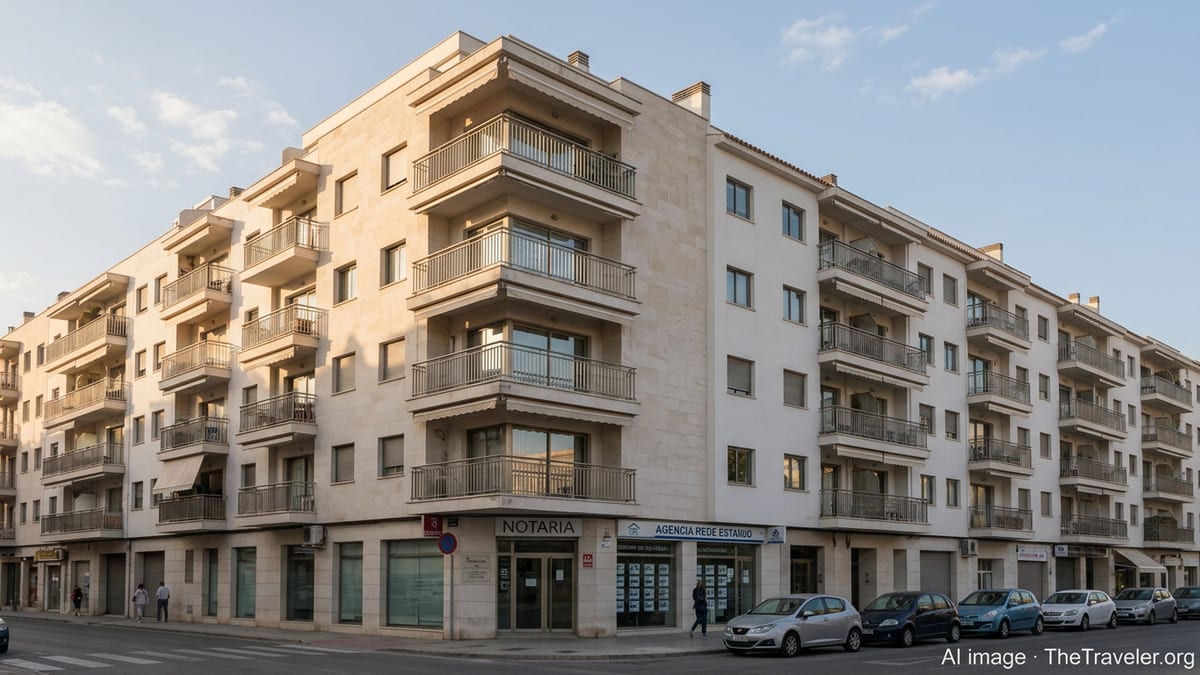
Legal Framework for Foreign Property Ownership in Spain
Spain places very few restrictions on foreign ownership of residential property. Both EU and non-EU nationals can generally buy freehold property on the same terms as Spanish citizens. Purchases by foreigners are most common along the Mediterranean coast, in the islands, and in major cities, but the legal rules are national, with taxation and some procedures differentiated by region.
Foreign buyers must obtain a Número de Identificación de Extranjero (NIE), the tax identification number for non-Spaniards, before completion. The NIE is required to appear in the title deed, to pay purchase taxes and ongoing property taxes, and to open a Spanish bank account in most cases. Without an NIE, the notary cannot finalise the transfer of ownership.
There are some limited special regimes. Rural or border properties near military areas, for example in parts of Galicia or around certain naval bases, can require additional defence ministry authorisation. These cases are relatively rare and usually flagged by local lawyers. Apart from such security-related zones, there is no national cap on how many properties a foreigner may own or on the value of those properties.
Historically, high-value property purchases could qualify non-EU citizens for residency under Spain’s so-called golden visa. This route has been phased out through legislation published in early 2025, with full termination of real estate-based golden visas scheduled for April 2025. After that date, property ownership alone no longer creates a right to reside, although ownership rights over the property itself are not affected.
Impact of the End of the Golden Visa Scheme
From 2013 to 2025, Spain’s golden visa allowed non-EU buyers to gain residency if they invested at least 500,000 euros of unencumbered funds in Spanish real estate. As of early 2025, Organic Law changes have repealed the key golden visa provisions, and the scheme ceases to accept new real estate-based applications from April 2025 onward. Existing golden visa holders retain their property ownership, but renewals and status transitions are subject to transitional rules that do not involve new property purchase conditions.
This policy change affects how non-EU nationals evaluate Spanish property. Buying a home in Spain no longer doubles as a residency route; instead, residency and immigration decisions must be based on other visa categories, while property decisions stand on their own financial and lifestyle merits. For a foreigner intending to relocate, the separation of real estate and residency means that owning a Spanish property is now more comparable to owning property in a country where residence rights are entirely visa-driven.
Market data suggest that golden visa purchasers accounted for a small fraction of total transactions, with estimates often below a few percent of annual sales. As a result, the immediate impact on pricing is expected to be limited in most areas. However, in certain prime urban and coastal submarkets that catered heavily to high-net-worth non-EU buyers, foreign purchasers should anticipate some policy-driven scrutiny of speculative or purely investment-driven acquisitions, particularly if further housing affordability measures are introduced at regional or municipal level.
From a decision-making perspective, foreign buyers should now treat Spanish property as an independent asset decision. The appropriate question is whether the chosen Spanish property works financially and operationally given the buyer’s likely visa scenario, rather than whether the property will unlock a specific immigration category.
Acquisition Process and Professional Roles
The mechanics of buying property in Spain are similar for foreigners and residents, though foreign buyers are strongly advised to engage bilingual professionals. The typical sequence is reservation contract, private purchase contract, and finally execution of the public deed of sale (escritura pública de compraventa) before a notary, followed by registration in the Land Registry. Foreign buyers can complete the process in person or via a power of attorney granted to a lawyer or trusted agent.
Key professional actors include an independent lawyer acting solely for the buyer, the notary, and in many cases a buyer’s agent or real estate agency. The notary is a public official who verifies identities, checks formal validity of the deed, and submits it electronically to the Land Registry, but does not perform full due diligence. Legal due diligence on title, planning compliance, charges, community debts, and any occupancy rights is normally carried out by the buyer’s lawyer.
Spain operates a system of strong land registration. The Land Registry (Registro de la Propiedad) protects registered rights, and most transactions involve properties that are already registered. Foreign buyers should ensure that the cadastral reference (used for tax and valuation) matches the registered property and that any extensions or renovations are properly regularised. Mismatches can affect taxes, mortgage availability, and future resale.
Completion timelines are influenced by how quickly the buyer can obtain an NIE, arrange financing, and complete due diligence. In a straightforward cash purchase with an existing NIE and clear title, a foreign buyer can often complete within six to eight weeks. Purchases involving off-plan properties or extensive regularisation works may take significantly longer due to permitting and construction milestones.
Transaction Taxes and Upfront Costs for Foreign Buyers
Transaction taxation is the largest single cost element beyond the purchase price itself, and it functions identically for foreigners and residents. The primary distinction is between new-build and resale property. New-build residential properties purchased directly from a developer are subject to value-added tax (IVA) and stamp duty (Actos Jurídicos Documentados, AJD). Resale properties are subject to property transfer tax (Impuesto sobre Transmisiones Patrimoniales, ITP), which is a regional tax.
IVA on new residential properties is generally around 10 percent of the purchase price, although certain officially protected housing can carry lower rates. AJD on new-build purchases is typically between 0.5 percent and 1.5 percent of the declared price, set by each autonomous community. For resale homes, ITP is charged instead of IVA and AJD; regional ITP rates commonly fall in a band of roughly 6 percent to 11 percent, often with progressive scales where higher-priced properties attract higher marginal rates.
Because these percentages apply to either the declared purchase price or an official reference value, the tax burden can be substantial. Foreign buyers should budget not only for these major transaction taxes but also for notary fees, Land Registry fees, legal fees, valuation fees if taking a mortgage, and agency commissions where the buyer is directly responsible. As a working assumption, professional and administrative fees often add in the region of 1.5 percent to 3 percent of the price, on top of the major tax components.
Regional variation is important for decision-making. For example, some regions such as Madrid and a few northern communities currently apply relatively low standard ITP rates and stamp duty, while other high-demand coastal or island regions apply higher rates, sometimes with surcharges for second homes or high-value properties. Given that autonomous communities have been increasing expected revenues from ITP and AJD in recent budget years, foreign buyers should expect potential upward revisions or tightening of reliefs, particularly for non-primary residences.
Ongoing Property Taxation for Non-Resident Owners
After purchase, foreign owners face several ongoing property-related taxes. At municipal level, the key recurring levy is the Impuesto sobre Bienes Inmuebles (IBI), a local property tax assessed on the cadastral value of the property. IBI rates are set by each municipality within centrally defined limits, and they vary widely; in many areas they are a small percentage of cadastral value, but higher-value or centrally located properties can still generate a material annual expense.
Non-resident owners are also subject to Spain’s non-resident income tax (Impuesto sobre la Renta de No Residentes, IRNR) in respect of Spanish properties. If the property is rented out, the tax applies to net or gross rental income depending on the owner’s residence in the EU or outside it, and deductions for expenses differ accordingly. Even where the property is not rented, non-residents are generally required to declare an imputed rental income amount calculated as a small percentage of the cadastral value. The European Commission has opened infringement proceedings against Spain regarding the way such imputed incomes are applied to non-residents for habitual residences, so the exact long-term shape of these rules may evolve.
Tax rates under IRNR depend on the owner’s country of tax residence. For residents of EU and certain associated states, the standard rate on Spanish-source income has been around the high teens as a percentage, whereas non-EU residents typically face a higher flat rate in the mid-twenties. These rates apply both to imputed income and to actual net income from rental activities if deductions are allowed. Foreign owners must also consider potential wealth tax or similar regional net worth taxes if the value of their Spanish assets exceeds applicable thresholds, which is more likely for owners of high-value coastal or urban properties.
Municipalities additionally levy a local tax known as plusvalía municipal on increases in the cadastral value of urban land when the property is sold or transferred. Although recent court decisions have constrained how plusvalía may be calculated, it remains a cost item at exit. Foreigners and residents are treated similarly for these local taxes, but non-resident owners need to account for compliance logistics, including appointing a tax representative in Spain in some circumstances to ensure filings are correctly made.
Financing, Mortgages, and Currency Risk
Foreigners can obtain mortgages from Spanish banks, though maximum loan-to-value (LTV) ratios are typically lower for non-residents than for tax-resident borrowers. While a Spanish resident might obtain up to around 80 percent LTV for a primary residence, non-resident foreigners are more commonly offered LTV ratios in the range of 50 percent to 70 percent, depending on income documentation, property location, and the buyer’s existing banking relationship.
Mortgage interest rates for non-residents can also be higher than for domestic borrowers, and banks may require more conservative affordability tests, including evidence of income from outside Spain. Foreign buyers using overseas income should expect rigorous documentation requirements and, in some cases, requests to provide life insurance or cross-collateral in the home jurisdiction. Fixed-rate and variable-rate products are both available, with many mortgages indexed to the euro interbank rates plus a margin.
Currency risk is central for buyers whose home currency is not the euro. A property priced in euros, financed in euros, and generating expenses and potential rental income in euros can create a natural currency exposure relative to the buyer’s home-currency income or wealth. Exchange rate movements can significantly alter the effective cost of mortgage repayments or the value of eventual sale proceeds in the buyer’s base currency. Some buyers hedge this risk using financial instruments or by aligning the currency of their mortgage and their primary income where possible.
Foreign buyers should also consider the impact of future interest rate cycles on affordability. Spanish mortgage markets have seen periods of very low rates, followed by rate rises that materially changed monthly repayment amounts on variable-rate loans. For relocation planning, it is prudent to model scenarios in which interest rates normalise above recent lows and to ensure that the property remains sustainable in those conditions.
Regulatory and Market Risks Specific to Foreign Buyers
Foreign buyers are exposed to the same market cycles as domestic purchasers, but they also face some specific regulatory and political risks. Spanish housing policy has increasingly focused on affordability, particularly in tourist-heavy regions and major cities where foreign demand has been visible. This has produced debates about potential surtaxes on vacant properties, restrictions on short-term rentals, and higher transaction taxes for non-primary residences, which can disproportionately affect non-resident owners.
Short-term rental regulations are especially fragmented and dynamic. Many municipalities and autonomous communities have tightened rules for tourist rentals, sometimes requiring specific licences, imposing zoning limits, or capping the number of days per year that a property can be rented to tourists. Foreign buyers intending to rely on short-term rental income must treat current regulations as potentially changeable and should build financial plans that do not depend entirely on tourist rental yields remaining unrestricted.
Another risk area is valuation and tax base policy. Spain has progressively moved toward using official reference values for ITP and other taxes, designed to reduce under-declaration of purchase prices. If the declared purchase price is below the reference value, tax authorities may apply the higher reference value when calculating transfer taxes, leading to unexpected tax bills. This affects foreigners and residents equally but can be more surprising for foreign buyers unfamiliar with the system.
Finally, systemic changes at EU level or domestic reforms in response to EU processes can alter the profile of non-resident property taxation over time. The European Commission’s scrutiny of Spain’s treatment of non-resident property owners for imputed income suggests that some rebalancing between residents and non-residents may occur. Buyers should therefore plan with conservative assumptions, allowing for the possibility of higher effective tax burdens or additional compliance steps in future.
The Takeaway
Spain is structurally open to foreign property ownership, and both EU and non-EU nationals can acquire residential real estate with relatively clear legal protections. The key complexity lies not in ownership rights but in taxation, regional variations, financing conditions, and the separation of property ownership from any right to reside in the country following the phase-out of real estate-based golden visas.
For relocation planning, property in Spain should be evaluated as a medium to long-term euro-denominated asset with jurisdiction-specific tax and regulatory characteristics. Decision-grade analysis requires careful modelling of transaction taxes, ongoing municipal and income taxes, mortgage scenarios, and the potential impact of evolving housing policy, particularly in high-demand urban and coastal areas.
Foreign buyers who undertake rigorous due diligence, engage local legal and tax professionals, and stress-test their assumptions against possible policy shifts are better positioned to benefit from Spain’s real estate market. Those who treat Spanish property primarily as a visa or tax planning instrument without fully understanding the underlying ownership environment are more exposed to regulatory changes and financial surprises.
FAQ
Q1. Can a foreigner buy residential property anywhere in Spain?
In most cases yes, foreigners can buy residential property throughout Spain on the same terms as Spanish citizens, with only limited restrictions in certain sensitive military or border zones where additional authorisation may be required.
Q2. Does buying property in Spain still grant residency or a golden visa?
No. The real estate route to the golden visa is being terminated in 2025, and new purchases of property do not automatically give a right to reside in Spain, although they are fully valid as property investments.
Q3. Do foreign buyers pay higher purchase taxes than Spanish buyers?
No. Transaction taxes such as transfer tax, VAT, and stamp duty are applied based on the property type and region, not on the nationality of the buyer, so foreigners and residents face the same statutory rates.
Q4. What is the main tax difference between new-build and resale homes for foreigners?
New-build homes are typically subject to VAT plus stamp duty, while resale properties are subject instead to transfer tax, with all of these taxes calculated as a percentage of the price or official reference value.
Q5. How much should a foreign buyer budget for taxes and fees on top of the purchase price?
While figures vary by region and property type, it is common for total transaction costs, including major taxes and professional fees, to amount to roughly 10 to 15 percent of the purchase price.
Q6. Are foreign non-resident owners taxed if they do not rent out their Spanish property?
Yes. Non-residents are generally subject to non-resident income tax on an imputed rental value of their property, calculated from the cadastral value, even when no actual rent is received, although the precise rules may evolve.
Q7. Can foreigners obtain Spanish mortgages for property purchases?
Yes, many Spanish banks lend to non-resident foreigners, typically at lower maximum loan-to-value ratios and sometimes at higher interest rates than for Spanish residents, subject to income verification.
Q8. Is it necessary for foreign buyers to have a lawyer when buying property in Spain?
It is not legally mandatory, but it is strongly recommended for foreign buyers to appoint an independent lawyer to handle due diligence, contracts, and coordination with the notary and registry.
Q9. Do foreign owners face restrictions on renting out their Spanish property?
There are no national restrictions specific to foreigners, but all owners must comply with regional and municipal regulations, which can be strict for tourist rentals and may limit short-term letting.
Q10. What are the main risks for foreigners buying property in Spain?
Main risks include regional tax variability, possible changes in non-resident taxation, evolving rules on rentals, currency and interest rate risk for financed purchases, and the need for accurate legal and planning due diligence.