

More news on this day
Security screening at Baltimore/Washington International Thurgood Marshall Airport appeared to stabilize on Sunday, March 29, with travelers reporting relatively short waits after hours long lines and terminal wide backups on Friday and Saturday.
Get the latest news straight to your inbox!
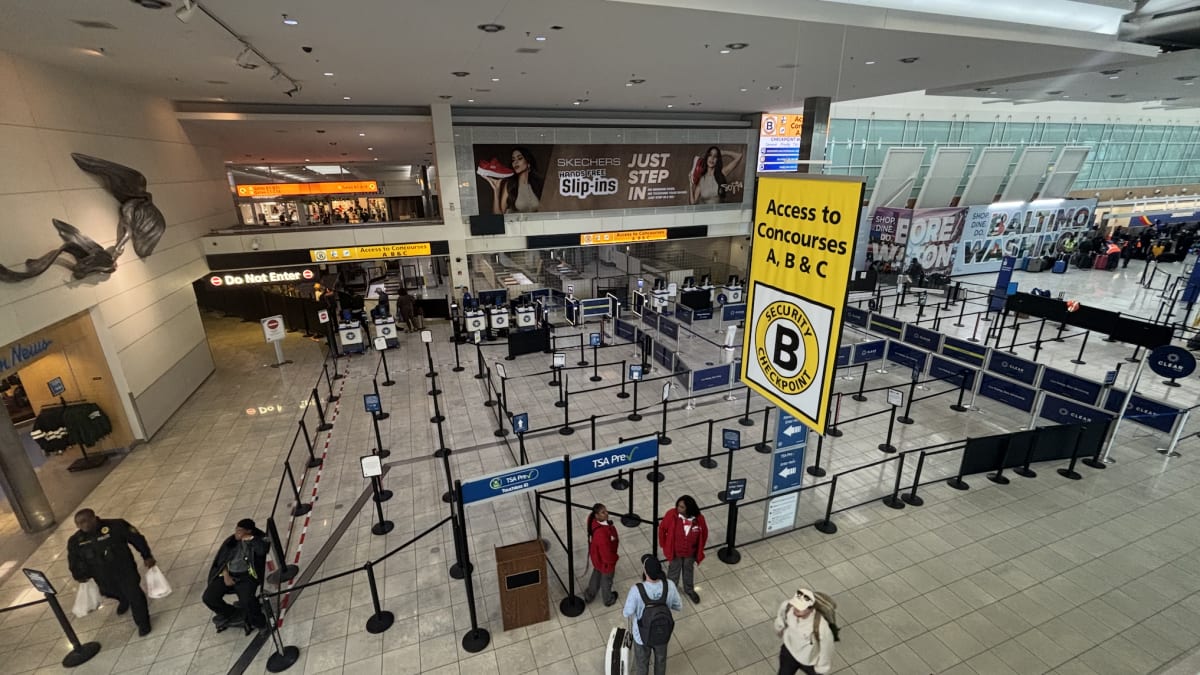
Image by WMAR 2 News Baltimore
From hours long waits to a quieter Sunday
Across social media and local forums, travelers departing BWI on Friday, March 27, and Saturday, March 28, described wait times that stretched for several hours, with security lines looping through concourses and spilling outside terminal doors. Some accounts referenced arriving four to five hours before departure and still cutting it close, while others reported missing flights entirely as lines in the A, B and C concourses inched forward.
By Sunday morning, March 29, the situation had shifted noticeably. A notice on BWI’s public facing information channels indicated that checkpoint wait times had improved from the peak disruptions on Saturday, though still trending higher than a typical late March weekend. Travelers posting real time updates described more manageable queues, with some reporting waits of under an hour at certain checkpoints.
The contrast underscored how quickly airport conditions can change. Passengers who braced for another day of gridlock found a system that, while not fully back to normal, was moving significantly faster than during the worst of the prior 48 hours.
Reports suggest that a combination of staffing adjustments, operational changes at individual checkpoints and the natural tapering of peak spring break traffic contributed to the easing of lines on Sunday.
Checkpoint closures and a perfect storm of pressure
Accounts from travelers and local coverage point to a convergence of factors behind the extreme delays at BWI on Friday and Saturday. Early on Saturday, multiple reports indicated that security checkpoints in the A and B concourses were closed for a period, forcing large numbers of passengers into fewer screening lanes and quickly overwhelming the remaining open checkpoints.
Those closures came on top of already elevated passenger volumes. Late March is a busy period for air travel, with spring break, religious holidays and weekend leisure trips layering onto routine business demand. The result at BWI was a concentration of travelers in the early morning and mid day banks of flights, periods that are historically among the airport’s busiest.
The broader national environment added further strain. The ongoing partial federal government shutdown has affected Transportation Security Administration staffing at airports across the United States, and published reporting in recent days has described higher than usual call outs and selective checkpoint closures at some of the country’s largest hubs. BWI’s experience on Friday and Saturday fit within that wider pattern of pressure on security screening capacity.
By Sunday, indications were that more lanes were open and that checkpoint operations had been rebalanced, contributing to shorter lines even as the underlying constraints had not fully disappeared.
Federal shutdown and TSA staffing backdrop
The disruptions at BWI unfolded against the backdrop of a prolonged federal funding lapse affecting the Department of Homeland Security, including TSA. National news coverage in recent days has documented long lines and multi hour waits at airports such as Houston’s George Bush Intercontinental and New York’s John F. Kennedy as unpaid TSA officers called out or sought other work.
On Friday, March 27, the White House announced an order directing the Department of Homeland Security to resume pay for TSA personnel, an emergency step intended to stem staffing shortages and relieve some of the pressure on airport screening nationwide. It remains unclear how quickly that directive will translate into consistent staffing levels at individual checkpoints, given the accumulated strain on workers during the shutdown.
Publicly available information on Sunday suggested that BWI was beginning to benefit from incremental improvements, even as the national system continued to operate under stress. A notice on the airport’s website described wait times that were trending downward compared with Saturday’s peak but cautioned that they remained above normal for some parts of the day.
Travel analysts note that passenger expectations may also lag behind conditions on the ground. After widely shared accounts of five hour waits and missed flights at BWI, many Sunday travelers appear to have arrived significantly earlier than they ordinarily would, spreading demand more evenly across the day and giving the system more room to absorb surges.
Passenger experiences highlight uneven impact across terminals
Individual traveler reports from the weekend point to substantial variation in wait times depending on airline, departure terminal and time of day. On Friday evening, some passengers departing from the A, B and C concourses described security lines stretching down corridors and out of the main terminal, with estimates of three to five hours to clear screening. Others flying from the D and E concourses during similar windows reported comparatively short waits, suggesting that not all checkpoints were affected equally.
On Saturday morning, several travelers recounted entering the A/B/C security queue shortly after 7 a.m. and not reaching the checkpoint until close to midday. Meanwhile, scattered accounts from other parts of the airport referenced wait times closer to 60 minutes, emphasizing the importance of real time information when choosing a checkpoint where that option exists.
By Sunday, anecdotal reports indicated that the most extreme delays had eased, but that experiences still varied considerably. Some passengers described moving through security in 30 to 45 minutes, while others, particularly during mid morning peaks, cited waits approaching 90 minutes. For many travelers, the memory of the prior two days’ chaos shaped decisions about arrival times and whether to rebook to later flights.
The uneven impact across concourses and time periods illustrates how localized operational decisions, such as closing or reopening specific checkpoints, can influence traveler experience even when overall passenger volume remains constant.
What travelers should know heading into the new week
With BWI’s lines shorter on Sunday but not yet fully back to typical levels, travel experts and airline guidance converge on a cautious message for passengers planning to use the airport in the coming days. Standard advice to arrive two hours before domestic flights and three hours before international departures is being widely treated as a minimum rather than a ceiling, particularly for early morning and evening departures.
Publicly available information from the airport indicates that wait times can still fluctuate significantly throughout the day and that posted estimates may lag behind real conditions during sudden surges. Travelers are being encouraged by airlines and consumer advocates to monitor flight status closely, build in additional buffer time for parking or ground transportation, and be prepared for lines that may be longer than advertised, even if they do not match the extreme conditions seen on Friday and Saturday.
Sunday’s relative calm at BWI offers some reassurance that the most acute phase of the weekend disruption has passed, especially as TSA pay begins to flow again and staffing levels potentially stabilize. However, the combination of a federal funding dispute, high seasonal demand and a complex network of checkpoints means that conditions could change rapidly if any piece of the system falters.
For now, travelers using BWI in the days ahead appear likely to face a more orderly experience than those who navigated the airport’s security lines on March 27 and 28, but caution and extra time remain the safest strategy for catching a flight on schedule.