

More news on this day
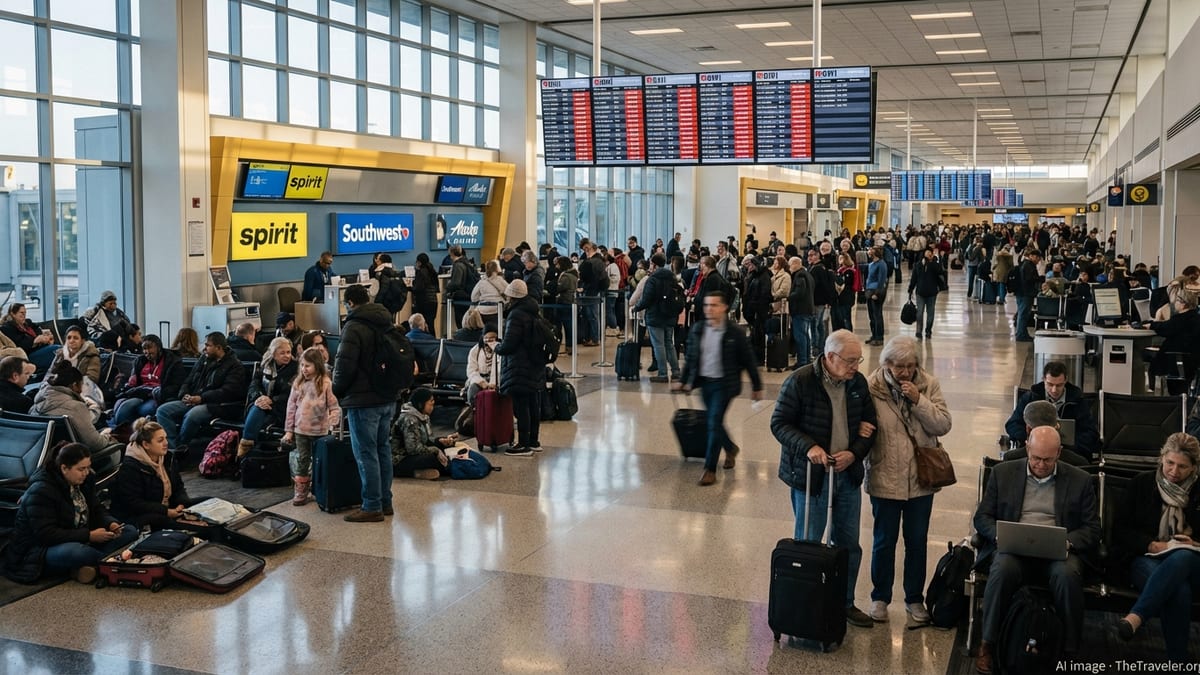
Passengers traveling through Baltimore/Washington International Thurgood Marshall Airport on Tuesday are facing a fresh wave of disruption, with at least 82 flights affected by cancellations and delays that are rippling across multiple U.S. airlines and itineraries.
Weather And Systemwide Turmoil Feed Into BWI Disruptions
The latest round of schedule chaos at Baltimore/Washington International Thurgood Marshall Airport, commonly known as BWI, comes as U.S. aviation is still recovering from weeks of weather related turmoil and operational strain. A powerful winter storm system that swept across much of the country in late January triggered one of the worst nationwide cancellation events since the pandemic, and its effects continue to be felt in airline networks.
Although skies over Baltimore were improving on Tuesday, residual schedule imbalances, aircraft misplacements and crew duty time limits continued to squeeze carriers. Industry analysts note that once operations are knocked off balance at major hubs and along key corridors, it can take days or even weeks for tightly wound schedules to fully normalize. Flights that originate or terminate at BWI are particularly vulnerable when airlines prioritize capacity recovery at their largest connecting hubs.
Aviation data providers show elevated delay rates at several major U.S. airports, with thousands of flights across the country operating behind schedule on Tuesday and hundreds cancelled outright. That broader backdrop has translated into localized pain for BWI passengers, as airlines adjust same day operations, reroute aircraft and, in some cases, proactively cancel flights to avoid further rolling delays.
Travel experts say the disruption at BWI reflects a convergence of factors rather than a single breakdown. Winter weather, congested airspace along the East Coast, tight staffing levels in some workgroups and lingering aircraft maintenance backlogs have all contributed to a fragile operating environment in which relatively small issues can quickly cascade.
Spirit, Southwest And Alaska Among Hardest Hit Carriers
Low cost and hybrid carriers with a significant presence at Baltimore are bearing much of the brunt of Tuesday’s irregular operations. Spirit Airlines, which operates a busy schedule of domestic and leisure oriented routes from BWI, has seen multiple departures and arrivals scrubbed or pushed well behind schedule, leaving budget conscious travelers with few immediate alternatives.
Southwest Airlines, one of the largest operators at BWI, has also been contending with a wave of delays as it works to reposition aircraft and crews through its point to point network. Passengers on popular routes to cities including Chicago, Denver, Orlando and midwestern destinations reported extended waits at departure gates, with some flights held for connecting customers coming off late inbound segments.
Alaska Airlines, which links Baltimore to its western hubs and beyond, has not been immune either. While some of its long haul services were still scheduled to operate, knock on effects from earlier weather and systemwide delays have led to revised departure times and tighter connections for travelers heading to the Pacific Northwest and onward to Alaska and Hawaii.
Other U.S. and international carriers serving BWI have also adjusted their operations, though in smaller numbers. Regional partners flying under the banners of major network airlines have faced particular challenges, as they juggle aircraft rotations and crew schedules across multiple hubs that are each dealing with their own local disruptions.
82 Flights Affected As Delays Outpace Cancellations
By early afternoon, at least 82 flights into and out of BWI had been affected, according to live airport and airline status boards, with the majority classified as delayed rather than outright cancelled. While that distinction offers some hope to stranded passengers, in practical terms it has meant long waits on the concourse and frequent gate changes as airlines attempt to keep as many flights operating as possible.
Departure boards showed a concentration of delays on short and medium haul routes, particularly those connecting Baltimore with other weather sensitive or congestion prone airports along the East Coast and in the Midwest. Airlines have been trying to protect longer haul services where rebooking options are more limited, but when aircraft assigned to those flights arrive late into Baltimore, schedules quickly compress.
Airport metrics indicated that departure delay percentages at BWI were running significantly above typical levels, with average hold times extending to roughly half an hour or more for some carriers and spikes well beyond that on certain routes. A smaller number of flights were cancelled outright, either due to aircraft availability problems, crew timeouts or forecasted congestion along the planned route.
For travelers, the practical impact of the numbers has been similar regardless of whether their flight was delayed or cancelled. Many have found themselves in long lines at service counters, seeking new itineraries, and in crowded seating areas where announcements of rolling departure times have become a steady soundtrack.
Passengers Confront Missed Connections And Strained Support Channels
The ripple effects of BWI’s disruptions have extended well beyond Maryland. Passengers on multi segment journeys have faced missed connections at downline hubs, forcing airlines to rebook them on later flights and, in some cases, provide hotel accommodations when onward travel was no longer possible the same day.
Families returning from vacations, business travelers on tight timetables and students heading back to campuses reported similar frustrations. Some described waking up to overnight emails or app alerts advising them of schedule changes, only to find upon arrival at BWI that departure times had shifted again. Others learned at the gate that newly assigned aircraft were being reassigned once more to cover different routes where crews and planes were in even shorter supply.
Customer service channels have been under strain as well. Hold times for airline call centers increased as more passengers sought assistance simultaneously, while chat functions and social media support teams fielded a surge in rebooking and refund requests. At the airport, carrier staffed counters and kiosks saw intermittent surges of customers each time a cluster of flights was delayed or cancelled.
Despite the difficulties, some passengers praised frontline employees for their efforts to manage the chaos, noting that agents and flight crews appeared to be working extended shifts and handling emotionally charged situations with patience. Still, the volume of disruptions meant that not everyone received immediate assistance, and some travelers were left to piece together their own alternative routes using airline apps and third party booking tools.
Airport Operations Continue As Crews Work To Ease Backlog
Within the terminal, operations at BWI have largely remained open, even as schedules fluctuated. Security checkpoints, concessions and parking facilities continued to function, though peak crowds developed around departure banks associated with heavily delayed carriers. Airport staff deployed additional wayfinding and customer assistance teams to help direct passengers to updated gates and to explain procedures around rebooking and baggage retrieval.
On the airfield, ground handling crews and deicing teams worked to keep aircraft moving safely between gates and runways during intermittent periods of poor weather and low visibility. Although conditions in Baltimore improved compared to the height of the late January storm, lingering moisture, cold temperatures and occasional low clouds required continued caution.
Airport officials have emphasized that while airlines are responsible for their own schedules and customer policies, the airport authority is coordinating closely with carriers, air traffic control and federal agencies to support a stable operating environment. Information displays throughout the terminal urged passengers to monitor their airline’s official channels for the most current flight details and to arrive early given the higher likelihood of irregular operations.
Aviation observers say that BWI’s experience on Tuesday mirrors that of many mid sized U.S. airports during periods of nationwide disruption. Even when local infrastructure is functioning normally, the interconnected nature of airline networks means that shocks elsewhere can quickly translate into local delays and cancellations.
Guidance For Stranded And Delayed Travelers
Travel advisors recommend that passengers impacted by the latest disruptions at BWI first confirm their flight status through official airline apps or websites before heading to the airport. Same day changes and rolling delays can make printed or earlier screenshots unreliable within hours, particularly when airlines are actively adjusting their operations.
For those already at BWI whose flights have been significantly delayed or cancelled, experts suggest quickly exploring alternative routings, including connections through secondary hubs or, where feasible, nearby airports in the Washington region. Because seats on later flights can fill rapidly during widespread disruptions, acting promptly often improves the chances of securing a workable itinerary.
Passengers whose travel is time sensitive, such as those heading to critical business meetings or family events, are encouraged to ask airline agents about interline options or reaccommodation on partner carriers, where agreements exist. Travel insurance providers and certain premium credit cards may also offer benefits for delays, including reimbursement for meals, ground transportation or overnight stays, though documentation of disruption is typically required.
Consumer advocates advise keeping records of all communications with airlines, including screenshots of status updates, to support any future claims for refunds or compensation where eligible. While U.S. regulations do not guarantee payment for weather related disruptions, airlines have published customer service commitments that in some cases extend beyond minimum legal requirements.
What Today’s Turmoil Reveals About System Resilience
The latest episode of disruption at BWI underscores broader questions about the resilience of U.S. airline operations in the face of severe weather and rising demand. The winter storm that battered large swaths of the country in late January exposed how quickly even sophisticated scheduling systems can be overwhelmed when many hubs and regions are affected simultaneously.
Industry analysts note that airlines have made substantial investments in technology and staffing since the pandemic era, but that tight margins and an ongoing pilot shortage have left little slack in the system. When storms, air traffic control constraints or unexpected maintenance issues occur, carriers can struggle to recover while still operating nearly full schedules.
BWI’s role as both an origin and destination airport and a focus city for several carriers has amplified these dynamics. With heavy use by low cost airlines that depend on high aircraft utilization and rapid turn times, even modest disruptions can snowball into larger schedule gaps, particularly on peak travel days or during holiday periods.
For passengers, the experience has reinforced the importance of building flexibility into travel plans during winter months, including allowing longer connection times, avoiding the last flight of the day where possible and considering nonstop options when available. While no strategy can fully eliminate the risk of disruption, many travelers say the events of recent weeks have reshaped how they plan and book trips through BWI and other busy U.S. airports.
Outlook For The Remainder Of The Week
Looking ahead, airlines serving BWI are expected to continue working through the backlog created by Tuesday’s disruptions, with some further delays possible as aircraft and crews are repositioned. Operational planners aim to stabilize schedules over the coming days, particularly if weather patterns remain relatively calm across major hubs.
Meteorologists are watching additional systems that could affect portions of the country later in the week, though early forecasts suggest any new weather impacts around Baltimore may be less severe than those seen in late January. Still, given the current fragility of airline schedules, even modest storms or air traffic flow constraints have the potential to trigger localized interruptions.
Travelers booked through BWI in the coming days are being urged to stay informed, sign up for airline alerts and allow extra time at the airport. As carriers review their winter performance, some may further adjust frequencies, aircraft assignments or departure banks to build more resilience into operations, though such changes typically unfold over weeks rather than hours.
For now, passengers at Baltimore’s main airport are focused on the immediate challenge of getting where they need to go. With 82 flights already affected and the potential for additional knock on impacts, the day has become yet another test of patience and planning for U.S. air travelers navigating a turbulent winter season.