

More news on this day
More than 100 flights at Cairo International Airport have been delayed in early April 2026, as regional airspace closures and mounting congestion disrupt connections between Europe, Africa and the Gulf.
Get the latest news straight to your inbox!
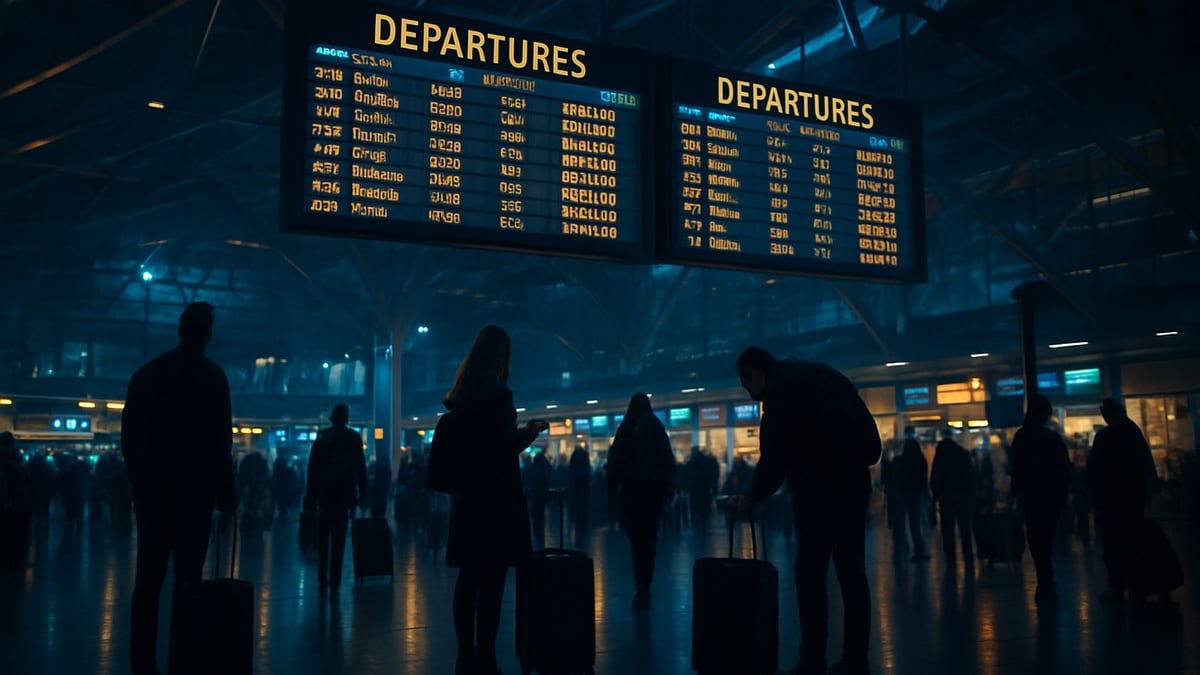
Wave of Delays Hits Key Cairo Hub
Operational tallies from early April indicate that Cairo International Airport has logged well over 100 delayed flights across several days, with disruption peaking around the first week of the month. On 1 April, published industry data showed nearly 200 delays alongside a small number of cancellations at Cairo, placing the airport among the most affected in the region on that day.
The pattern continued into 5 and 6 April, when travel trade reporting and open flight data pointed to another large spike in disruption. On 6 April alone, Cairo recorded more than 150 delayed flights and several cancellations, according to aggregated figures cited by specialist travel outlets. These operational statistics suggest that Cairo’s total delay count has already reached several hundred movements in the opening days of April, well above typical levels for the same period in previous years.
While scheduled operations at Cairo have largely remained intact, the volume of late departures and arrivals has created significant knock-on effects for passengers transiting the airport. The delays have been heavily concentrated on short and medium haul routes linking Cairo to Gulf hubs, European gateways and regional destinations across North Africa and the Levant.
The result for travelers has been an uptick in missed connections, extended time in crowded departure halls and increased reliance on last minute hotel and rebooking arrangements. Social media posts and traveler forums describe long queues at transfer desks and a scramble for updated flight information as airlines work within a fast changing operational environment.
Regional Airspace Tensions Drive Operational Strain
Behind the figures lies an evolving regional backdrop that has reshaped air traffic flows across the Middle East since late February. Military escalation involving Iran, Israel and the United States has led several neighboring states to restrict or temporarily close sections of their airspace. Publicly available government statements and aviation advisories describe an environment of heightened alert, with flight paths adjusted to avoid conflict zones.
Egypt’s aviation network has been drawn into this wider disruption. Reporting from Egyptian and international outlets highlights how airports in the country have received diverted flights that would normally transit the Gulf, Iraq or Iran. In early March, Egypt’s main airports took in more than twenty diversions in a single day, including a notable share routed to Cairo International. These additional arrivals were layered on top of already busy schedules at the national hub.
At the same time, specialist travel and risk consultancies have flagged heavy congestion at key airports across the region, including Dubai, Abu Dhabi, Kuwait City and Istanbul. The combination of diversions, rerouted airways and capacity constraints has left airlines juggling aircraft rotations and crew hours, with Cairo emerging as one of several choke points where delays are now concentrated.
According to recent analysis by regional media, Egypt has also become a more critical corridor for flights bridging Europe and Asia while portions of nearby airspace remain disrupted. That shifting role helps explain why Cairo is seeing delay numbers in the hundreds, even on days when local weather and airport infrastructure are not the primary cause of operational challenges.
Impact on Airlines, Routes and Passenger Experience
The disruption at Cairo is being felt most acutely across a cluster of heavily trafficked routes linking the Egyptian capital with Gulf hubs such as Doha, Dubai and Kuwait City, as well as with major European cities including Frankfurt, London and Istanbul. Travel trade coverage from early April chronicles a succession of late departures and arrivals on these corridors, affecting both Egypt’s flag carrier and a roster of international airlines.
EgyptAir appears among the most delay exposed operators at Cairo, with public flight tallies showing dozens of services running behind schedule during the first week of April. International carriers operating into Cairo, including major Gulf and European airlines, have also experienced significant schedule stretching as they slot their rotations into a crowded regional network marked by diversions and altered routings.
For passengers, the operational picture translates into practical challenges at every stage of the journey. Longer queues at security and passport control, busier transfer checkpoints and tighter turnaround times at gates are recurring themes in traveler accounts from early April. Those with short connection windows have been particularly vulnerable, with some reports of travelers having to rebook onward legs or accept lengthy layovers as airlines work to re-accommodate disrupted itineraries.
Travel advisers and risk bulletins are increasingly urging passengers transiting Cairo in April to build extra buffer time into itineraries, monitor flight status closely and remain prepared for potential last minute gate changes. The advice reflects a recognition that even when flights eventually depart, operations at the hub are likely to remain less predictable than usual while the broader regional situation continues to evolve.
Operational Adjustments and Policy Changes at Cairo
Alongside managing day to day disruption, Egypt’s aviation authorities and airport operators are progressing longer running operational changes at Cairo that intersect with the current surge in delays. One of the most visible adjustments for travelers is the planned removal of paper arrival and departure cards for Egyptian passengers at Cairo International from 11 April, as announced in local media. The move is intended to streamline border processes and reduce paperwork at the terminals.
Although the timing of the policy shift predates the latest wave of regional flight disruption, its rollout coincides with a period of intense passenger volumes and heightened traveler frustration. Industry observers note that any measure that shortens processing times at border checkpoints could help offset some of the pressure created by late arriving flights and compressed connection windows, particularly during peak evening and overnight banks.
Separately, coverage in Egyptian and regional outlets has emphasized that airports across the country are operating on an elevated state of readiness. This includes close monitoring of traffic flows, coordination with airlines on revised schedules and contingency planning for further diversions if regional airspace conditions deteriorate again. Cairo, as the country’s primary international gateway, sits at the center of these efforts.
For now, there is no indication in public reporting of any large scale ground stop or extended closure at Cairo in April. Instead, the disruption has taken the form of rolling delays and scattered cancellations that collectively add up to a significant operational burden for airlines and travelers alike.
What April Travelers Through Cairo Should Expect
With the month still unfolding, publicly available indicators point to a continued risk of irregular operations at Cairo International through at least the coming weeks. Regional tensions that initially flared in late February have not fully subsided, and advisories issued in March continue to reference constrained capacity and possible schedule adjustments at major Middle Eastern hubs.
Passengers planning to travel through Cairo in April are therefore being encouraged by travel industry commentary to treat schedules as subject to change. That may mean allowing for longer connection times than usual, especially on itineraries tying together Europe, Africa and the Gulf, and being prepared for rebookings if onward segments are missed due to incoming delays.
Travelers are also likely to encounter busier terminal environments, particularly around banks of flights serving Gulf destinations and European capitals. Even where individual flights depart close to schedule, the cumulative effect of earlier delays can leave check in counters, security lanes and transfer desks dealing with overlapping passenger flows.
While it remains possible that a degree of normalization will return later in April if regional airspace constraints ease, early month data already confirms that Cairo has crossed the threshold of 100 delayed flights with ease, placing it firmly among the focal points of Middle Eastern aviation disruption in 2026.