

More news on this day
More than 100 flights at Cairo International Airport have been delayed in early April 2026, as the Egyptian hub struggles with heavy congestion and wider regional airspace disruption that is rippling across key Middle East and Europe–Africa routes.
Get the latest news straight to your inbox!
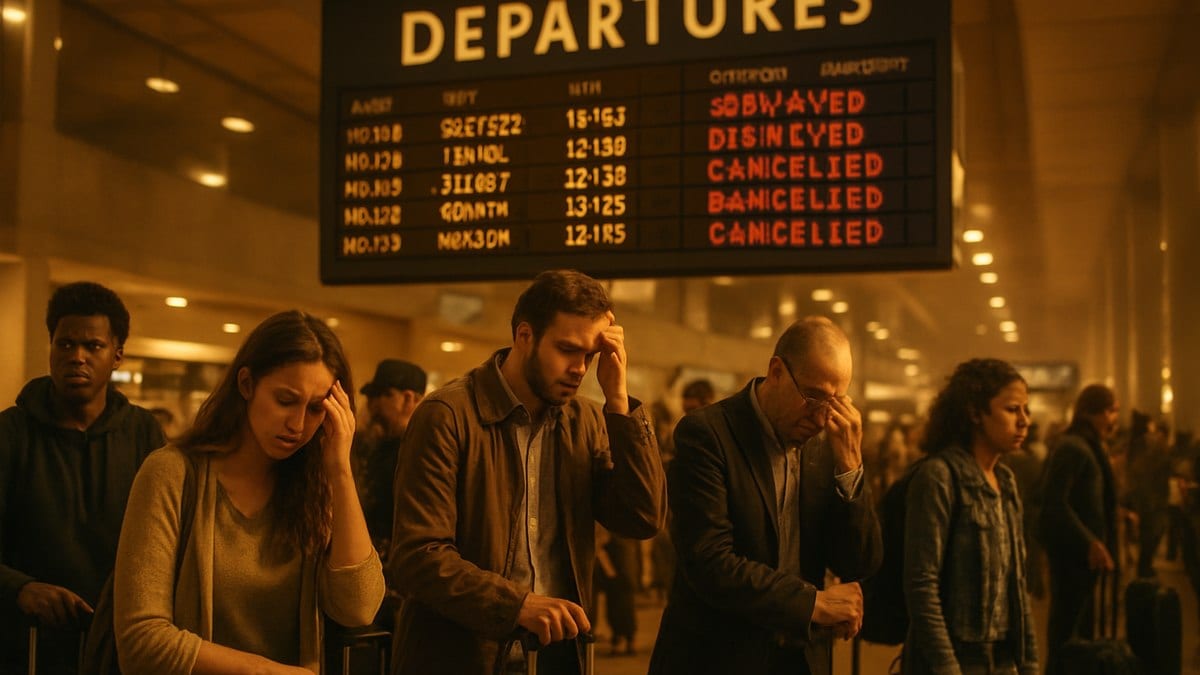
Delays Mount at Key Regional Hub
Operational snapshots for the first week of April indicate that at least 106 flights have faced delays at Cairo International Airport, with some monitoring services and travel industry coverage putting the figure significantly higher on peak disruption days. On 6 April alone, one specialist travel outlet reported 155 delayed departures and arrivals and six cancellations, affecting services operated by EgyptAir, Emirates, Lufthansa and several other carriers.
The pattern points to Cairo functioning as a pressure point in a stressed regional aviation network. Published flight status data and media reports highlight long queues at check in, crowded departure halls and passengers facing extended waits at boarding gates as departure times slide back in successive increments.
While the majority of affected services have eventually departed, the scale of the delays has been enough to strand connecting travelers mid journey and to force missed onward flights. Some passengers have described multi hour waits on the ground as revised departure times continue to shift, particularly on routes linking Cairo with major hubs such as Frankfurt, Doha, Dubai, Istanbul and London.
Despite the disruption, publicly available information indicates that core airport infrastructure remains intact and that safety procedures and air traffic control operations are continuing without interruption. The challenge for carriers has largely centered on scheduling stability and the ability to reposition aircraft and crew within a volatile regional environment.
Regional Tensions Feed Knock On Congestion
The current wave of disruption in Cairo is closely intertwined with wider instability in Middle East airspace. Since late February 2026, portions of the region have seen temporary airspace closures and rerouted traffic following military escalations that affected major hubs including Dubai. Aviation intelligence briefings and airline advisories have pointed to thousands of cancellations and diversions across multiple countries during the initial phase of the crisis.
Egyptian airspace itself has remained open, but regional carriers have been adjusting routings and frequencies to comply with evolving risk assessments. This has increased reliance on Egyptian airports as safe corridors and alternates, drawing additional traffic through Cairo at a time when airlines are already operating with tight margins on aircraft and crew availability.
Reports from Egyptian media describe the country emerging as a critical aviation bridge between Europe, the Gulf and Asia during the ongoing disruption. Cairo International Airport, as the primary hub, has absorbed a significant share of diverted and restructured services, which in turn has increased the strain on its daily schedule and ground operations.
These regional dynamics mean that even flights not directly affected by security reroutes can encounter delays when arriving aircraft, crews or passengers are inbound from more heavily impacted airports. The result is a cascading effect on punctuality, with Cairo’s timetable repeatedly rebalanced throughout the day as conditions across neighboring states evolve.
EgyptAir and Global Carriers Adjust Schedules
EgyptAir, which operates the largest share of movements at Cairo International Airport, has already spent much of early 2026 adjusting its network in response to regional volatility. In recent weeks the airline has published a series of notices outlining suspended services to selected Gulf and Levant destinations, options for rebooking or refunds, and a gradual resumption of some routes such as Dubai, Abu Dhabi and Dammam on a reduced schedule.
Publicly available statements from the flag carrier emphasize close monitoring of conditions through its operations control center and coordination with overseas stations. The airline has encouraged passengers to review their bookings frequently and to check flight status before heading to the airport, highlighting that punctuality remains vulnerable to short notice changes.
Foreign airlines serving Cairo have also been swept up in the disruption. Travel media coverage of the 6 April disruption listed delays for carriers including Emirates, Lufthansa and others on services connecting Cairo with European and Gulf hubs. Published flight tracking data from recent days shows multiple Cairo departures to destinations such as Nairobi and major European cities leaving later than scheduled.
These adjustments reflect an industry wide effort to maintain connectivity while managing crew duty limits, aircraft positioning and route restrictions. In many cases, airlines have opted to operate delayed services rather than cancel outright, a choice that preserves capacity but pushes knock on delays deeper into the network.
Impact on Passengers and Travel Plans
For travelers, the immediate impact of Cairo’s April disruption has been missed connections, extended airport stays and uncertainty around time sensitive plans such as business meetings, tours and hotel check ins. Travel advisories and news reports from the first week of April describe passengers sleeping in terminal seating areas and re queuing repeatedly as boarding times shift.
Standard airline policies for irregular operations have come into focus as more passengers seek rebooking, accommodation and refund options. Guidance documents circulated by consumer advocates and law firms in recent months stress that entitlements may differ depending on the airline, ticket type, and the jurisdiction governing passenger rights, especially for itineraries involving both European Union and non EU carriers.
Some travelers have turned to social media and online forums to recount experiences of long lines at transfer desks and difficulty reaching call centers during peak disruption periods. These accounts point to a familiar pattern seen in previous regional crises, in which support channels become saturated just as large numbers of passengers require itinerary changes.
Travel planners and industry consultants are advising passengers with April itineraries via Cairo to build in longer connection times, keep digital copies of all booking confirmations and receipts, and maintain flexibility where possible on same day activities at their final destination. The focus is on reducing the risk that a moderate delay at Cairo will cascade into more significant disruption further along the journey.
Operational Changes and What Travelers Should Expect
Beyond immediate scheduling challenges, Cairo International Airport is also undergoing incremental procedural changes that shape the passenger experience during this period of heightened disruption. Local media recently reported that paper arrival and departure cards for Egyptian passengers will be phased out from mid April, part of a broader digitalization effort within the Ministry of Civil Aviation.
While the change is administrative, it underscores that authorities are attempting to streamline processing and reduce bottlenecks in areas such as immigration and departure control. For passengers, the shift means a greater reliance on accurate electronic data submitted through airline and border control systems ahead of travel.
Operational observers note that staffing levels, ground handling capacity and terminal crowd management will be critical factors in determining whether Cairo can absorb the extra traffic generated by regional rerouting without prolonged disruption. Steps such as dynamic use of gates, prioritization of heavily delayed inbound flights and close coordination between airlines and airport operators are likely to play a role in stabilizing performance.
In the meantime, travelers planning to pass through Cairo in April 2026 are being urged by travel information services to monitor their flights frequently on the day of departure and to arrive at the airport earlier than usual. With more than 100 flights already delayed this month and regional airspace conditions still fluid, expectations are being set for a period of continued irregular operations at one of the Middle East’s most important transit hubs.