

More news on this day
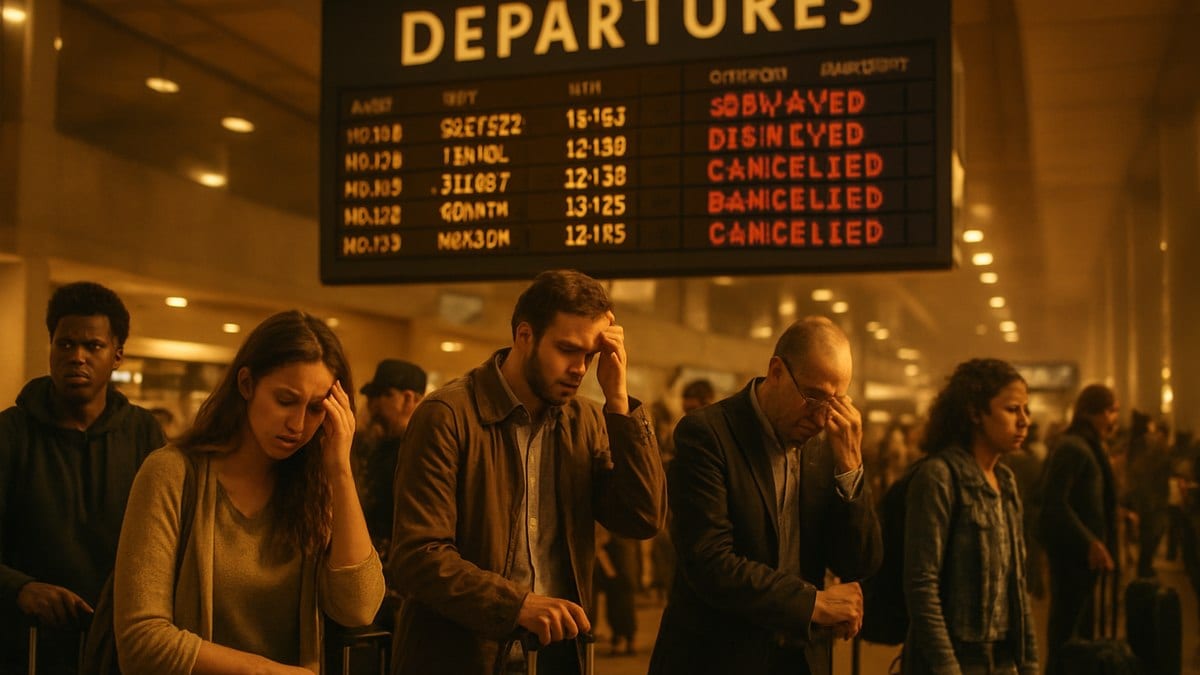
Cairo International Airport has recorded well over 100 delayed flights in the first week of April 2026, as regional airspace restrictions, congestion and staffing strains ripple through one of the Middle East’s key transit hubs.
Get the latest news straight to your inbox!
Delays Mount as April Operations Come Under Strain
Operational tallies from travel and aviation reports show that Cairo International Airport has repeatedly logged triple-digit delay figures since the start of April 2026. On 1 April, regional coverage indicated around 190 delays linked to Cairo among a wider Middle East disruption pattern, while by 5 April the airport again featured prominently in summaries of 254 delays and 17 cancellations across several regional hubs.
The pressure intensified around 6 April, when multiple industry tracking roundups pointed to Cairo as one of the hardest-hit airports in the region. One widely cited travel news analysis described more than 150 delayed departures and several cancellations at Cairo that day, noting that knock-on effects were felt across onward connections to Europe, Africa and the Gulf.
Across the first week of April, these figures mean at least 106 flights have been delayed at Cairo, and likely many more, as different daily snapshots capture overlapping but incomplete segments of the disruption. Publicly available information suggests that irregular schedules, extended turnaround times and rolling airspace constraints have become defining features of operations at the Egyptian capital’s primary gateway.
The impact has been visible on both domestic and international services. Reports highlight late-running departures on EgyptAir and other regional carriers, as well as delays affecting long-haul links to destinations such as Frankfurt, Doha, Dubai, Istanbul and London. For many travelers, that has translated into missed connections, improvised overnight stays and unplanned rebookings.
Regional Tensions and Airspace Restrictions Feed the Bottleneck
Cairo’s disruption is unfolding against a backdrop of heightened tensions across the Middle East that have reshaped air routes since late February 2026. According to published coverage, airspace closures and restrictions in parts of the Gulf and the Levant have forced airlines to reroute traffic along narrower corridors, significantly altering the flow of flights between Europe, Asia and Africa.
Recent reporting on the status of Ben Gurion Airport in Israel, which remains under heavy operational constraints as of 8 April, underscores how localized shutdowns can push more traffic onto alternative routings. Industry commentary increasingly describes Egypt as a critical aviation corridor, with Cairo and other Egyptian airports absorbing diversions and adjusted flight paths that previously relied on more northerly or easterly routes.
As airlines lengthen flight times to skirt closed or high-risk airspace, tight connection banks that once operated with minimal buffer are coming under strain. Flights arriving slightly late into Cairo can cascade into further delays as ground handling, refuelling and boarding windows compress. This dynamic helps explain how a single day can produce more than 150 delayed flights at the airport, even without extreme weather or technical failures.
Security considerations have also layered complexity onto scheduling. Travel advisories issued in early March pointed to ongoing uncertainty around airport operations across the region, with travelers advised to monitor itineraries closely. While Egyptian airports continue to operate, the combination of rerouted overflights and higher alert postures has contributed to a more fragile operating environment.
Staffing, Ground Logistics and Knock-on Effects for Travelers
Beyond airspace constraints, Cairo’s disruption reflects the challenges of managing ground operations under sustained pressure. Travel trade reports from early April describe congestion across several Middle Eastern hubs, with staffing shortages and operational bottlenecks cited as contributing factors. Cairo appears to be experiencing similar strains, particularly during peak departure waves.
When large numbers of flights arrive behind schedule, airport resources such as gates, baggage systems and security checkpoints struggle to keep pace. Turnarounds lengthen as crews and ground staff work through backlogs, leading to additional delays on subsequent departures. Observers note that EgyptAir has recorded a high proportion of late departures at Cairo in recent days, an indicator of how difficult it is to reset punctuality once disruptions take hold.
For passengers, the practical consequences are significant. Accounts compiled in travel media and online forums describe travelers facing waits of several hours in transit halls, uncertainty over missed connections and challenges obtaining updated information. Some travelers have reported being shifted onto later flights or re-routed via alternative hubs such as Istanbul, Dubai or Doha when onward legs from Cairo could not be guaranteed.
Industry guidance circulating since March advises anyone transiting the region to build in extra buffer time, avoid tight self-connecting itineraries and check flight status repeatedly in the 24 hours before departure. At Cairo in particular, recent patterns suggest that even flights ultimately departing on the same day may do so well behind schedule.
Egypt’s Airports Adapt as a Strategic Corridor
The disruption at Cairo cannot be viewed in isolation from broader shifts in regional aviation. Coverage from Egyptian and international outlets in recent weeks has emphasized how the country’s airports have become important relief valves for a network strained by partial closures elsewhere. Reports indicate that Egyptian airports collectively received more than 20 diverted international flights on some days in March, illustrating the scale of the rerouting.
At Cairo, that role as a strategic corridor is intertwined with the city’s function as a hub for Africa, the Middle East and Europe. Increased overflight and transit traffic strengthens the airport’s importance but also exposes its vulnerabilities when the system comes under stress. Each additional diversion or extended route brings with it more passengers, more bags and more complexity to manage at already busy terminals.
Operationally, Egyptian aviation authorities and airport operators appear to be focusing on incremental measures rather than headline-grabbing overhauls. Publicly available information points to schedule adjustments, route retimings and tactical use of secondary airports such as Sphinx International to spread demand. However, with conflict-linked uncertainties persisting, the margin for error in daily operations remains narrow.
Policy changes are also emerging in parallel. For example, officials have announced that Cairo International Airport will discontinue paper arrival and departure cards for Egyptian passengers from 11 April, a move framed in local coverage as part of an effort to streamline border formalities. While not directly tied to the current disruptions, such steps highlight a broader push to modernize processes at a moment when the system is under scrutiny.
What April’s Disruptions Mean for Upcoming Travel
For travelers with itineraries through Cairo in the coming weeks, the pattern established in early April 2026 offers both warning signs and practical lessons. The data so far suggests that while outright cancellations at Cairo remain relatively limited compared with delays, schedules are fluid and subject to rapid change as regional conditions evolve.
Industry observers expect that Cairo will continue to play an outsized role in absorbing rerouted traffic as long as airspace restrictions and operational caps persist at neighboring hubs. That means passengers connecting through the airport may continue to encounter longer-than-usual transit times, crowded terminals and last-minute gate changes, even if their flights ultimately operate.
Travel guidance emerging from airlines, risk consultancies and consumer platforms converges on a few consistent recommendations: allow generous connection windows, keep booking details accessible, and monitor both airline and airport communications frequently before setting out for the airport. Travelers may also wish to consider flexible tickets or travel insurance products that cover missed connections and extended delays, given the region’s unsettled outlook.
As of 8 April, there is no clear indication in public reporting of when Middle East air traffic patterns will fully normalize. Until that happens, Cairo International Airport is likely to remain a barometer of wider regional disruption, with delay counts in the triple digits serving as an early indicator of how much strain the system is under on any given day.