

More news on this day
More than 150 flights at Cairo International Airport faced delays in early April 2026 as a combination of regional airspace tensions, diverted traffic and recent severe weather pushed the hub to its operational limits.
Get the latest news straight to your inbox!
Delays Peak on April 6 as Traffic Bottlenecks Build
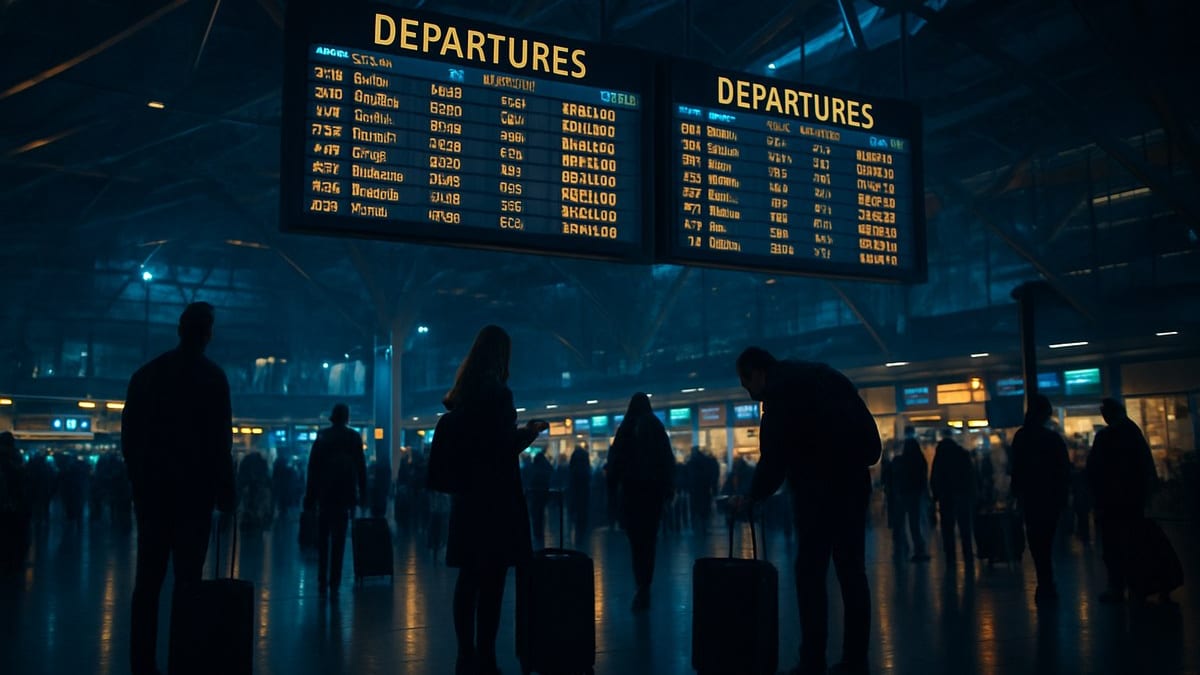
Publicly available airport data and travel industry coverage indicate that Cairo International Airport experienced one of its most disrupted days of the year on April 6, with reports of roughly 150 delayed departures and several cancellations crowding departure boards for much of the day. The disruption affected a mix of regional and long haul services, including routes to major hubs such as Dubai, Doha, Frankfurt, Istanbul and London.
Airline schedules show that EgyptAir bore a significant share of the impact, alongside major international carriers that operate into Cairo. The combination of rolling delays and a handful of cancellations left passengers facing extended waits in departure lounges and at check in counters, with knock on effects that rippled into connecting banks throughout Europe, Africa and the Gulf.
While day to day delays are common at major hubs, the scale of the disruption in early April appears to be well above Cairo’s typical baseline. Industry trackers and regional news coverage consistently reference triple digit delay counts at the airport during the first week of April, far surpassing routine operational hiccups and underscoring the extent of the strain on the network.
The April 6 peak followed weeks of mounting pressure on Egypt’s aviation system as airlines adjusted schedules and routings in response to a volatile regional environment. The result for travelers transiting Cairo was an unusually high likelihood of missed connections, rebookings and extended layovers over several consecutive days.
Regional Tensions and Airspace Closures Drive Knock On Effects
The disruption in Cairo cannot be viewed in isolation from the broader turmoil affecting Middle East airspace since late February. According to published government and industry briefings, military escalation involving Iran, Israel and the United States prompted multiple neighboring states to close or restrict their airspace, forcing airlines to reroute or curtail services across the region.
These closures altered traditional flight corridors between Europe, the Gulf and Asia, pushing more traffic onto remaining open routes and hubs. Public comments from Egypt’s civil aviation leadership in late March described Egypt as an increasingly critical corridor for Europe Asia traffic as carriers sought alternatives to affected airspaces. That re routing trend has concentrated more overflight and transit volume over Egyptian territory, with Cairo acting as a primary gateway.
National carrier EgyptAir has acknowledged the impact of these developments in customer advisories, noting that a number of routes across the Middle East have been suspended or altered on a rolling basis since late February. As airlines adjust schedules day by day in response to shifting risk assessments and regulatory decisions, punctuality at hubs closely tied into these flows has suffered.
The cascade of route changes and diversions means that an incident far from Egypt’s borders can still translate into late arriving aircraft, crew constraints and missed rotation windows in Cairo. The early April wave of delays therefore reflects not only local conditions at the airport but also the accumulated effects of weeks of regional realignment in airline operations.
Weather and Operational Strain Add to Passenger Frustration
Recent adverse weather in Egypt has further complicated efforts to keep flights on time. Late March coverage from local media described torrential rain, flash flood warnings and transport disruption across the country, prompting EgyptAir to issue a broad advisory urging passengers to arrive at airports significantly earlier than usual. Road congestion and reduced visibility fed into longer processing times and greater risk of late check ins.
Greater Cairo and the Suez Canal cities experienced some of the most challenging conditions, with rain related disruption overlapping with the existing regional aviation stress. Even after the most severe weather eased, residual schedule imbalances and aircraft positioning challenges remained visible in early April, contributing to the build up of delays at Cairo International Airport.
Operationally, the airport has been working through heightened demand at security, immigration and boarding gates as diverted and rescheduled flights converge on limited infrastructure. Travelers posting on public forums in recent weeks have repeatedly described Cairo as “chaotic” or “overwhelming,” reflecting crowded terminals and uncertainty around departure times during the disruption period.
Reports also indicate that capacity constraints at nearby regional hubs have limited the options for rerouting stranded passengers, compelling many to wait in Cairo for later departures rather than being shifted quickly to alternative gateways. This has amplified the visible impact of the delays, with more passengers remaining in the terminal for longer periods.
Airlines Adjust Schedules While Egypt Positions as Transit Corridor
Against the backdrop of disruption, Egypt is simultaneously attempting to consolidate its role as a key aviation bridge between Europe, Africa and North America. In February, EgyptAir filed plans to expand connectivity to the United States during the second quarter of 2026, including new and resumed routes to major American gateways. Those growth ambitions are now unfolding in parallel with the most challenging regional operating environment in years.
Industry analysis published in late March notes that, even as several Middle Eastern states imposed airspace restrictions, Egyptian airspace has remained open. This has enabled Cairo to attract additional overflights and diversions, but it has also brought added strain for airlines and airport operators attempting to manage the extra volume without significant slack in fleets or staffing.
In response, airlines have been fine tuning schedules, consolidating some departures and gradually reinstating others as conditions permit. EgyptAir and several Gulf carriers have announced phased resumptions of selected routes, particularly to the United Arab Emirates and other Gulf states, indicating some tentative stabilization while acknowledging that further changes remain possible on short notice.
For passengers, this environment translates into a high degree of variability. A flight that appears confirmed weeks in advance may still be retimed, rerouted or merged with another service as airlines navigate shifting airspace rules and operational constraints. The early April delays at Cairo are emblematic of this uncertainty, underscoring the importance of real time monitoring of bookings and flexible travel plans.
What Travelers Using Cairo in April Should Expect
For the remainder of April 2026, publicly available advisories and recent performance trends suggest that travelers passing through Cairo International Airport should plan for ongoing disruption risk, even if conditions gradually improve from the early month peak. While the number of severely delayed flights may fluctuate day to day, elevated congestion and occasional last minute schedule changes are likely to persist as long as regional airspace remains unstable.
Airlines and travel consultants are encouraging passengers to build in longer connection windows when itineraries involve Cairo, particularly for journeys that depend on onward flights to the Gulf, Europe or North America. Longer layovers can provide a buffer against missed connections if an inbound leg is delayed by upstream issues such as diversions or extended routings.
Travelers are also being urged, through publicly available airline and government channels, to monitor flight status frequently in the 24 hours before departure, use airline apps where possible, and be prepared for gate or timing changes close to departure. For those starting journeys in Egypt, arriving at the airport earlier than usual may still be prudent, especially during peak hours or in periods of unsettled weather.
While Cairo International Airport continues to function as a vital regional hub, the early April disruption involving more than 100 delayed flights illustrates the vulnerability of even large and experienced airports to sudden shifts in the wider aviation landscape. For passengers, awareness and flexibility remain the best tools for navigating a complex and fast changing situation.