

More news on this day
Passengers transiting Cairo International Airport this week have faced severe disruption, as operational tallies show more than one hundred delays and multiple cancellations affecting EgyptAir, Flynas, Nile Air and Air Cairo services on pivotal routes to London, Dubai, Riyadh and Amman.
Get the latest news straight to your inbox!
Wave of Delays and Cancellations Hits Cairo Hub
Operational data and travel industry coverage indicate that Cairo International has recorded 106 delayed departures and five cancellations across a recent 24 hour period, compounding a wider pattern of disruption seen at the airport since early April. The latest figures follow consecutive days of elevated delay levels at major Middle Eastern hubs, with Cairo repeatedly featuring among the most affected airports.
The disruptions are concentrated on busy regional and long haul corridors, including flights from Cairo to London, Dubai, Riyadh and Amman that are vital for both business and leisure travelers. EgyptAir, Flynas, Nile Air and Air Cairo have all seen services pushed back or scrapped, forcing passengers into last minute itinerary changes and lengthy waits in terminal areas.
Published coverage from regional travel news outlets links the spike in delays to broader congestion in Middle Eastern airspace, where altered routings and tighter capacity are placing additional strain on schedules. At Cairo, that pressure appears to be translating into rolling knock on delays across departure banks, as aircraft and crew rotate late into subsequent services.
While some flights have eventually departed after extended holds at the gate or on the apron, cancellations on select routes have left travelers seeking scarce rebooking options, particularly on same day services to London and key Gulf cities.
Key Routes to London, Dubai, Riyadh and Amman Disrupted
The impact of Cairo’s latest operational problems has been most visible on trunk routes linking Egypt with major economic and political centers. Flights to London serve not only point to point demand but also onward connections to North America and Europe, meaning a single late departure from Cairo can cascade into missed long haul links for dozens of passengers.
Dubai, Riyadh and Amman are similarly critical for regional connectivity. EgyptAir and Air Cairo have built up dense schedules to the Gulf, while Flynas and Nile Air provide additional capacity on Saudi and Levant routes. When multiple departures in a single day are delayed from Cairo, passengers heading for these hubs often find later flights fully booked or subject to their own rolling delays.
According to publicly available schedules and recent reporting, travelers on affected flights have faced waits ranging from minor holdups of under an hour to significant disruptions stretching well beyond three hours. For those with tight onward connections at airports such as London Heathrow and Dubai International, even modest delays from Cairo can trigger full itinerary failures requiring hotel stays and rebooking on alternative services.
Industry observers note that the current pattern at Cairo aligns with a broader regional trend, in which airspace constraints, weather related congestion and shifting demand patterns are testing the resilience of airline operations on high density corridors.
Regional Turbulence Adds Pressure to Airline Operations
The spike in disruptions at Cairo has unfolded against a backdrop of wider flight chaos across the Middle East in recent weeks. Reports from travel trade publications describe hundreds of combined delays and dozens of cancellations at airports in Egypt, Saudi Arabia, the United Arab Emirates and Türkiye as carriers adjust to evolving airspace restrictions and rerouted traffic flows.
Egypt has simultaneously become a more important transit corridor between Europe, Africa and Asia, with Cairo International handling increased overflight and connection activity. Publicly available commentary from aviation analysts suggests that this added role, while beneficial for traffic volumes, also raises the stakes when operational issues occur, since a single day of disruption can ripple outward across multiple regions.
For EgyptAir, Flynas, Nile Air and Air Cairo, the current environment leaves limited margin for recovery when delays mount. Aircraft and crew already operating close to their duty limits face further pressure when flights run late, and spare capacity to deploy backup aircraft on affected routes is often constrained. This can swiftly convert a delay into a cancellation where regulatory or operational limits are reached.
Travel news coverage has highlighted how, on some days, Cairo’s disruptions have coincided with similar problems at Dubai and Istanbul, reducing the availability of onward options for passengers attempting to reroute on other carriers or via alternative hubs.
Stranded Passengers Confront Long Queues and Uncertain Timelines
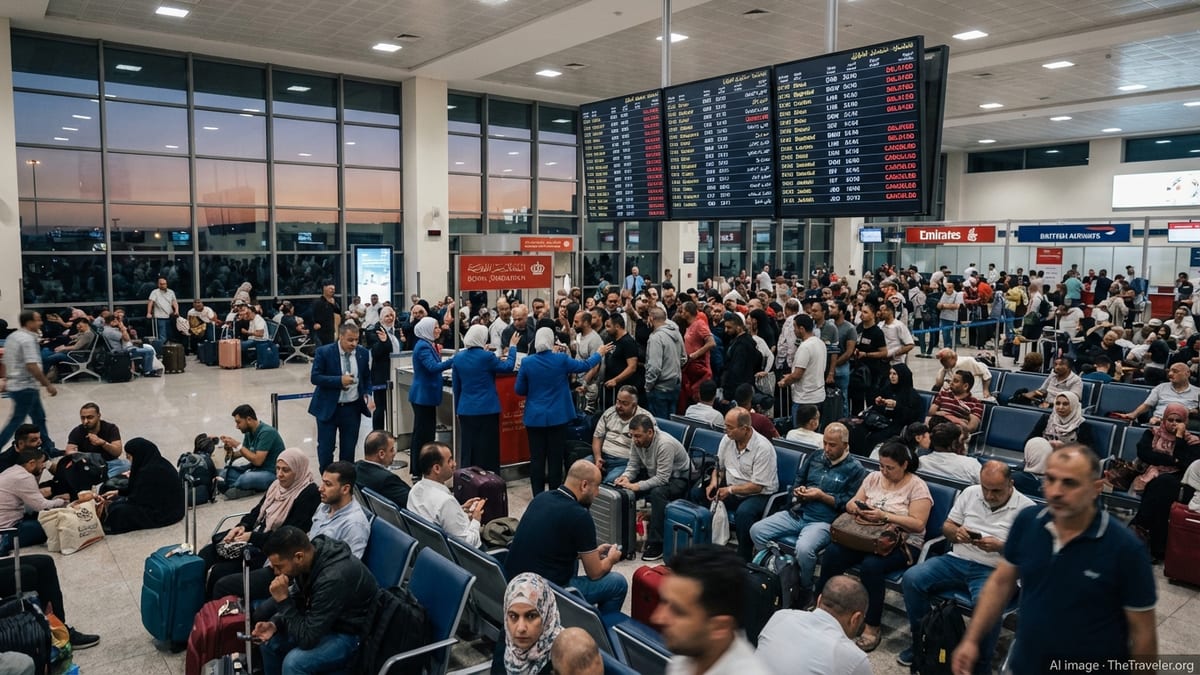
For travelers on the ground at Cairo International, the statistics translate into crowded departure halls, long customer service queues and uncertain departure times. Published accounts from recent days describe passengers waiting hours for updated departure boards and seeking assistance with hotel vouchers, meal provisions and rebooking when delays stretch late into the night.
The strain is particularly acute for families and older travelers on connecting itineraries, who may face challenges navigating visa rules or overnight arrangements when an initially modest delay from Cairo to London or Dubai ultimately leads to a missed long haul connection. For some, the combination of late night disruptions and language barriers adds to an already stressful situation.
Travel industry guidance circulating in the wake of the latest disruptions emphasizes the importance of monitoring flight status in real time via airline apps and airport information channels. Passengers are being advised to arrive early for departures from Cairo, carry essential items such as medications and chargers in hand luggage, and keep documentation of boarding passes and delay times in case they later pursue compensation under applicable regulations.
Consumer advocates also reiterate that entitlements can vary depending on the airline, route and jurisdiction covered by specific flights, particularly on services between Cairo and European destinations like London where European consumer protections may apply in some circumstances.
What the Disruptions Mean for Travelers in the Coming Days
With airspace conditions and regional traffic flows still volatile, operational experts caution that Cairo International may see continued pockets of disruption even after the worst of the current wave subsides. Airlines are expected to keep adjusting schedules on routes to London, Dubai, Riyadh and Amman as they work through aircraft positioning challenges and crew availability issues.
Travelers booked on EgyptAir, Flynas, Nile Air and Air Cairo in the near term are encouraged by travel advisories to reconfirm their itineraries frequently and consider building longer connection buffers, especially when traveling onward from London or Gulf hubs on separate tickets. Same day turnarounds through Cairo may be riskier than usual while the network stabilizes.
For Egypt’s wider aviation sector, the episode underscores both the strategic importance of Cairo as a regional gateway and the vulnerability of tightly wound schedules to sudden shifts in regional conditions. How quickly airlines can restore on time performance and rebuild passenger confidence on key routes will be closely watched by the travel trade in the days ahead.
As peak travel periods approach, industry observers suggest that a combination of more conservative scheduling, clearer passenger communications and closer coordination between carriers and airport operators will be essential to preventing another day in which more than one hundred flights fall behind schedule and multiple services are scrubbed from the board at Cairo’s primary international gateway.