

More news on this day
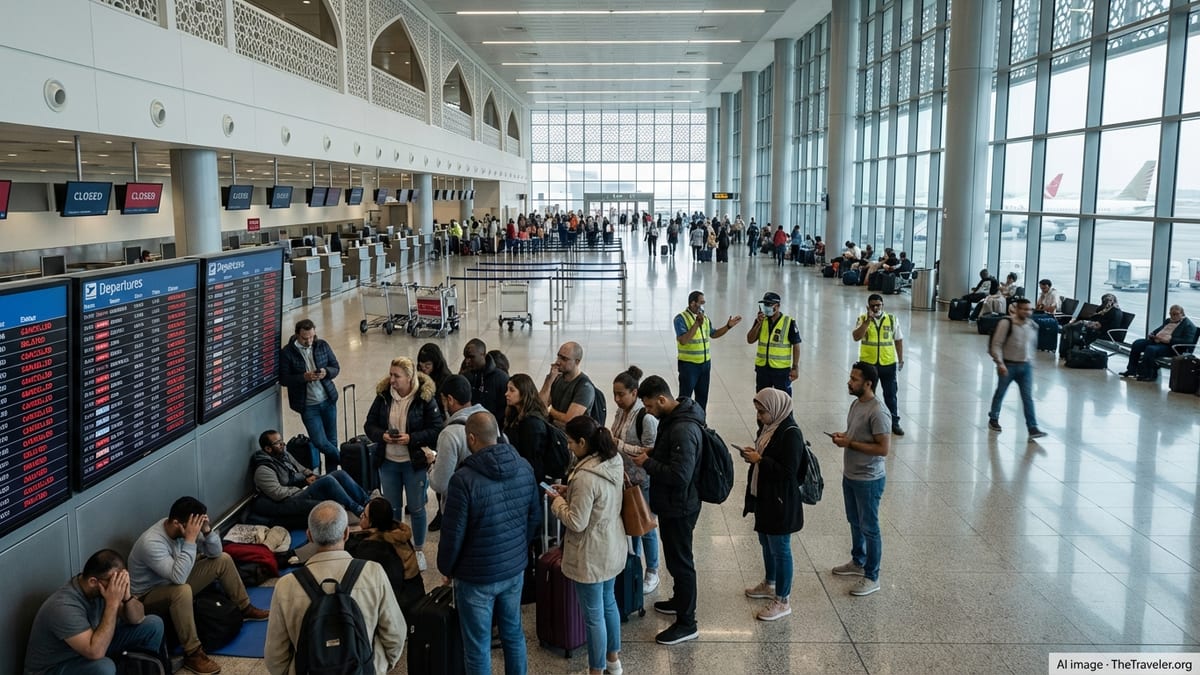
Hundreds of passengers were left stranded at Cairo International Airport after a fresh wave of disruption saw at least 106 delays and five cancellations involving EgyptAir, Flynas, Nile Air and Air Cairo services on key routes to London, Dubai, Riyadh and Amman.
Get the latest news straight to your inbox!
Operational Strain Hits Cairo on Key Regional and Long Haul Routes
Operational data compiled from public flight-tracking and aviation analytics platforms indicates that Cairo International has again emerged as one of the Middle East’s most affected hubs, with more than one hundred departures and arrivals disrupted in a single operating window. Among the hardest hit were services operated by EgyptAir, Flynas, Nile Air and Air Cairo, many of them on heavily travelled corridors to London, Dubai, Riyadh and Amman.
The cluster of delays, running from moderate hold-ups to multi-hour disruptions, came on top of an already fragile regional network following weeks of airspace restrictions and rerouting across parts of the Middle East. Recent industry reporting shows that Cairo has repeatedly recorded triple-digit daily delays since early April, placing additional pressure on airlines using the airport as a transfer and crew base.
Published tallies from specialist aviation outlets show that EgyptAir accounted for the largest single share of delayed movements in Egypt, followed by Saudi carriers and regional operators such as Flynas and Nile Air. Air Cairo, which runs a mix of leisure and regional routes, has also been affected where its schedules intersect with constrained airspace or congested arrival and departure banks at Cairo.
Travel-focused coverage over recent days highlights how this pattern of rolling disruption is especially visible on trunk routes that link Cairo with Gulf hubs and major European gateways. Flights to London and Dubai, as well as regional connections to Riyadh and Amman, have been among the most exposed due to their reliance on tight turnaround times and onward connections.
Wider Middle East Airspace Turbulence Fuels Knock-on Delays
The latest Cairo disruptions did not occur in isolation. Over the past month, airspace closures and restrictions across parts of the Middle East have forced airlines to reroute or temporarily suspend services, particularly on corridors touching the Gulf and Levant. Passenger-rights organisations and travel advisories report that Dubai, Abu Dhabi, Doha and other hubs have all experienced elevated cancellation and delay rates since early March.
According to recent reporting from regional media, EgyptAir temporarily suspended or thinned out flights from Cairo to several Middle Eastern destinations, including Dubai and Amman, before beginning a phased resumption in March. The carrier cited rapidly changing overflight permissions and safety considerations as factors that had complicated its network planning, leaving some rotations out of position and intensifying the risk of further delays when services resumed.
Independent analyses of flight statistics for Egypt point to steep increases in disruption affecting multiple airlines, not only the national carrier. Flynas, which links Cairo with Saudi Arabian cities such as Riyadh and Jeddah, has registered high percentages of delayed services on some routes in recent days, while Nile Air’s operations between Egypt and Gulf destinations continue to face punctuality challenges when schedules intersect with congested air corridors.
In this environment, even a relatively small number of outright cancellations can have an outsized impact on passenger journeys. When five flights are cancelled at short notice from a hub handling large volumes of transfer traffic, re-accommodating travellers on already crowded services to London, Dubai, Riyadh and Amman becomes significantly more complex, driving further late departures.
Passengers Confront Long Waits and Limited Real-time Information
For travellers on the ground at Cairo International, the immediate impact of 106 delays and several cancellations has been long queues, missed connections and uncertainty about revised departure times. Social media posts and first-hand accounts captured by travel forums in recent weeks describe passengers facing multi-hour waits at departure gates and check-in counters as airlines attempt to rebook customers or source replacement aircraft and crews.
Consumer guidance sites note that many passengers rely on a mix of airline apps, airport departure boards and third-party tracking tools to piece together the latest information. However, discrepancies between these sources are common during fast-moving disruption, making it harder for travellers to make decisions about rebooking, overnight stays or alternative routings via other hubs such as Istanbul or Doha.
Analysts say that the nature of Cairo’s role as a connecting hub magnifies the consequences of irregular operations. A late inbound flight from Riyadh or Dubai, for example, can cascade into missed onward connections to London or other European cities, particularly when turnarounds are scheduled tightly. With aircraft and crew utilisation already stretched by regional detours, there is often limited slack in the system to absorb additional delays.
Travel industry reporting also highlights the experience of passengers on regional carriers such as Nile Air and Air Cairo, where delays on short-haul sectors feeding into Cairo can undermine carefully planned itineraries. For tourists and business travellers alike, the combination of limited spare capacity and rapidly shifting schedules has translated into disrupted hotel bookings and missed meetings far beyond the departure hall.
Airlines Adjust Schedules as Disruption Threat Persists
In response to the ongoing turbulence, several carriers operating through Cairo have begun recalibrating their schedules and capacity allocations. Recent public statements and timetable updates from EgyptAir show an effort to gradually rebuild frequencies to Dubai and other Gulf destinations, while maintaining flexibility to adapt to further airspace changes. Aviation observers note that this often means operating at lower utilisation rates or adding schedule padding, which can reduce efficiency but improve resilience.
Saudi low-cost carrier Flynas, together with regional operators such as Nile Air, has also adjusted some departures and arrivals in published timetables, particularly on Riyadh and Jeddah services that interconnect with busy banks at other hubs. These changes may mitigate the risk of last-minute cancellations but can still entail revised departure times that affect passenger plans.
Air Cairo, which focuses on regional and leisure markets linking Egypt with nearby countries and tourist destinations, faces a dual challenge of seasonal demand swings and restricted routing options. Industry coverage suggests that the airline, like its peers, has had to balance maintaining connectivity with managing resource constraints, especially when aircraft are delayed arriving from other disrupted airports in the region.
Despite these efforts, forecasts from travel analysts indicate that volatility is likely to persist in the short term along routes between Cairo and major cities such as London, Dubai, Riyadh and Amman. The combination of constrained airspace, high demand and limited spare capacity across fleets means that even minor schedule perturbations can ripple quickly through the network.
What Travellers Can Do When Flying Via Cairo
Passenger-rights organisations and travel advisory services recommend that anyone booked on flights involving Cairo, particularly on itineraries to London, Dubai, Riyadh or Amman, build in additional buffer time and closely monitor their flight status ahead of departure. This advice is consistent across recent guidance issued for travel through other affected Middle Eastern hubs.
Air travel experts point out that travellers who booked through a single ticket and airline have clearer avenues for rebooking when delays and cancellations occur, compared with those who pieced together separate tickets on different carriers. In the event of severe disruption, passengers are encouraged to keep records of expenses incurred for accommodation, meals and transport, which may be relevant in any subsequent compensation or reimbursement claim under applicable regulations.
Publicly available information from regulators and consumer bodies underscores that eligibility for compensation varies depending on where a journey begins, the airline operating the flight and the exact cause of the disruption. Routes linking Cairo with London can sometimes fall under European Union protections on certain itineraries, while flights between Cairo and Gulf or regional destinations such as Dubai, Riyadh and Amman may be governed by a different legal framework.
With no immediate end in sight to the broader regional airspace challenges, travellers connecting through Cairo International in the coming days and weeks are likely to continue facing an elevated risk of delays and schedule changes. For now, careful planning, flexible itineraries and regular checks of airline communications remain the most practical tools for navigating a volatile operating environment.