

More news on this day
Fresh airspace restrictions linked to the latest Gulf security crisis are stranding travelers across Cairo, Dubai, Abu Dhabi, and Riyadh, as EgyptAir, Etihad Airways, and Saudia cancel 54 flights and delay or heavily reroute at least 61 more on key Middle East and Asia corridors.
Get the latest news straight to your inbox!
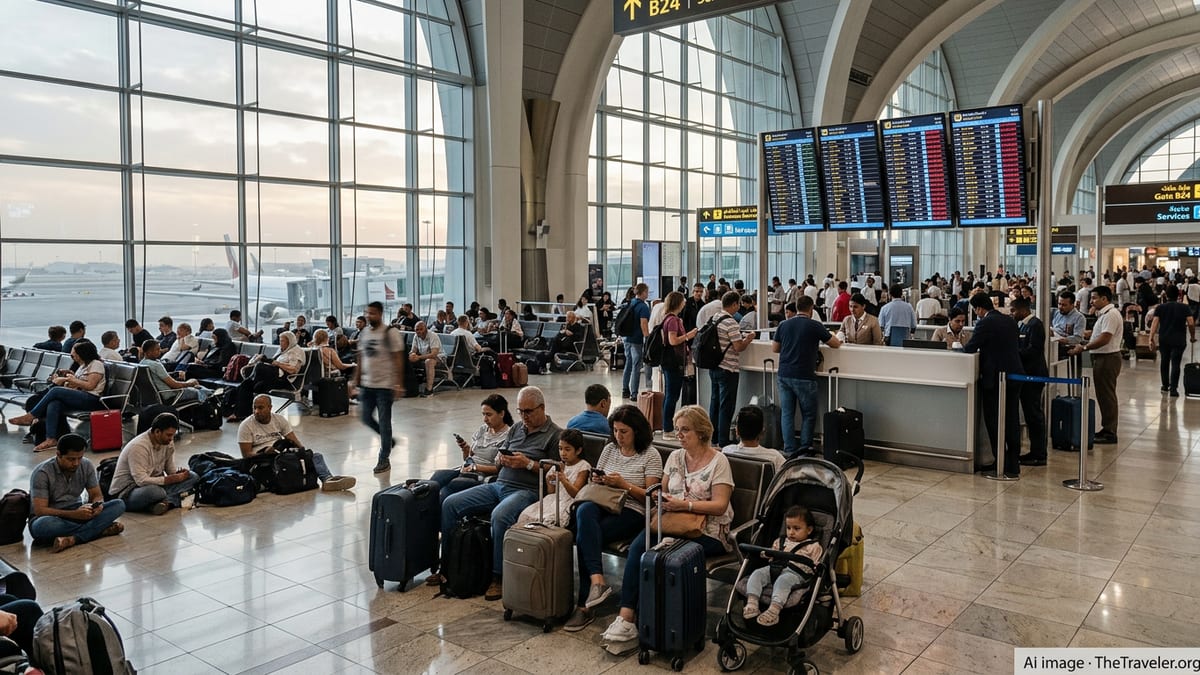
Security Crisis Triggers New Wave of Disruptions
The latest round of flight cancellations comes less than two weeks after a sharp escalation in regional tensions prompted sweeping airspace closures across parts of the Gulf and Iraq, forcing airlines to suspend or divert routes en masse. Aviation advisories issued in early March warned that airspace over several conflict-adjacent states would be restricted, compelling carriers to abandon their usual high-traffic corridors between the Middle East and Asia.
In response, national carriers including EgyptAir, Etihad, and Saudia have imposed rolling schedule cuts at their home hubs, concentrating today’s disruption in Cairo, Dubai, Abu Dhabi, and Riyadh. While some services have resumed on a limited basis, the mix of outright cancellations, last-minute delays, and lengthened flight paths is creating a patchwork of uncertainty for passengers attempting to travel between the Middle East, South Asia, and key Asian gateways.
Operational planners say the combination of closed airspace, mandatory detours, and congestion on remaining viable routes has sharply reduced capacity, even on flights that are technically still operating. Longer routings around sensitive zones are also adding hours to journey times and complicating aircraft rotations, feeding fresh delays into already strained schedules.
Cairo Hit Hard as EgyptAir Rebuilds After Mass Cancellations
Cairo International Airport, a major transfer point between Africa, the Middle East, and Europe, has been one of the hardest-hit hubs. Egypt’s flag carrier has spent the past week gradually unwinding an earlier decision to suspend multiple routes from Cairo to Gulf and Levant destinations after neighboring airspace was deemed unsafe for civilian overflights.
On Wednesday, EgyptAir was still working through the backlog created when dozens of flights to and from Gulf cities were axed or downgraded to skeleton service. Of the 54 cancellations reported across the affected hubs today, a significant share involved EgyptAir-operated sectors connecting Cairo with Dubai, Abu Dhabi, Sharjah, Doha, Kuwait City, and major Saudi gateways. Additional delays were recorded on services to Amman and Beirut as aircraft and crews remained out of position.
The airline has begun a phased restoration of some previously suspended links, adding back limited service to Amman and select United Arab Emirates airports, but capacity remains far below normal levels. Extra “rescue” flights are being mounted where possible to bring home stranded travelers who had already started their journeys before the worst of the disruption took hold.
For passengers in Cairo, this has translated into crowded terminals, long queues at rebooking desks, and overnight stays in the city for those unable to secure same-day alternatives. Airport hotels around Heliopolis and along the airport road have reported elevated occupancy driven almost entirely by displaced transit travelers.
Etihad and Saudia Struggle With Gulf Hub Bottlenecks
In the Gulf, Abu Dhabi-based Etihad and Saudi Arabia’s Saudia are grappling with similar pressures as they try to maintain truncated operations at Abu Dhabi and Riyadh while navigating restricted airspace to the east and north. Travel advisories have noted recurring smoke, debris, and intercept activity in the wider Gulf region in recent days, raising the risk profile of overflights and forcing routing changes on many long-haul services.
Etihad has been operating on a reduced schedule out of Abu Dhabi, with several Asia-bound flights either cancelled outright or subject to extensive delays as aircraft are rerouted south around high-risk zones. Some passengers connecting from South Asian cities such as Hyderabad and Mumbai have reported being stranded in Abu Dhabi for days awaiting rebooked onward flights to Europe and North America.
Saudia’s main hub at King Khalid International Airport in Riyadh has also seen a mix of cancellations and late departures as the carrier juggles limited airspace corridors with strong demand from residents and expatriate workers trying to reach or transit through the kingdom. Short-haul flights to nearby Gulf capitals and longer services linking Riyadh to Asian financial centers have both been affected, with knock-on delays rippling through domestic Saudi routes as aircraft are reassigned.
Operational data from regional aviation monitors indicates that the 61 delayed or heavily slowed flights today include several services that technically departed on time but were forced into extended holding or circuitous routings, adding significant time in the air compared with normal schedules.
Asia Routes Face Detours, Longer Flight Times, and Missed Connections
The impact of these Middle East airspace restrictions is being felt most acutely on high-density corridors between Gulf hubs and Asia-Pacific gateways. Airlines that usually operate fast, direct sectors between cities such as Dubai, Abu Dhabi, Riyadh, and Cairo and key Asian airports are now threading through a shrinking number of safe, approved routes.
Flights to and from major Asian hubs including Singapore, Kuala Lumpur, Shanghai, Bangkok, and Delhi have seen the steepest increases in block times, with some journeys extended by more than two hours. Longer routings mean higher fuel burn and tighter aircraft utilization, which in turn can force last-minute cancellations when a previous leg encounters unexpected delays.
For passengers, this translates into missed connections and disrupted itineraries even when their individual flight has not been formally cancelled. Travelers connecting through the Gulf or Cairo from Europe or North America to onward Asian destinations are particularly exposed, as a minor delay on their first leg can now be enough to break already thin connection windows.
Airlines are responding by loosening rebooking rules on affected routes, with many waiving change fees for passengers willing to shift travel dates or accept alternative routings that avoid the most congested air corridors. However, peak-season load factors and the scale of the disruptions mean that seats on desirable alternative flights are limited and can sell out quickly.
What Travelers Need to Know If Their Flight Is Canceled or Delayed
For anyone scheduled to travel through Cairo, Dubai, Abu Dhabi, or Riyadh in the coming days, the key message from aviation authorities and airlines is to stay flexible and informed. Timetables published even 24 hours ahead are subject to change as security assessments and airspace permissions are updated in real time.
Passengers should monitor their booking via airline apps or direct notifications, rather than relying on static itineraries issued at the time of purchase. Many carriers are encouraging travelers to confirm their flight status repeatedly in the 24 hours before departure and again before leaving for the airport. Where possible, providing updated contact details can ensure that rebooking options and gate changes are communicated quickly.
Those whose flights are canceled are generally being offered a choice between rebooking at the earliest available opportunity, rerouting through alternative hubs, or receiving refunds in line with each airline’s conditions of carriage and any applicable consumer protection laws. Travelers originating in or departing from jurisdictions with strong passenger rights regulations may be entitled to additional assistance, including meals and accommodation during extended delays.
Travel experts advise building extra margin into itineraries that involve Gulf or Cairo connections, avoiding tight same-day onward flights, and considering travel insurance policies that explicitly cover disruption from airspace closures and security incidents. While airlines in the region are working to restore more normal schedules, the evolving security picture means further cancellations and extended detours on Middle East and Asia routes remain a real possibility in the short term.